
Finding Magic in Puppetry: Alumna Maggie Rocha’s Journey After AU
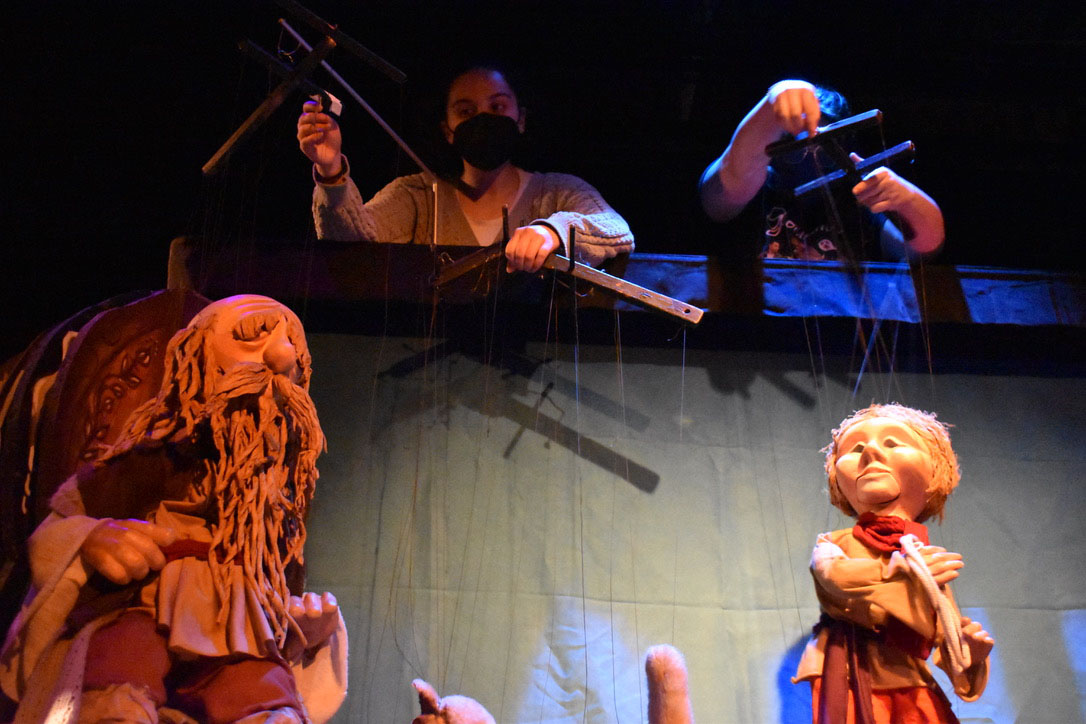

Maggie Rocha’s (CAS ‘21) path from American University to The Puppet Co. wasn’t exactly what she expected. An AU graduate with a double major in Communication Studies and Theatre Arts, Rocha now works as the Production and Operations Manager at one of the region’s most beloved puppetry organizations, where her work spans performance, production, operations, audience engagement, and arts administration. From learning how to operate multiple marionettes at once to helping bring live theater to young audiences every day, Rocha has built a career that combines creativity, adaptability, and a genuine love for storytelling.
In a conversation with AU Arts Management graduate Josie Palmarini (CAS ‘26), Rocha reflects on graduating during the pandemic, discovering puppetry through unexpected opportunities, and how simply being “in the right building” can change everything.
Josie Palmarini (JP): Tell me a little bit about yourself, your experience as a student at AU, and what you do at The Puppet Co.
Maggie Rocha (MR): My name is Maggie Rocha, and I’m originally from just outside Boston, Massachusetts. I’m currently the Production and Operations Manager at The Puppet Co. in Glen Echo, Maryland. At AU, because of the pandemic, the second half of my junior year and my entire senior year were fully online. Graduating during that period was definitely strange, especially entering the arts world at such an uncertain time.
JP: How did your time studying theater at AU shape your path toward puppetry and arts management?
MR: One of the most valuable things about the Theatre Arts degree was how broad it was. I got exposure to a little bit of everything, and that ended up being incredibly helpful once I started looking for work. At the time, The Puppet Co. was reopening under entirely new management, and they were hiring for front-of-house and box office positions. Everyone was new, so it felt like a great environment to jump into and learn together. I started there in August 2021, essentially right out of college, and I’ve been there ever since. I didn’t grow up thinking, “I want to be a puppeteer,” but I did grow up saying that I wanted to work with the Muppets someday. Now I’m in a line of work where that actually feels possible.
JP: Your career spans performance, directing, marketing, and operations. How has working in multiple roles influenced the way you approach storytelling and audience engagement?
MR: A lot of it comes down to improvisation and learning how to read a room. Different situations require different skills and different versions of yourself. Sometimes you need to create multiple voices or characters, and other times you need to step into a leadership role and be more assertive. Working across so many areas has helped me figure out what each moment needs. The broad nature of the Theatre Arts degree really helped with that because it gave me interdisciplinary skills and vocabulary for communicating with all kinds of collaborators. For example, taking scenic design classes gave me the language I needed to discuss technical issues and communicate with designers. Working at Greenberg Theatre before the shutdown also taught me a lot about lighting, which is now a major part of my work. When problems come up, I can jump in and troubleshoot because I have that baseline knowledge from AU.
JP: What drew you to puppetry specifically, and what makes it such a powerful form of theater?
MR: I originally sought out theater in general, not puppetry specifically. But someone once told me “It’s the right building, you’re in the right building,” and that really stuck with me. The important thing was that I was working in theater at all, even if it wasn’t exactly what I originally imagined. Then I fell in love with puppetry as an art form. Looking back, puppets have always been part of my life through television and children’s media. Once I started seeing performances up close and learning how the puppets were built and operated, it felt magical. What’s so unique about puppetry is that your own appearance doesn’t define the character. The audience only sees what you want them to see. You can completely disappear into the role because the puppet becomes the character, and comes to life through your movement and voice.
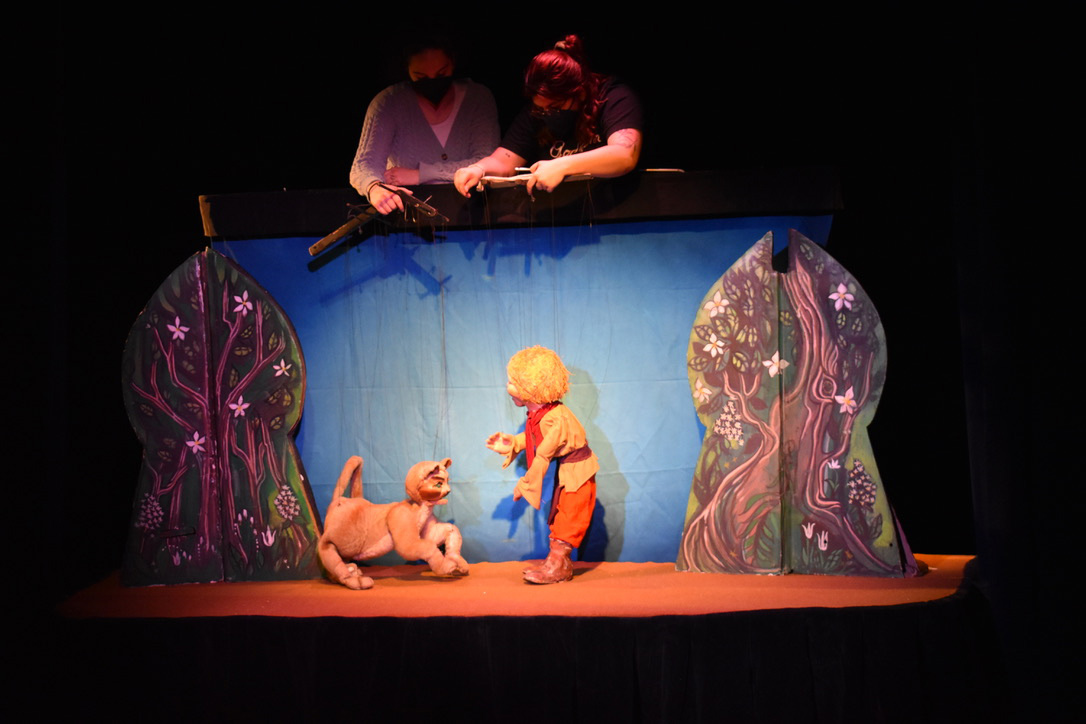
JP: Do you remember the first puppet show you worked on artistically?
MR: Yes! The first show I performed in at The Puppet Co. was Peter and the Wolf, a two-person marionette production. One performer handled Peter, and I handled everyone else, what we jokingly called the “and the wolf” track. I had to learn how to operate five completely different marionette puppets, each with its own mechanics and personality. At the first rehearsal, our director basically handed us the puppets and said, “Go for it.” I was thrown into the deep end in the best way possible. I remember asking the director to give me three adjectives for each character before I started building the voices. One minute I was an old man, then a tiny bird, then a very sassy duck. The hardest part was when the bird and the duck had a conversation because I kept waiting for my own cues.
JP: As Production and Operations Manager, what does a typical day look like for you?
MR: Every day starts with checking in to make sure everyone expected in the building is either there or on the way. Then it’s emails, lots of emails. On any given day, I might be coordinating with schools, working with ASL interpreters, discussing designs with puppet builders, or scheduling upcoming performances. I also help manage front-of-house operations, especially when large student groups arrive. Once performances begin, I stay nearby in case there’s a technical issue or emergency backstage. Then it’s back to scheduling, repairs, planning special events, and continuing the administrative side of things. Arts administration really is a cycle of opening your email, putting things into your calendar, doing the task, and then going back to your email again.
JP: What advice would you give current AU Theatre students who are interested in careers that branch beyond traditional theater paths?
MR: Try as many things as you can while you’re still in that educational environment. Take advantage of your professors, guest artists, and all the opportunities around you. It’s much easier to build a baseline of knowledge while you’re in a learning mindset and then expand on it later in professional spaces. You never know what’s going to spark your interest until you actually experience it. I certainly never expected to end up in puppetry when I graduated. At first, I thought I’d just be auditioning around and picking up theater jobs here and there. But I loved the people, the environment, and the work I was doing, so I stayed, and I’ve been seeing what happens ever since.
Maggie’s journey is a reminder that careers in theater rarely follow a single path, and that some of the most rewarding opportunities come from staying open to new experiences. Learn more about the AU Theatre/Musical Theatre Program and discover more about Maggie’s work and upcoming productions at The Puppet Co.