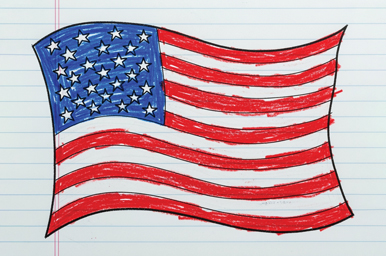
We the people . . . might need summer school.
According to the 2023 National Assessment of Educational Progress, only 22 percent of the nation’s eighth graders are proficient in civics. Scores dropped for the first time in a quarter-century, with fewer than half of students able to identify components of the Bill of Rights or able to explain how the Electoral College actually works.
But hey, that’s just the kids, right? Surely you remember the three branches of government. It’s time to find out: Are you smarter than an eighth grader?
Try these questions from a real middle-school civics exam. (Honor system: No googling, no pleading the Fifth, and no asking your teenager for help.)
- True or false: Senators are elected for four-year terms.
- The “great compromise” during the Constitutional Convention settled the dispute over: A. whether to have a king or a president; B. how states would be represented in Congress; C. whether slavery should be legal; D. how to amend the Constitution
- How many amendments does the Constitution currently have? A. 10; B. 21; C. 27; D. 50
- True or false: The legislative branch has the power to declare war.
- The first three words of the Constitution are “We the People.” What principle does this establish? A. popular sovereignty; B. federalism; C. separation of powers; D. rule of law
- Which power allows the judicial branch to check the legislative branch by declaring a law unconstitutional? A. impeachment; B. ratification; C. veto power; D. judicial review
- True or false: The eighth amendment protects a person against self-incrimination.
Answers: 1) false; 2) B; 3) C; 4) true; 5) A; 6) D; 7) false