
The Power of Showing Up
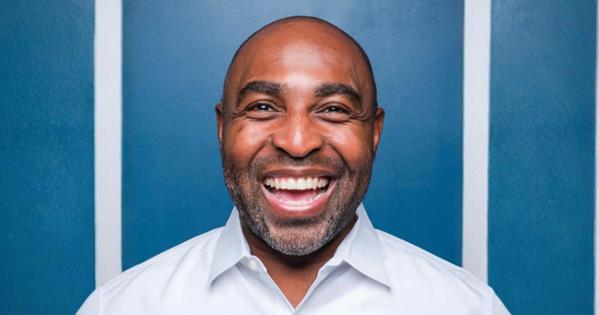
For Clarence J. Fluker, SOC/MA '02, the Washington Business Journal’s 2026 LGBTQ+ Business Award is not the story.
It’s a brushstroke.
“Rarely when we look at a painting do we see a piece with a single paint stroke,” Fluker says. “There are lots of different paint strokes that create the painting.”
The honor recognizes more than two decades of advocacy, community leadership, and public service across the Washington region. But the picture began taking shape long before the award, long before the titles, and long before Fluker became known as a champion for LGBTQIA+ inclusion.
It began in Cleveland.
Growing up, Fluker was surrounded by people who taught him a lesson that would shape the rest of his life: he belonged.
“I was raised to know that I am a child of God, I’m worthy to love and be loved, and that I can take up space,” he says. “My family taught me that I was just as worthy as everyone else.”
As he came into his identity as both a Black and gay man, that foundation became increasingly important. Fluker recognized that the freedom to fully embrace every part of who he was wasn’t something everyone experienced. The more he reflected on his own journey, the more he felt called to help create that same sense of belonging for others.
At the time, he didn’t think of it as advocacy. He was simply living openly, volunteering in his community, and searching for spaces where people like him could be seen and valued.
That path eventually led him to American University.
Shortly after arriving in Washington to pursue a master’s degree in AU’s School of Communication, Fluker signed up to volunteer for the Whitman-Walker AIDS Walk. One weekend he registered participants outside a grocery store. The next, he handed out water and cheered on walkers crossing the finish line.
When he picked up a copy of The Washington Blade and spotted himself in the background of a photo from the event, he felt an unexpected sense of pride.
“I was so proud to be in the paper for volunteering at the AIDS Walk,” he recalls.
What felt like one small moment was really another paint stroke in a lifelong commitment to advocacy.
At AU, Fluker immersed himself in campus life, balancing coursework, teaching assistant responsibilities, and opportunities through the Center for Congressional and Presidential Studies. He also served as a communications intern for Youth Pride Alliance, the organization behind Washington's annual Youth Pride celebration. For Fluker, the role was less a starting point than a continuation of work already underway. From his internship with the ACLU of Ohio as an undergraduate to facilitating workshops with DC Black Pride and helping organize some of Cleveland's early Black Pride weekends, he had long been finding ways to support and uplift LGBTQIA+ communities. At AU, those experiences began to converge, helping him see communication not simply as a profession, but as a powerful tool for advocacy, visibility, and connection.
In the years following graduate school, Fluker traveled to colleges and universities across the East Coast speaking about the intersection of race and sexual orientation and the realities of navigating both identities.
“I was grappling with it on my own, but I knew I wasn’t alone in feeling that way,” he says. “I knew I wanted to elevate that conversation. Without talking about it, we wouldn’t be able to make the world better for me and those who come after me.”
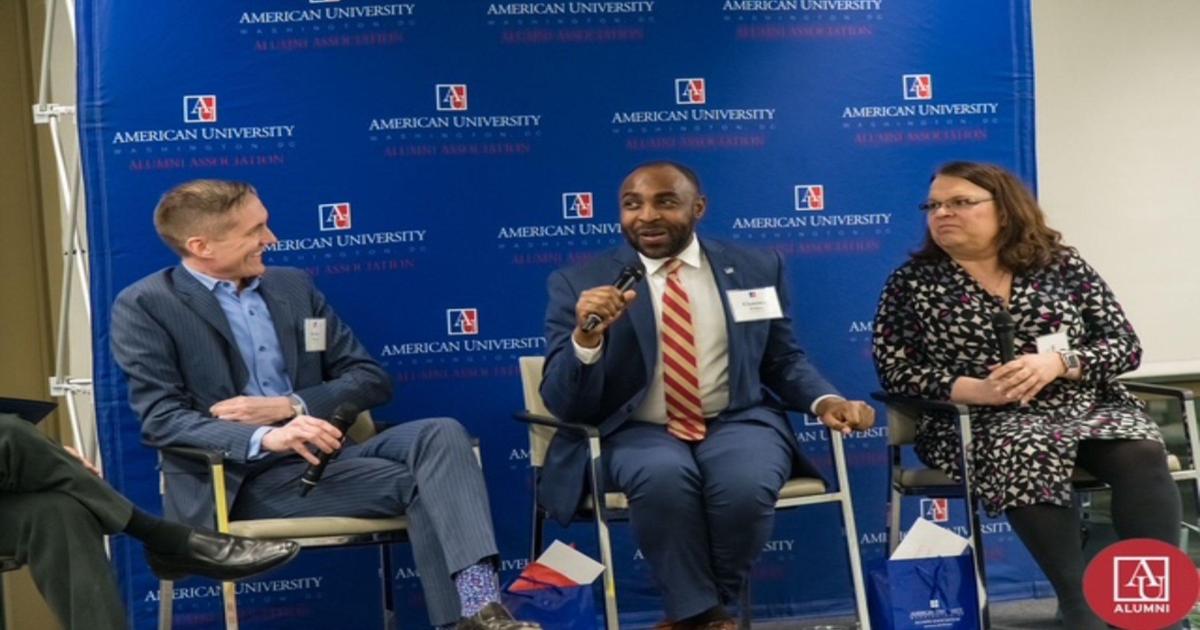
Those conversations deepened his understanding of intersectionality and expanded his vision of advocacy.
“As much as I desire to be my whole self, I desire that for everyone around me,” he says. “We’re all nuanced, complex humans. I want to respect and celebrate that.”
Today, that philosophy shapes both Fluker's professional work and civic engagement. As senior director of patient, family, and community engagement at the Association of American Medical Colleges, he helps academic medical centers elevate the voices of those they serve, recognizing that meaningful progress begins with listening, learning, and partnership. He also serves as an adjunct lecturer in the graduate communication program at Johns Hopkins University, helping prepare future leaders to communicate with purpose and empathy.
Throughout every role, he has remained committed to one core belief: authentic stories have power.
“Everyone has a voice. Too often, what people don’t have is the microphone.”
For Fluker, advocacy has never been about speaking for others. It has been about creating opportunities for people to speak for themselves.
Sometimes that impact appears in subtle ways. In meetings, he routinely asks questions such as, “How will this impact LGBTQ people?” or “Have we considered bringing in the voice of a queer person?” Over time, he noticed colleagues asking those same questions even when he wasn’t in the room.
“Every single advocate cannot be in the room,” he says. “But when people who’ve worked with you start asking those questions because you’ve influenced how they think, that’s meaningful. Conversations are what lead to change.”
Twenty-five years after arriving at AU, that belief continues to guide him. A member of both the Black Alumni Alliance and supporter of the Pride Alumni Alliance, he remains actively engaged with the AU community through mentorship, volunteerism, and alumni leadership.
“Community helps keep you in the work,” he says. “It’s there to help us support each other, to laugh, cry, and find comfort.”
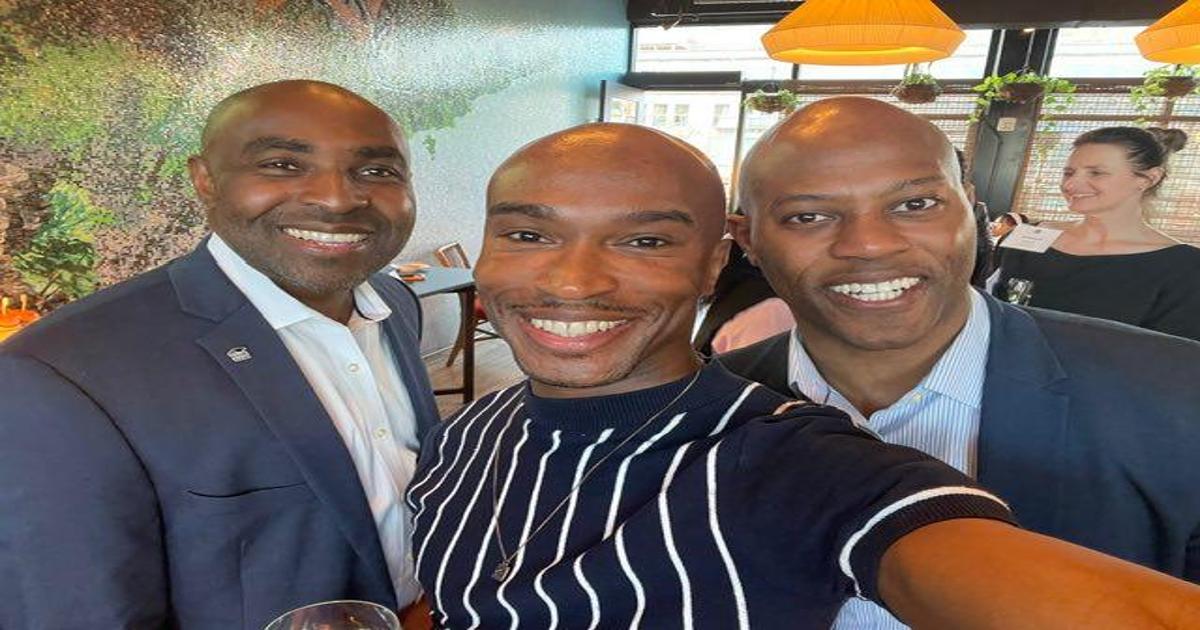
That sense of community has connected every chapter of Fluker’s story, from Cleveland to Washington, from volunteer opportunities to leadership roles, and from personal self-acceptance to public advocacy.
The Washington Business Journal’s LGBTQ+ Business Award may recognize the impact he has made, but the true measure of that impact can be found in the people who feel more seen, heard, and valued because he showed up.
“Just start,” he says when asked what advice he would offer students and young alumni hoping to make a difference. “I never started out thinking that people would refer to me as an advocate. I just did what felt natural to me.”
Like the painting he describes, Fluker’s legacy has never been defined by a single brushstroke. It has been shaped by years of helping others embrace the fullness of who they are and ensuring they have a place in the picture.