
9/11 at 25: What It Means to “Never Forget”
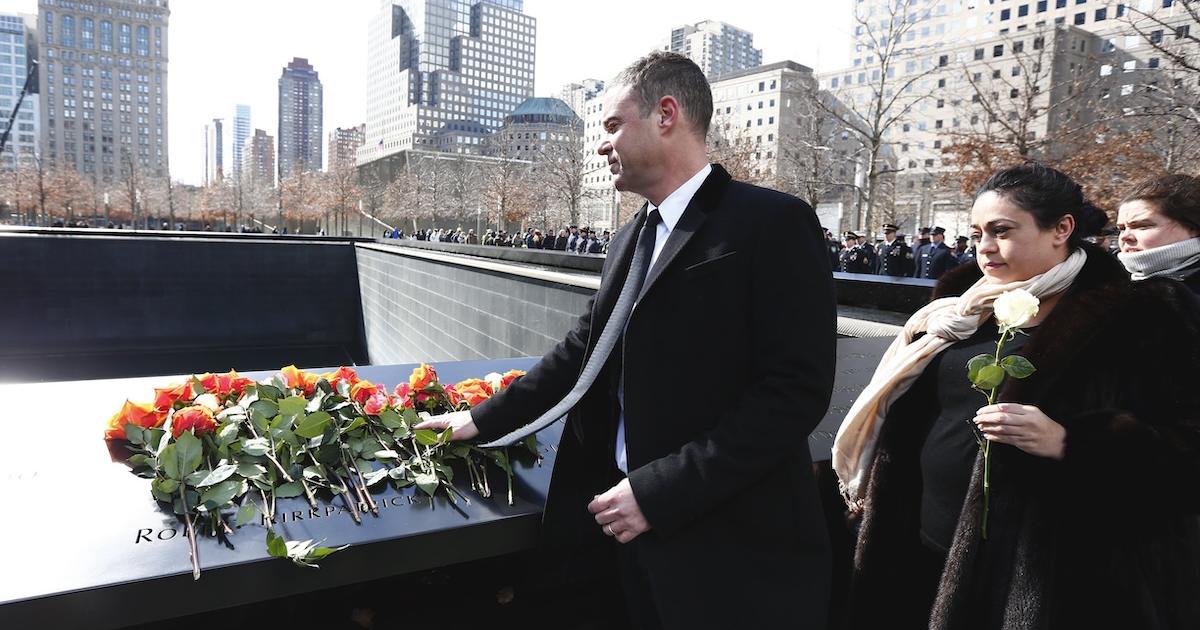 On September 11, 2001, Joe Daniels emerged from the subway to find horror unfolding above him.
Across the street from his office at McKinsey & Company, smoke billowed from the North Tower of the World Trade Center. Not long after, he watched in disbelief as people trapped more than 1,000 feet in the air began jumping from the building.
Then the South Tower erupted into a fireball. Daniels ran from Ground Zero before he could fully process what was happening. In an instant, an ordinary morning turned into a nightmare he would never forget.
“Picture yourself walking down the street,” Daniels told an audience of American University students in the Mary Graydon Student Center on September 10. “You turn the corner, and all of a sudden, it’s like you’re in this nightmare happening in front of you.”
A day before the 25th anniversary of 9/11, Daniels joined AU’s Kennedy Political Union to reflect on the aftermath of the deadliest terrorist attack on US soil.
In conversation with School of Public Affairs senior professorial lecturer James Quirk, Daniels recalled witnessing “the absolute worst of humanity,” as well as the profound unity and resilience that followed.
For a brief period, Americans recognized “there was something deeper, more foundational than the different lines of division we face,” said Daniels, who led the memorial and museum for a decade. “It was beautiful, and it was never meant to last.”
Stepping into leadership in 2006 to build the eight-acre landmark, Daniels grew a team of 10 into a staff of more than 500, delivering on the ambitious goal of opening the memorial by the 10th anniversary in September 2011.
In 2014, the companion museum opened, giving millions of visitors a place to encounter authentic artifacts, multimedia exhibits, and the personal stories of the 2,977 people killed.
As time passes, Daniels noted, the memorial and museum carry an even greater responsibility to remind the public that “when the times require, we have the capacity to come together.”
“Twenty-five years later, we’re living in a hyper-fractured landscape in America,” Daniels said. “I just hope we retain that memory of what it means to be there for your fellow American.”
Preserving that legacy also requires those who lived through it to share their stories with the more than 100 million Americans too young to remember the day firsthand.
“The stories that we choose to remember and retell and pass along generation after generation [are] a reflection of the country itself,” Daniels said.