
Inside a Day with WAMU’s 1A
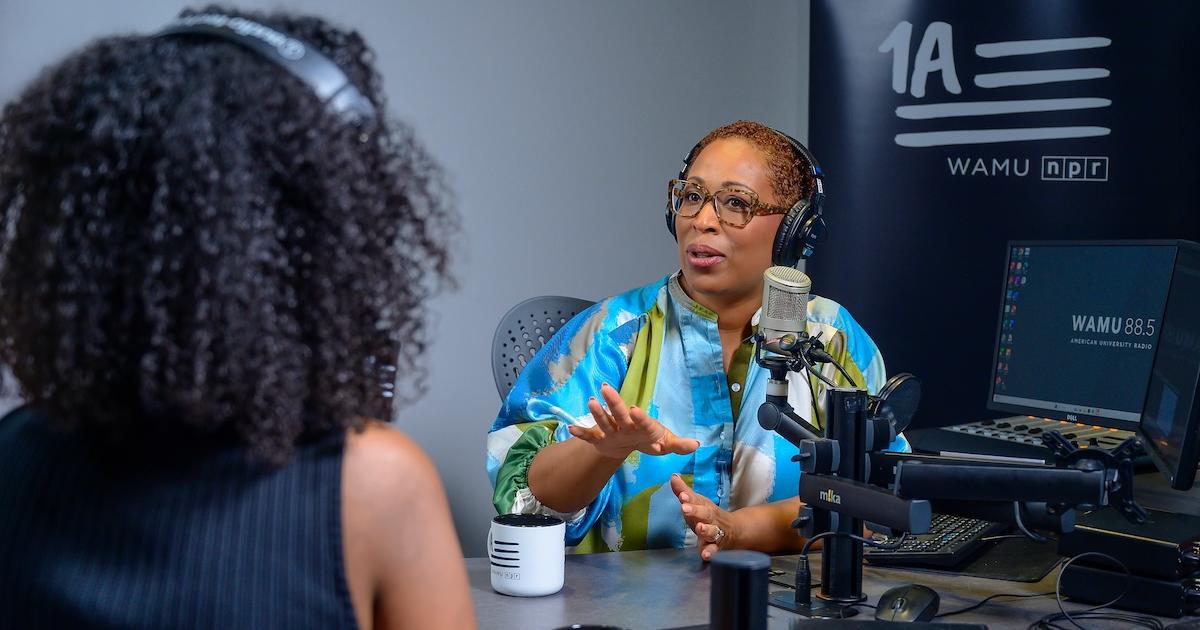 At exactly 10:05:50 every weekday morning, WAMU 88.5’s flagship program goes live on the air with a familiar, three-word refrain.
“This is 1A,” host Jenn White says inside the studio at 4401 Connecticut Avenue NW.
1A, which bills itself as “a show for a changing America,” serves as the national engine for DC’s top radio station, which is owned and licensed by American University.
Broadcast each week to more than 400 NPR stations across the country, the program reaches millions of listeners from its home base in Washington, DC, all the way to Pullman, Washington, and Ketchikan, Alaska. Yet even the most loyal listeners never see or hear the coordinated effort required to produce 10 hours of seamless live radio each week.
It all starts with the host. The responsibilities of helming a live daily broadcast are not for the faint of heart: White must conduct an orchestra of competing priorities in real time.
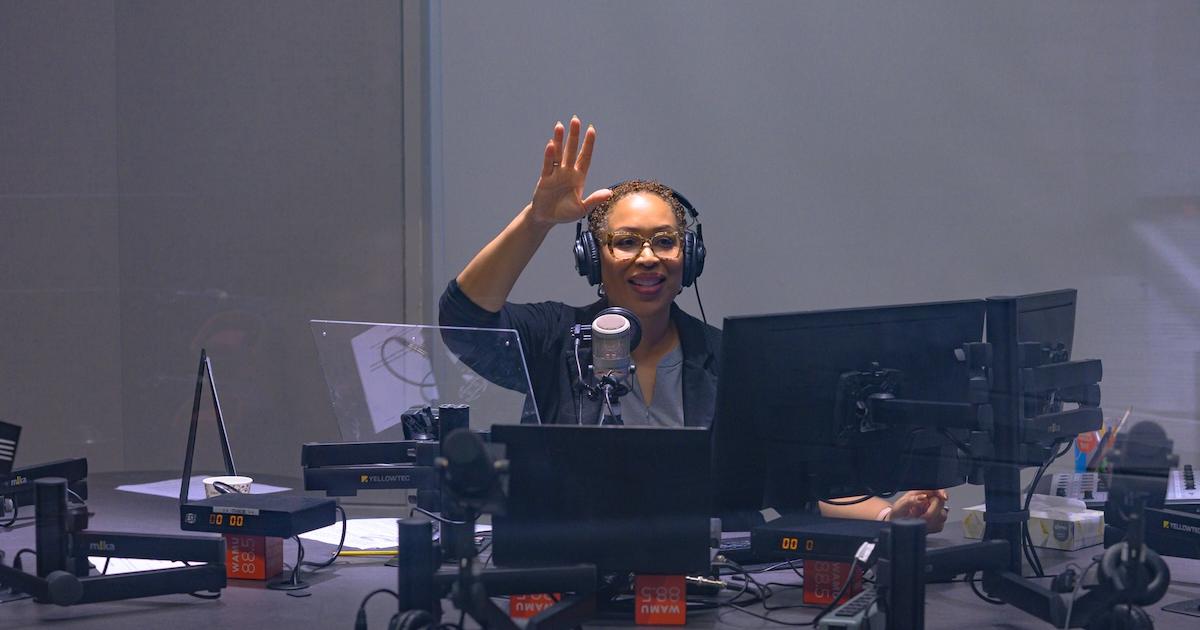 On a recent Wednesday morning, White, wearing black headphones, settles into her captain’s chair for an in-depth conversation about prostate cancer. Notes, a script, and three glowing computer monitors are arranged in front of her.
Across the table, two physicians join her in-studio to discuss the stigma, diagnosis, and treatment options for the most commonly diagnosed cancer in American men. Two additional medical experts—one at Vanderbilt University, the other at the University of Washington—appear via Zoom.
Listening closely to each panelist is paramount, but White must also shepherd the conversation, ask sharp follow-up questions, roll to sound bites, monitor incoming messages from producers, periodically reintroduce the topic for listeners tuning in mid-show, and ensure every fact shared is airtight.
There is no pause button and no second take. “Live radio is a lot like walking a tightrope that someone occasionally skips over and lights on fire,” White said.
 If White is navigating a journalistic high-wire act, her team of seven core producers is the safety net. Every week, producers research the episodes, generate scripts, pitch new ideas, and fact-check the information relayed on air. “Our team works really collaboratively,” White said. “People talk about the diversity of the topics we cover on the program. A lot of that is because of our producers and the diverse experiences and interests they bring to the show.”
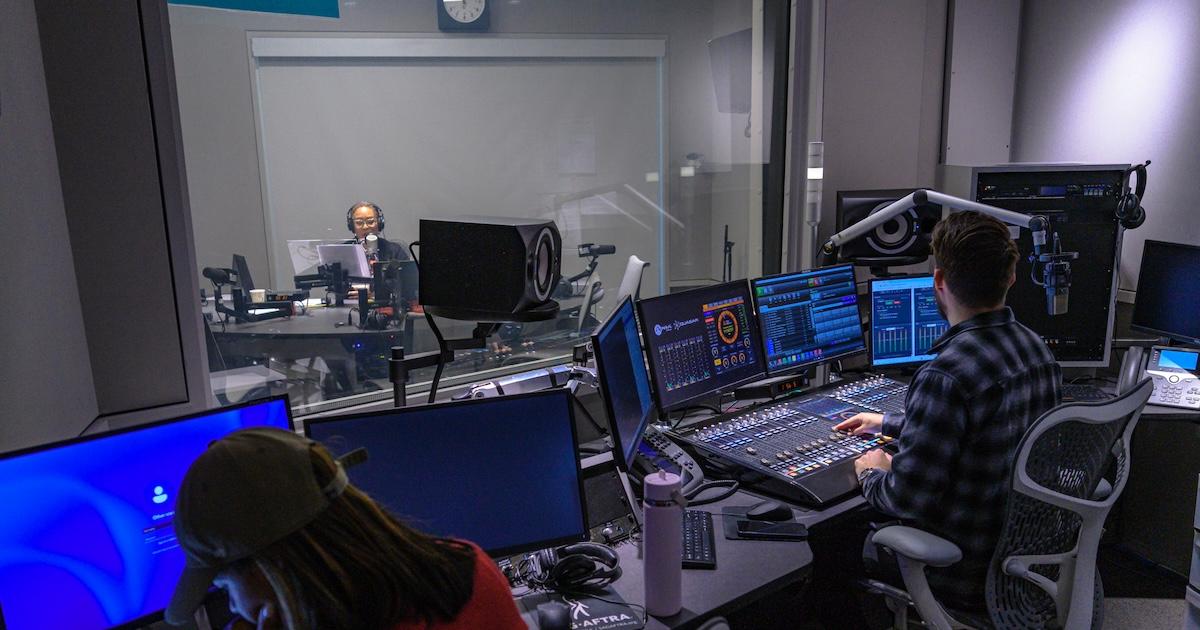
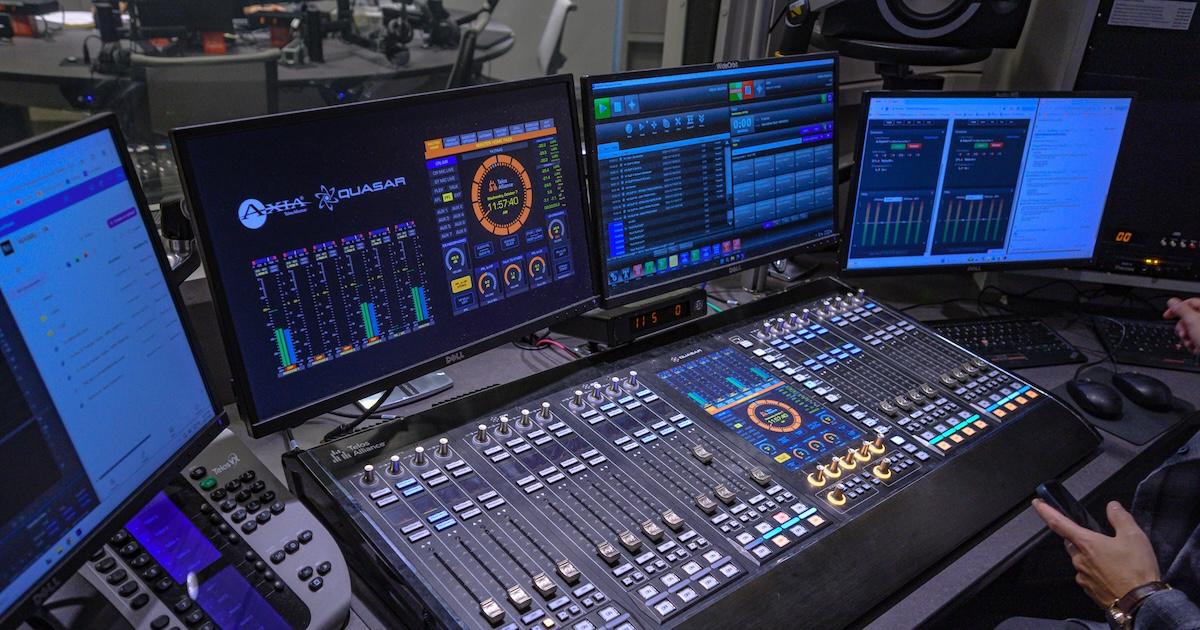
On the other side of the glass, producer Claire Mufson and audio engineer Mike Kidd staff the control room, surrounded by banks of faders and digital monitors. Kidd compares monitoring audio quality to driving a car. “You don’t want to over-tweak,” he said. “You’re keeping [the sound] in the lane.”
Throughout the broadcast, he works in lockstep with White, firing clips that range from a snippet of prostate cancer survivor Ben Stiller in Zoolander to a listener voicemail. He and White trade quick hand signals that indicate when audio is cued and when a clip is winding down.
 A seat away, Mufson pores over a flood of listener emails that began arriving before the broadcast even started. At 10:03, Jim wrote in about his diagnosis two years earlier. By far, the hardest part of his treatment was hormone therapy, which brought hot flashes, weight gain, night sweats, and insomnia. He wants to know: Is that common?
Midway through the hour, after Mufson routes the note to White, Jim’s question is read on air for the panel to address. That responsive relationship with listeners remains central to 1A’s identity.
“[Listeners] are shaping the show as much as we are bringing topics to them,” Mufson said. “That is meaningful. It makes me feel like what we’re doing is worthwhile. They are part of the conversation with us.”
Since its 2017 debut, 1A has built on WAMU’s long tradition of community-centered broadcasting. This week, the station will mark its 65th anniversary.
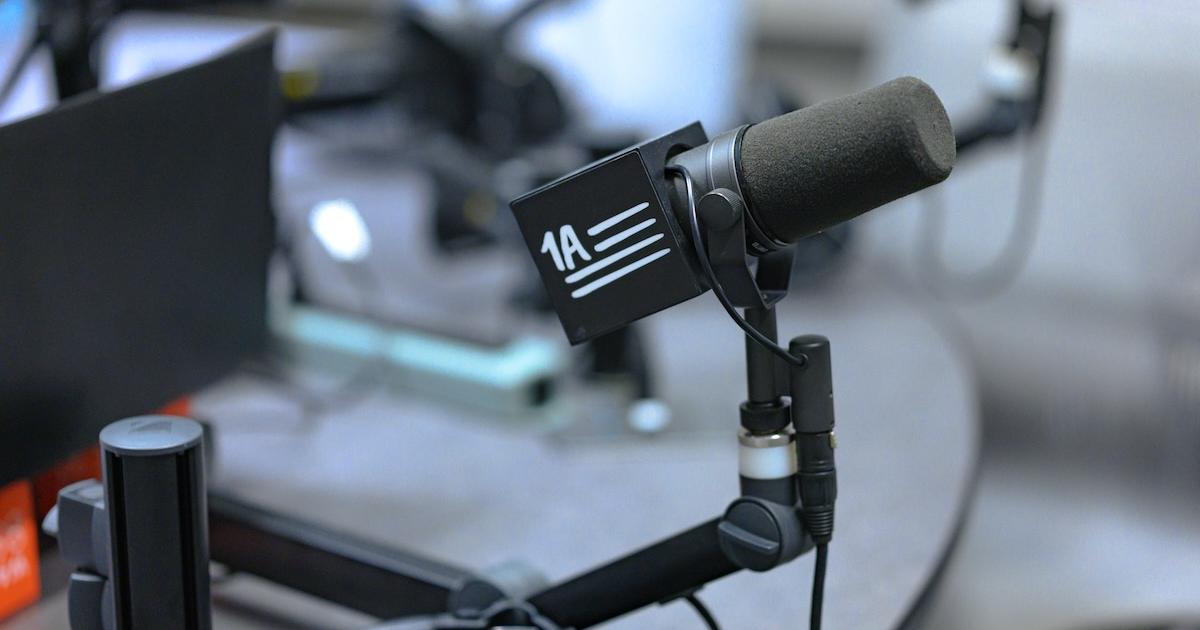 At 4 p.m. on October 23, 1961, WAMU signed on for the first time from AU’s campus, becoming the sixth station in the Educational Radio Network, the direct predecessor to NPR.
“It was created as an extension of the classroom,” said WAMU general manager Erika Pulley-Hayes. “From its very inception, it was part of the university.”
Today, 1A and WAMU serve as an entry point to AU for millions of listeners who may never set foot on the university’s Northwest DC campus. Among noncommercial peer stations, WAMU ranks eighth nationwide in audience share, according to Nielsen data.
“At any given time, 13 to 16 percent of people listening to radio are listening to WAMU and connecting to American University,” Pulley-Hayes said.
 1A strives to “act as a national mirror,” surveying national politics, current events, and pop culture. Recent hours have probed the US-Ukraine alliance, adult hearing loss, and how the American toy industry pivoted toward adult consumers.
This week, the team flew to Ann Arbor, Michigan, for a live broadcast ahead of the midterms. The following day, the program pivoted to the delights and drawbacks of daydreaming.
“It doesn’t really do what everyone else is necessarily doing,” said 1A executive producer Christopher Turpin, who joined WAMU in April after five years as chief of staff to NPR’s president and CEO, preceded by 12 years executive producing All Things Considered. “It zags when others zig.”
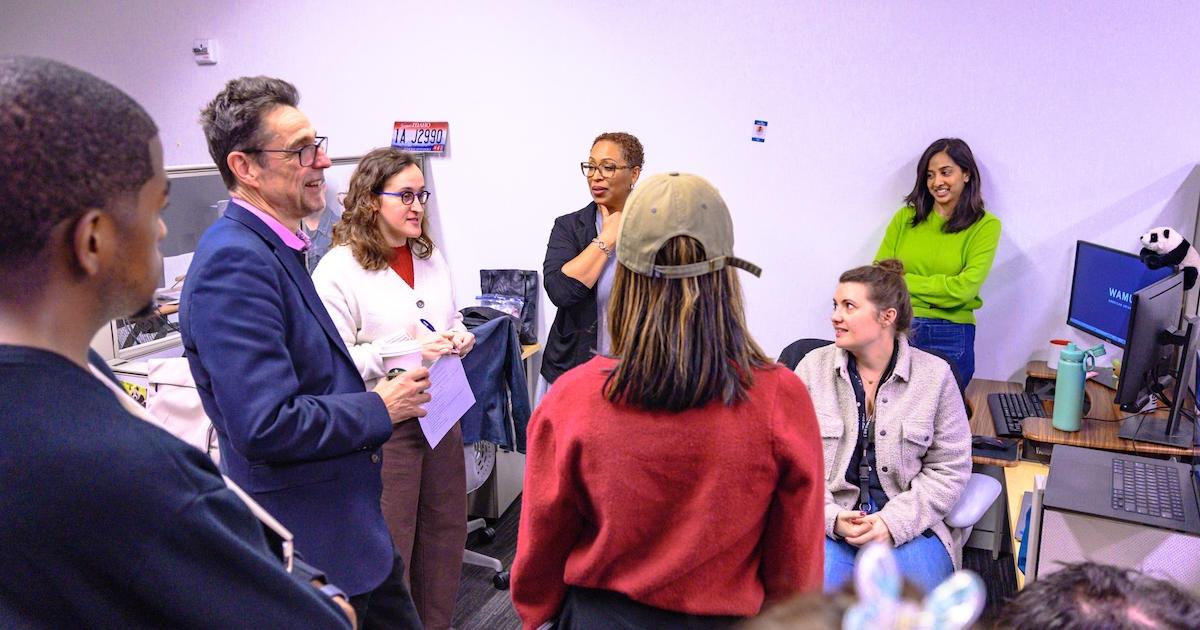 WAMU chief content officer Michael Tribble called 1A a “national megaphone” for the station’s journalistic mission.
“What we do with The Politics Hour locally is a lot like what we do nationally with 1A,” Tribble said. “It’s bringing people to the table to have conversations about important things and allowing our audience to ask questions.”
The broadcast also brings AU students directly into the newsroom. Two undergraduates—Zoe Kazanzides, SPA /BA ’27, and Xavier Stokely, SOC/BA ’28—are interning with the production team this fall.
A self-described “NPR backseat baby,” Kazanzides grew up listening to 1A alongside her mother. When she arrived at AU, she sought out ways to join the staff, starting as a volunteer before earning an internship.
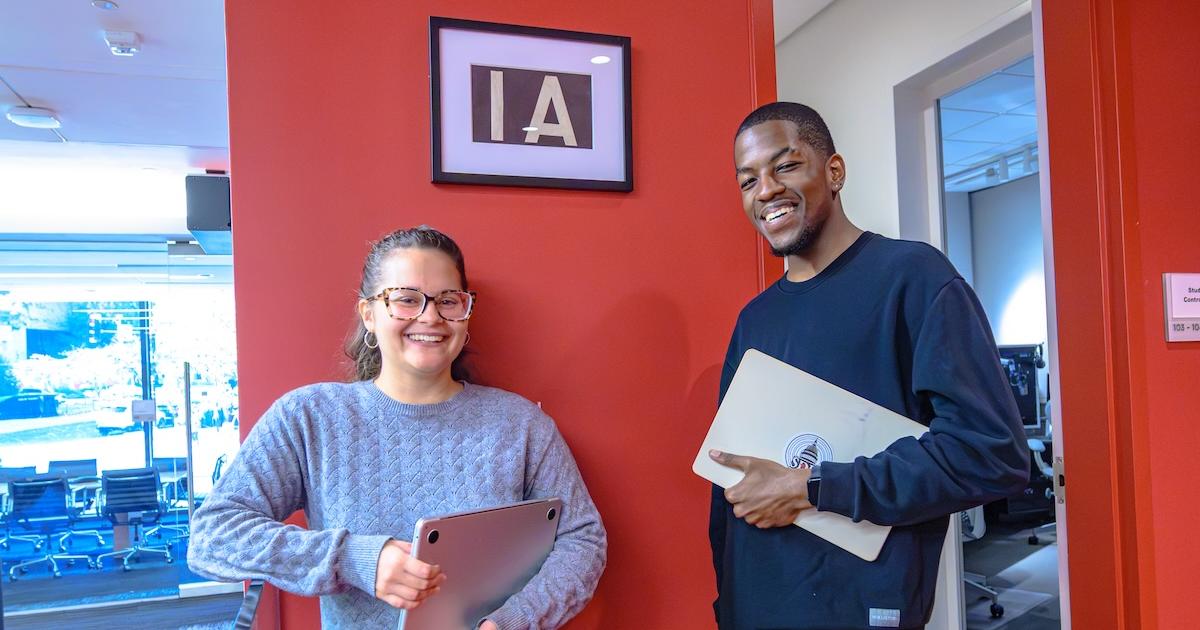 “I’m interested in working in the news, so this has just been such a valuable hands-on experience for how to write a script, how to contact guests,” she said.
During his two semesters with the show, Stokely, who plans a career in television broadcasting, has collaborated with producers on segments exploring “looksmaxxing,” the rise of “tradwives,” and how to safeguard mental health amid relentless news cycles.
Pitching and producing for a daily national show has sharpened his reporting instincts.
“As college students, there are so many questions that we have,” he said. “1A does a really, really good job at answering so many of life’s questions.”