
Scrums, Rallies, and Byline Credits: How Battleground Michigan Put Eagles on the Front Lines
Two days before notching a historic victory as the first Muslim elected to the US Senate, Democratic candidate Abdul El-Sayed walked into an empty banquet hall in Hamtramck, Michigan, and greeted Amy Dacey, SPA/MA ’95, executive director of American University’s Sine Institute of Policy and Politics, with a warm hug.
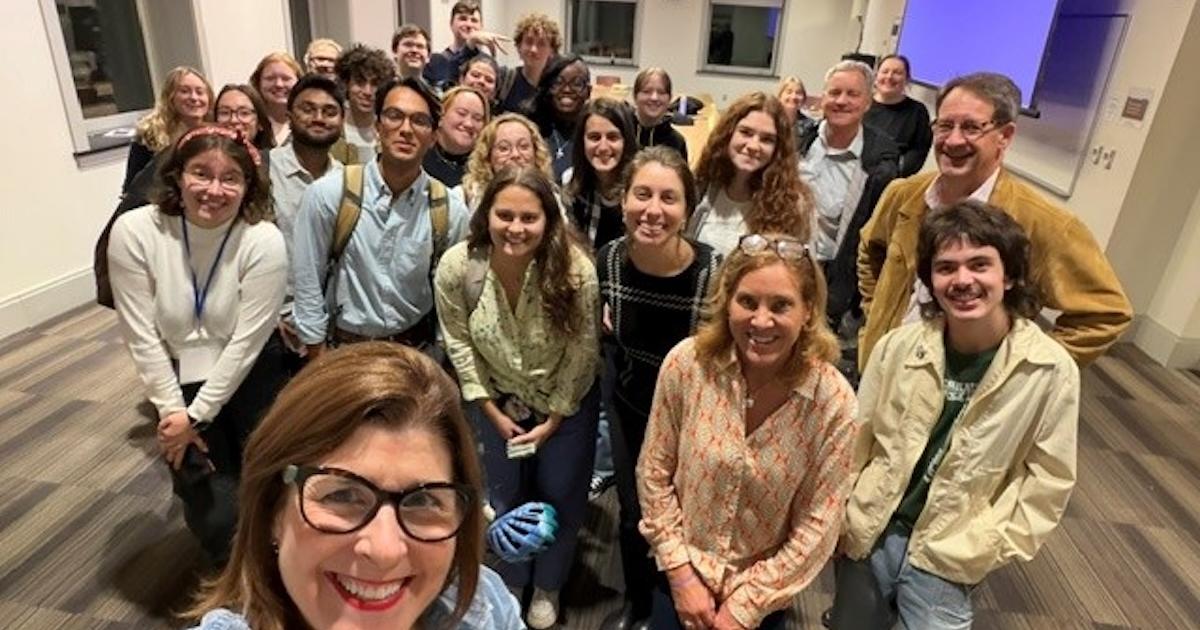
In the final sprint of the campaign, he spent the next 30 minutes fielding questions from 23 Eagles on the ground in one of the midterm cycle’s most consequential battlegrounds as part of a hallmark experiential learning course run jointly by the School of Communication and the School of Public Affairs.
“Too often we talk about a big tent, but we push everybody in the corner of their tents and then go and pander to them—rather than bringing everybody together under the idea that no matter who you are, you need housing, you need good schools, you need health care, [and] you need to be able to afford your gas and your groceries,” El-Sayed, a 2019 Sine Institute fellow and one-time SPA adjunct, told the students following a canvas kickoff with volunteers in the Detroit enclave.
That the physician and former Wayne County health director carved out precious time in the campaign’s final 48 hours to meet with Eagles speaks to the unfettered access afforded by Battleground Michigan. Now in its 10th iteration, the course blends political science with campaign reporting, offering students an inside look at how modern campaigns operate and how the media covers them.
Co-taught by Molly O’Rourke, SPA and SOC executive in residence, and Terry Bryant, SOC Hurst Senior Professorial Lecturer—with help from Dacey and Marina Lopes, SOC adjunct professorial lecturer—the course is by application only. Travel and lodging are fully covered by the Stoll Family Fund for Student Experience, funded by Adam Stoll, SPA/BA ’95, ensuring the class remains accessible to all selected students.
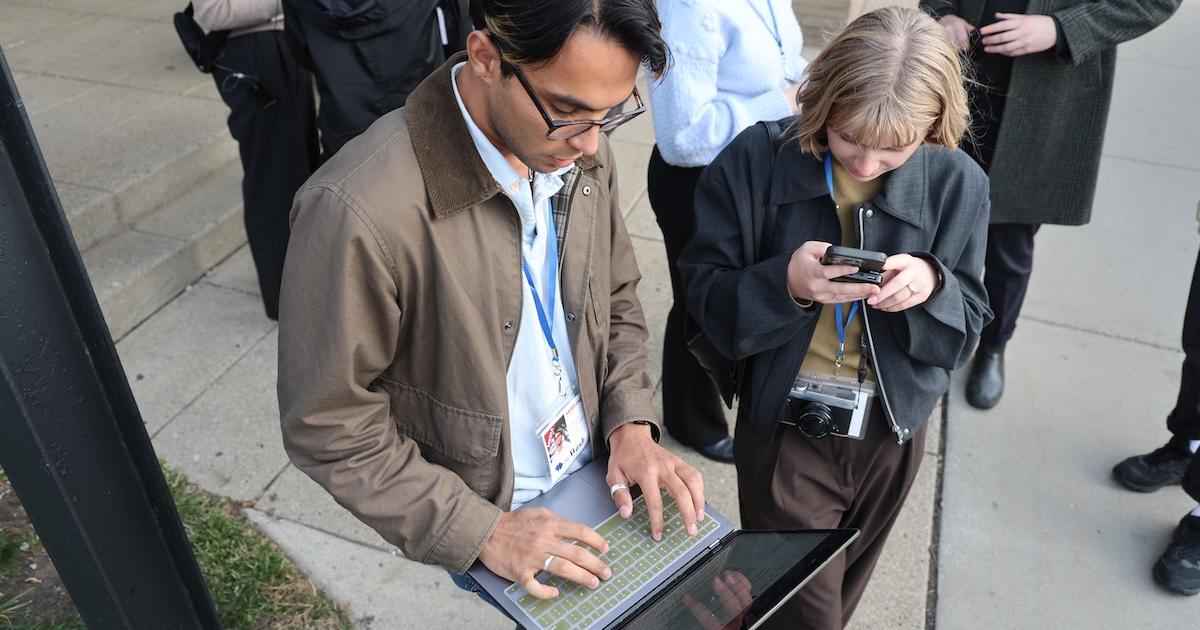 Over four whirlwind days, students covered rallies, interviewed more than 500 voters, and attended private briefings with political operatives on both sides of the aisle through the lens of Michigan’s hotly contested Senate and gubernatorial races. Their on-the-ground reporting even contributed to coverage in The Washington Post and other national outlets.
Then, the campaign trail threw them a live curveball.
Journalism major Ellie Knudson, SOC/BA ’27, was talking to voters inside a church on the outskirts of Detroit when her professors messaged the group, instructing them to leave immediately.
Rushing to a site where a podium was assembled, the students witnessed Representative Haley Stevens, SPA/BA ’05, CAS/MA ’07, take the stage to deliver a stunning endorsement of El-Sayed’s Republican opponent, Mike Rogers.
Eagles quickly went to work interviewing Stevens and reporting the breaking story, earning four students contributing writer credits in The Washington Post for their coverage of the endorsement and its fallout. Among them was Zoe Kazanzides, SPA/BA ’27, whose reporting also aired on WAMU 88.5’s 1A, where she has interned since 2024.
“We were all happy to celebrate together and thankful that we could be on the ground when the news broke,” Kazanzides said. “Being able to contribute our own unique interviews was a wonderful experience.”
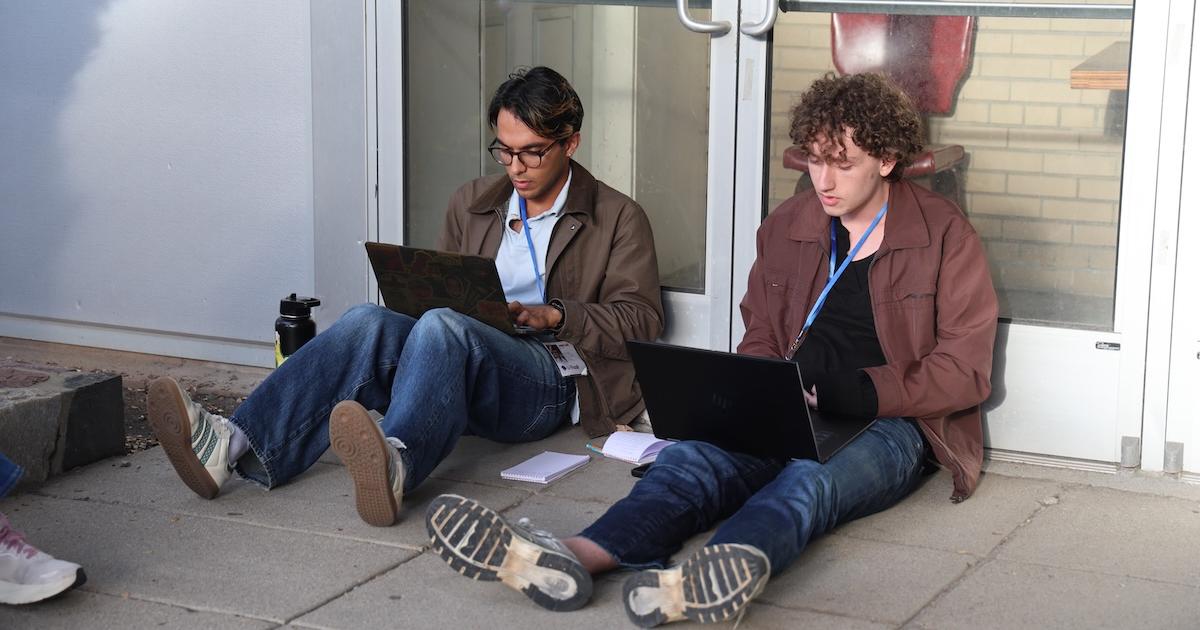
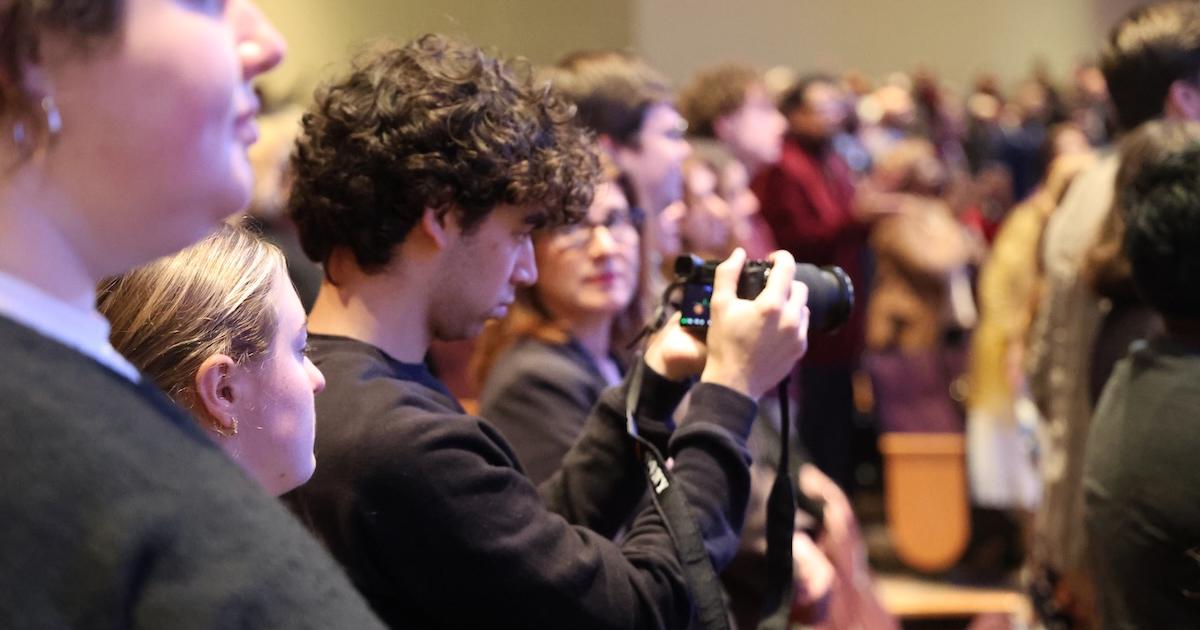 Public relations major Maya Heller, SOC/BA ’28, attended El-Sayed’s subsequent press conference addressing the endorsement, often finding herself sitting on curbs with her laptop alongside national press corps veterans.
For Heller, dodging elbows in media scrums to capture photos and notes cemented her career ambitions. “The fast-paced environment solidified for [me] that [I want] to go into campaign work and be in those high-stakes environments,” she said.
Beyond breaking political developments, the course forced students outside their usual media and political bubbles. Public relations major Camryn Petersen, SOC/BA ’27, attended a Detroit GOP rally headlined by Rogers and Speaker of the House Mike Johnson (R-LA). Talking to voters in line opened her eyes to motivations and voting patterns she had not previously encountered.
Kazanzides echoed that shift.
“At first, interviewing voters pushed me out of my comfort zone, but quickly, I was more than happy to strike up a conversation,” she said, recalling conversations ranging from a swing voter wrestling with high consumer costs to attendees who offered hugs and gratitude for stopping to listen. “Battleground Michigan has been my favorite class at AU.”
 For Harry Walton, SPA/BA ’27, a political science major and fellow in AU’s Project on Civic Dialogue, conversations outside a rally for Rogers and Republican gubernatorial candidate John James presented raw, challenging realities.
“Interviewing voters outside the rally was particularly meaningful,” Walton said, noting instances of open Islamophobia among some people he spoke with. “Being exposed to that was important, because—to paraphrase El-Sayed—this is only the symptom of a larger problem in our political culture. Theorizing harm, hate and inequality is different from seeing it manifest. I feel I can better imbue anti-Islamophobia and anti-hate broadly into the theoretical frameworks taught in the classroom.”
That dual exposure—marrying classroom theories with street-level realities—has defined the program since its founding in 2008 by SOC journalist in residence Lynne Perri and the late SPA professor and pollster Dotty Lynch. Originally conceived to cover early primary states, the course took students to every New Hampshire presidential primary starting in 2008, later expanding to South Carolina in 2020 and Virginia in 2021 to examine varied electorates and off-cycle races.
“The class is a great example of AU’s distinct approach to experiential learning,” O’Rourke said. “Students build a strong foundation in campaigns, elections and news reporting in the classroom, then they take that knowledge into the field and put it into practice. It’s an exceptional opportunity to not only develop their skills but also pursue topics they’re passionate about.”
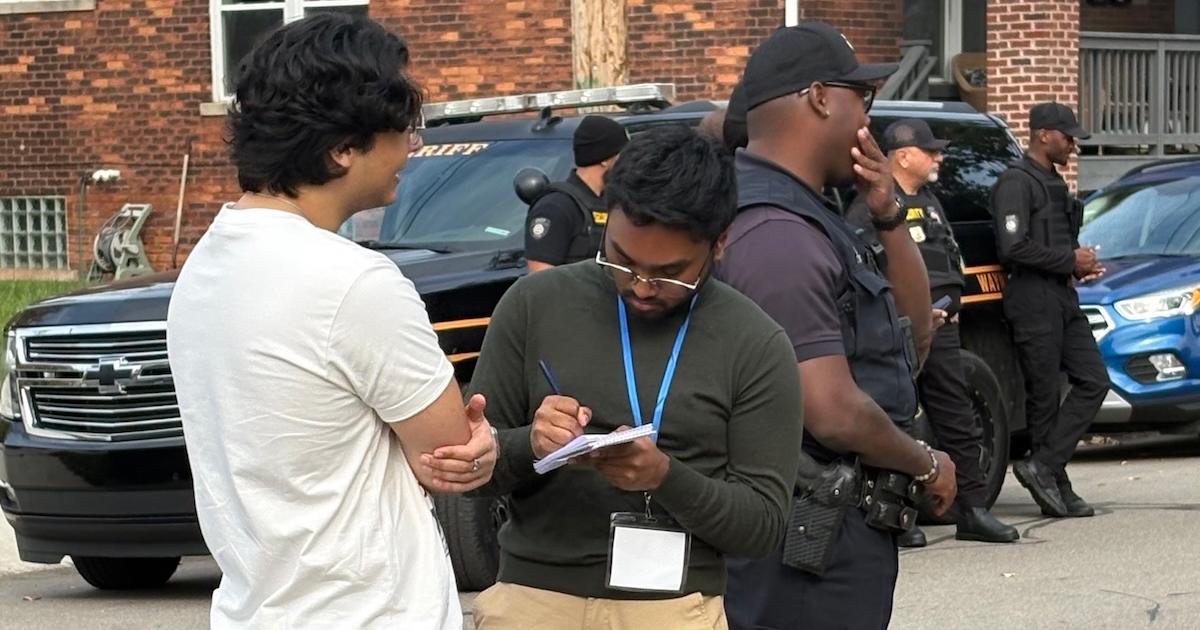 For public affairs students like Robyn Jennings, SPA/MPA ’27, stepping into shoe-leather reporting unlocked a new appreciation for the craft.
“It was incredible ... to learn the beauty of journalism,” Jennings said. “I learned how to speak with people on the street and get them to know that their voice is heard and that people are interested in hearing their opinions related to politics and the state of the country.”
That multidisciplinary literacy is precisely the goal, Dacey said.
“Giving students firsthand exposure to campaigns is a unique opportunity at AU. By meeting operatives, journalists, community leaders, campaign managers, candidates, and election officials, they get to experience the full scope of campaign work. I know they can carry this invaluable experience forward—not just into political careers, but into whatever path they choose.”