
Eyes on the Earth
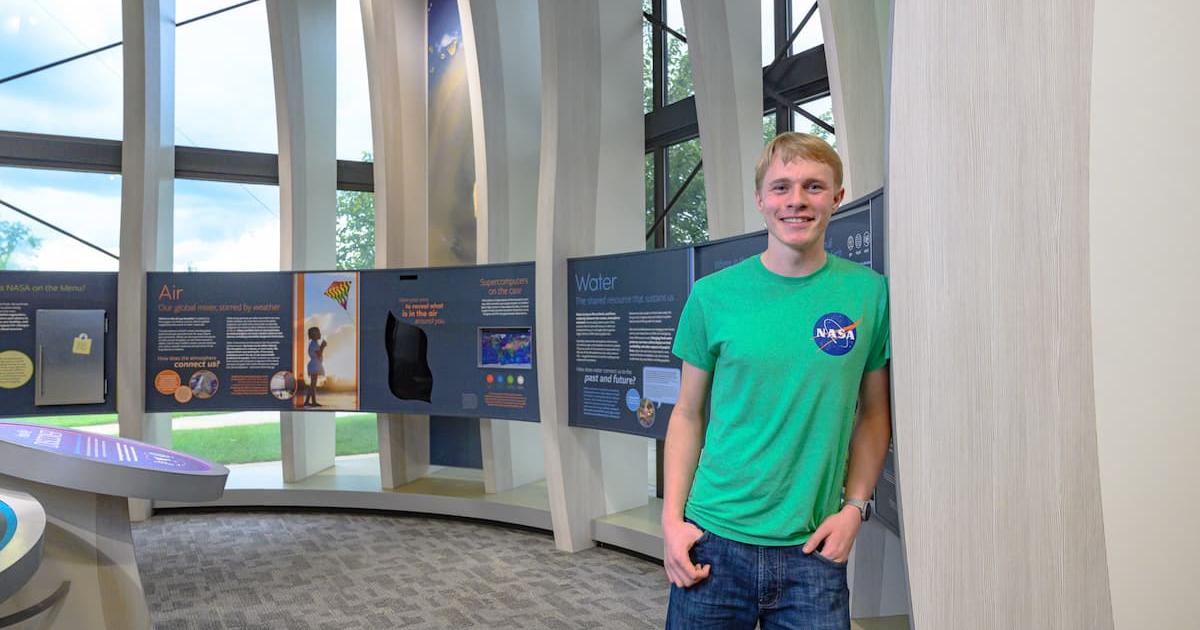 During spring break, while working through a take-home midterm, Carter Zembrzuski’s phone rang. On the line was the program manager for NASA’s Student Airborne Research Program (SARP), calling to congratulate him on his acceptance.
There was just one catch: The Rockville, Maryland, native had been selected for SARP’s West Coast cohort.
An avid cyclist, Zembrzuski, CAS/BS ’27, had originally applied assuming the research opportunity was based locally in Washington, DC, where he could simply commute by bike.
“I was kind of shocked,” Zembrzuski said. “I went back to the website and was like, ‘Oh, there’s two cohorts: East Coast and West Coast.’ But I was excited. I told my research advisor [chemistry professor Matt Hartings], ‘Good news: I got into the program. Bad news: I’m going to be away all summer.’ He really encouraged me to take it.”
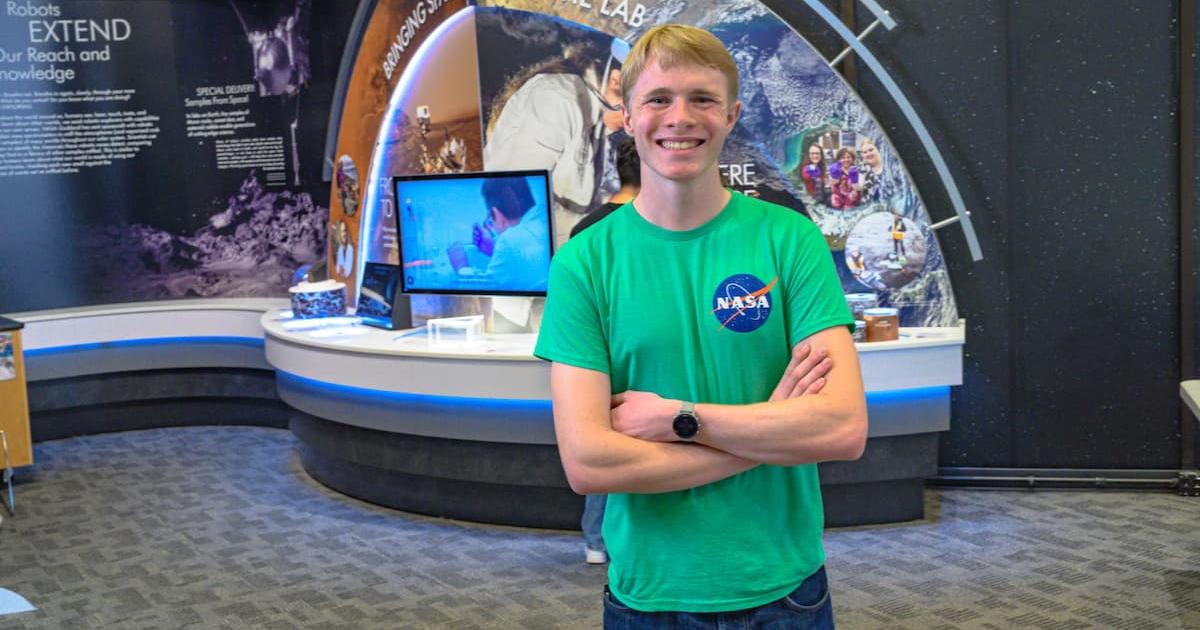 With an acceptance rate under 10 percent, Zembrzuski became the first AU student selected for the prestigious summer program.
The eight-week experience kicked off with two intensive weeks in Houston, uniting both cohorts for coding workshops and daily lectures from Earth scientists, astronauts, and TV meteorologists. Students also embarked on ground-truthing missions across Texas research stations, conducting soil moisture analysis at a University of Texas at Austin ranch and visiting the Texas Water Observatory.
A defining thrill came aboard NASA’s airborne scientific fleet. Flying on reconfigured aircraft—including a Gulfstream V outfitted with massive remote-sensing instruments—Zembrzuski helped collect Earth observations from 30,000 feet while sitting in the very seats occupied months earlier by the Artemis II astronauts following their Pacific splashdown.
From Houston, Zembrzuski headed to San Diego State University to conduct independent research within the terrestrial ecology group under SDSU faculty mentor Dan Sousa and graduate mentor Sam Madonia. Focusing on environmental contamination, he titled his project “Assessing the Potential of Imaging Spectroscopy to Detect Agricultural Microplastics in Soils with Varying Clay Composition.”
Put simply, Zembrzuski said: “Can we detect microplastic-contaminated fields with planes and satellites?”
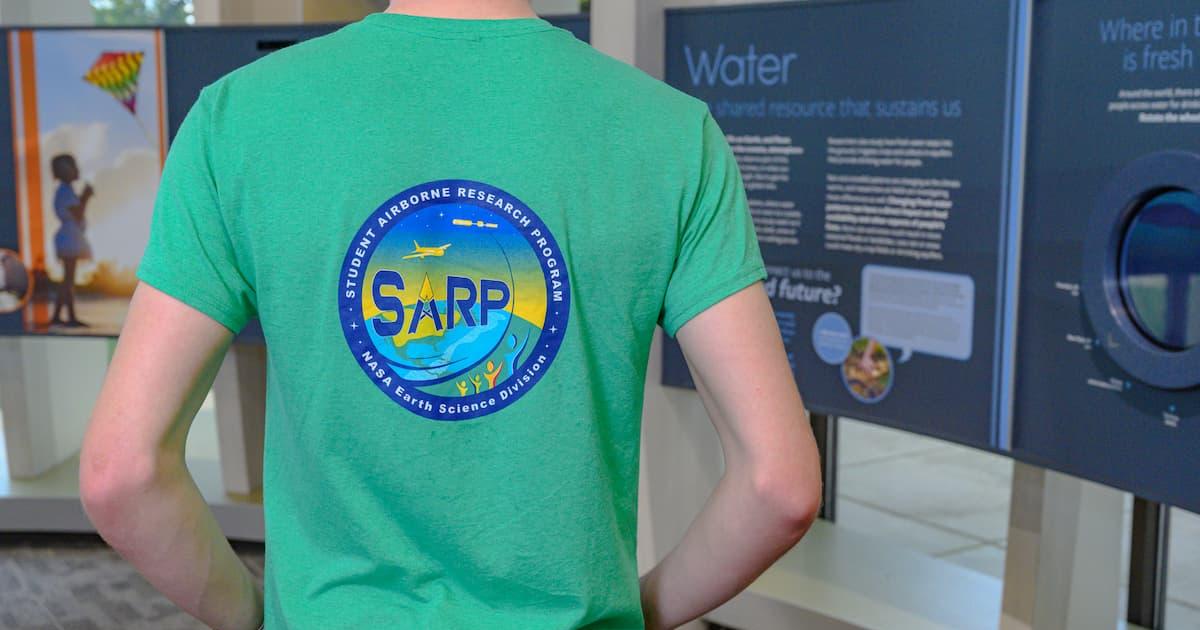 In the laboratory, he ran roughly 400 spectroscopy measurements across synthetic and controlled soil samples with varied microplastic concentrations. He then paired those ground-level spectral signatures with public remote-sensing data captured from NASA aircraft and orbiting satellites to determine whether the contamination could be identified from the sky. At the close of the summer, he presented his findings during a two-day symposium broadcast across both coasts to NASA scientists, university mentors, and headquarters officials.
“When I first got there, I was like, ‘This is kind of cool, but I don’t know if this type of science is what I really want to do,’” Zembrzuski said. “By the time I was presenting my research, I could see myself doing this for the rest of my life.”
Long before he took to the skies with NASA, however, Zembrzuski’s interest in science began on the ground with a personal environmental choice. He’s been a dedicated vegetarian since fifth grade, driven early on by curiosity about how everyday human choices ripple across natural ecosystems.
After earning an associate’s degree from Montgomery College, he transferred to AU to study chemistry. He was drawn by the campus community’s commitment to sustainability and small STEM classes where students work closely alongside faculty mentors.
While AU kept him grounded close to home, leaving the DMV for the summer taught Zembrzuski practical lessons he plans to carry forward as he prepares for graduate school and a career in research.
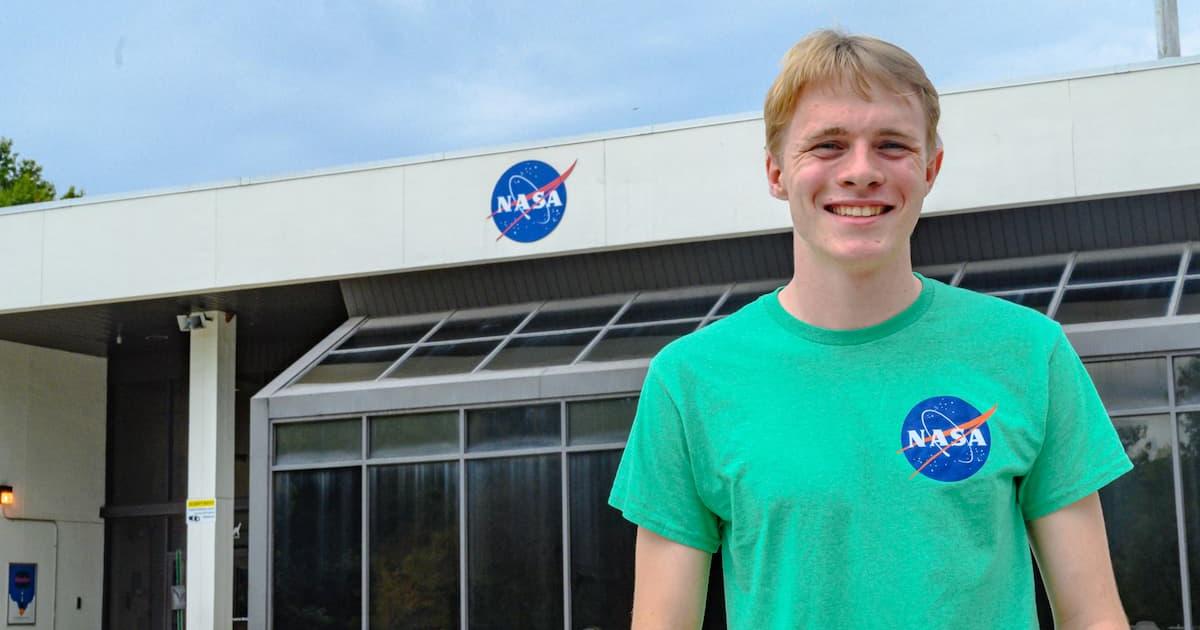 He discovered that advocating for oneself and reaching out early pays off. Sending a polite email to clarify application qualifications demystified the process and made his name stand out among hundreds of candidates. When requesting recommendation letters, he advises securing professors who understand your overall work ethic and problem-solving drive, rather than just those who rewarded you with the easiest grade.
“If they know who you are and how you work, they likely want you to succeed just as much as you want yourself to succeed,” he said.
Adapting to the unexpected—whether troubleshooting flat bike tires across San Diego or adjusting data models on the fly—also taught him that true scientific resilience is built outside the lecture hall.
Back on campus, Zembrzuski is channeling that high-altitude perspective into his coursework, confident that tackling the planet’s biggest challenges starts with a willingness to explore uncharted territory.