
From Grassroots to Capitol Hill: AU Senior Selected as Newman Civic Fellow
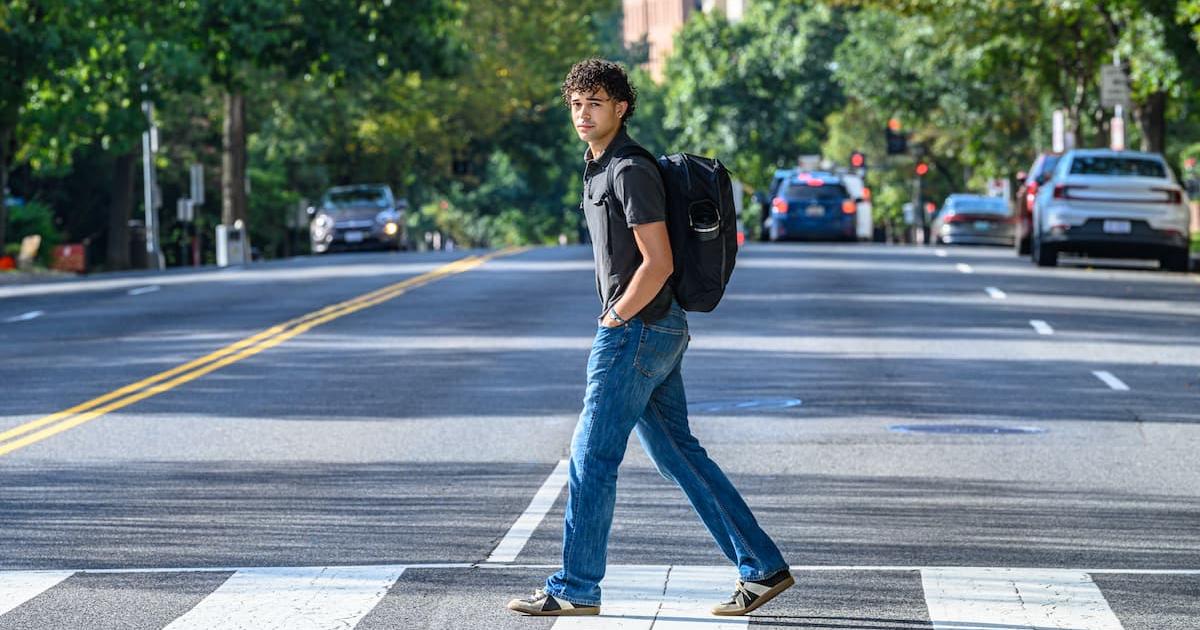 Owain Squance, SPA/BA ’27, came to American University to learn how to drive real-world change on the ground.
Hailing from San Francisco, the political science major saw no better place to jump into action than the nation’s capital. “That’s why I came to DC. I knew I wanted to be around politics,” Squance said. “I wanted to be where things are happening so that I could be part of it.”
At AU, Squance found both a close-knit campus where professors and peers know his name and direct access to civic impact across the District and on Capitol Hill.
His sustained commitment to community engagement earned him the 2026–27 Newman Civic Fellowship, a yearlong program that cultivates student problem-solvers at Campus Compact member institutions. Campus Compact, the nation’s largest and oldest higher education association dedicated to civic and community engagement, selects fellows based on their potential for public leadership and collaborative community action. Nominees are put forward directly by their university leadership.
Amanda Harrison, assistant director of AU’s honors and scholars programs, said Squance exemplifies the fellowship’s spirit.
“He seeks out opportunities to engage with communities, learn from others’ experiences, and contribute where he can,” Harrison said. “That combination of intellectual curiosity and authentic concern for others is what makes him so deserving of this recognition.”
Over the next year, Squance will tap into a national network of fellow student leaders and resources to sharpen his strategies for social change. He will receive one-on-one leadership coaching from a local mentor, participate in skill-building sessions, and have the opportunity to apply for a $1,500 mini-grant to fund a social impact project. In November, he will travel to the three-day annual Newman Fellows convening.
“I’m really excited to be around other impact-driven young people across the country,” Squance said. “I hope to build a network that can help me implement even more change in the future.”
Squance spent two years in AU’s DC Community Impact Scholars Living-Learning Community, translating scholarship into grassroots action. Through the program, he led a community-based participatory research project to mobilize youth around farmworkers’ rights.
He has also worked closely with Student-Athletes Organized to Understand Leadership (SOUL), a Southeast DC nonprofit that supports local youth through academic, interpersonal, and career development. Through SOUL, Squance secured a community relations internship with Major League Soccer’s DC United, helping coordinate outreach and events with local partners like DC Scores.
Last summer, he volunteered with the Build Healthy Places Network to draft policy briefs for congressional offices, distilling research aimed at improving public health access in rural communities.
“Rural communities often lack major funding because residents earn less, so advocating for strong, informed change is vital—especially around healthcare access,” Squance said. “The goal is to show the true social and economic value of investing in community health.”
This fall, Squance is working with the Democratic National Committee to mobilize voters ahead of the November elections, building on prior campaign work for congressional candidates and DC’s congressional delegation.
Through each experience, Squance has come to believe that sustainable progress depends on listening first and prioritizing the community’s stated needs.
“The number-one thing is to be a good listener,” Squance said. “It’s important to understand the landscape before taking action, and to make sure your work aligns with what the community actually wants. Never assume anything. Work with the community, not for them.”