
The Architect of Social Change: Dana Fisher on Climate and Activism
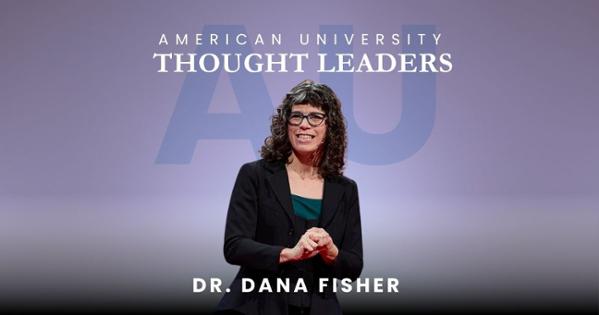
In 2021, Dana R. Fisher was heralded by PBS as "One of America's Most Prescient Political Thinkers" in a piece on the Changing Politics of Climate Change. However, Fisher’s impact goes well beyond climate. As a prognosticator of social change, Fisher’s storied career also spans the topics of policy, democracy, and community resilience through activism, leadership and collaboration.
A Sociologist of Systems
At her core, Fisher studies the political mechanisms that drive our society. Her research is an exploration into how different social actors—from grassroots activists to high-level policymakers—compete and collaborate to move the needle on major issues related to democracy, civic engagement, activism, and climate politics.
In one aspect of her research, Fisher is looking at the ways communities are responding to and recovering from extreme events: floods, heat waves, wild fires, and hurricanes. From a climate policy perspective, she is helping to map the global participants, comparing policy on a larger scale, and collaborating closely with colleagues around climate communications here in the US.
Fisher is deeply focused on how research outcomes benefit society. As an example, she and her team are applying their findings to inform the ways organizations are addressing workforce development. She is also doing actionable on the resistance movement, determining what is motivating people to participate and helping organizations behind this movement be more impactful and successful.
Fisher explains that conducting research based on strong science is important, but delivering those findings into the hands of the practitioners and policy makers to directly inform the work they are doing is the ultimate goal. Above all, she states, researchers have to be nimble to rise to the evolving needs of society.
Answering the Call for the Future Needs of Society: The CECE Mission
Fisher’s role at AU’s Center for Environment, Community & Equity centers on interdisciplinary work, which means breaking down the walls between different fields of study to match the complex needs of the future. Since arriving three years ago, she has built the CECE into a hub where researchers from vastly different backgrounds solve challenges that they wouldn't otherwise tackle together.
Fisher facilitates these teams to conduct research at the nexus of community, environment, and equity, ensuring that high-level data is translated into products such as public-facing reports and events that reach a broad audience. This approach has already yielded strong results, such as the Faculty Research Incubator Program, which provided seed funding and support to faculty affiliates who then secured a prestigious grant from the National Science Foundation. Fisher is also dedicated to mentorship, running the AmeriCorps-funded Data Corps Fellowship Program where graduate students gain field experience in data collection and evaluation centered around disaster relief and community resilience.
Predicting the Unpredictable: Technology-Fueled Responses to Save Lives
One of Fisher’s most ambitious new projects showcases this cross-departmental strategy through an all-woman team comprised of Fisher, a computer scientist and two scholars from the department of environmental science from AU. The project involves designing an app that uses AI to predict extreme events and--through the app’s data--the capacity of civic groups to respond to them. The project is designed to be deeply equitable, providing critical information resources to lower socioeconomic communities and tracking their potential displacement and recovery outcomes to ensure no one is left behind after a disaster hits.
As Fisher proudly states, “This work is thrilling. I see this as laying the groundwork for broader research we can do to really help the world. If we are successful in proving our concept, we will pilot it in DC, then expand nationally.”
The Network Effect
Fisher rejects the idea of the "lone researcher," attributing her success to a career foundation built on rigorous publishing and a vast, supportive network. Whether working with federal government partners, local community leaders, or like-minded colleagues, she views science as a collective effort rooted in persistence and collaboration. For Fisher, the work is never just about the data; it is about the lives that data can save. By translating complex social patterns into actionable strategy, she is ensuring that when the next wave of change—or crisis—hits, our communities are not just reactive, but ready to lead.
_________________________________
Dana R. Fisher has authored over 80 peer-reviewed articles and book chapters, has written seven books, and serves on the editorial boards of prestigious journals. Professor Fisher and her insights have been featured across top-tier broadcast programs and media. You can watch her compelling 2024 TED Talk, “How to be an Apocalyptic Optimist,” viewed globally more than 500,000 times, which explains how to cultivate resilience to catastrophe in yourself and your community—and how to rally for change in the face of seemingly intractable problems. Learn more about Professor Fisher and her impactful research at www.danarfisher.com.