
From Behavior Specialist to Harvard Scholar: Sahar Elbeih’s CDA Journey
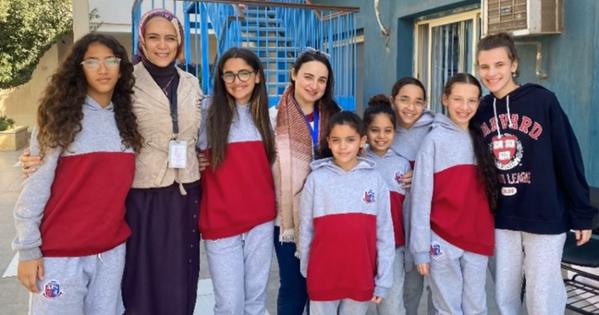
Sahar Elbeih, CDA ’24, is, “a strong believer that child development is the foundation for all learning and development for every child.” Working as a behavior specialist in international school settings in Egypt only deepened that conviction. “Understanding the emotion behind the behavior is more important than strictly following the behavior policy of the school or determining the consequences.” It was this holistic perspective that led Elbeih to the Child Development Associate (CDA®) program at American University’s Baker School of Education — and, ultimately, attending the Harvard Graduate School of Education.
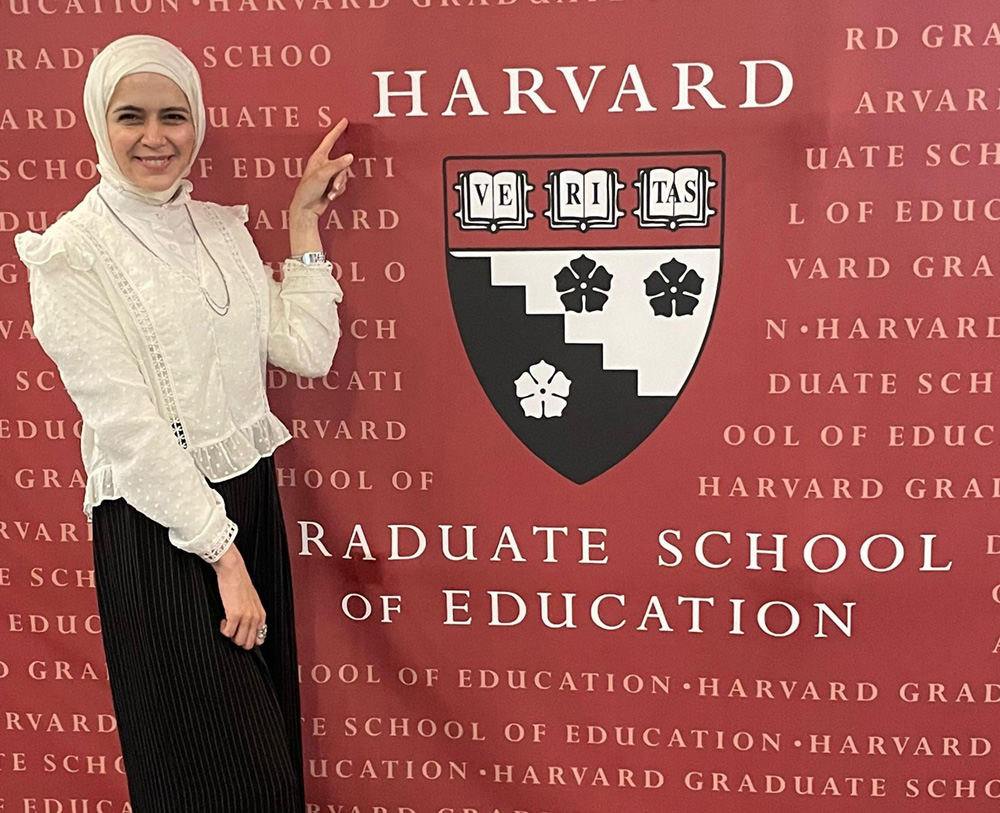 A recommendation from a Harvard-educated friend first put AU’s CDA program on Elbeih’s radar. But what sealed the decision was the program’s flexibility. “It can be accessible to every international candidate like me, with different schedules and responsibilities,” she explains.
She also appreciated the program’s comprehensive scope, which covered social-emotional learning, physical development, language, and family partnerships. The biggest insight she took away was the interconnectedness of those elements. “Each one has to happen not separately — they have to happen in combination together,” she says.
As a behavior specialist, Elbeih had seen it firsthand: children with autism or ADHD who received early support consistently fared better in later years. “Whatever the support they received, it’s always affecting and influencing their future grades and behaviors.” The CDA gave her the comprehensive framework to understand why — and the confidence to take her studies further.
“The CDA program was one of the inspirations to pursue my master’s and learn more about the holistic, comprehensive development of a child, and how family collaboration is one of the most important factors behind this.” She enrolled at Harvard’s Graduate School of Education in September 2025, completing her master’s degree in human development and education in 2026.
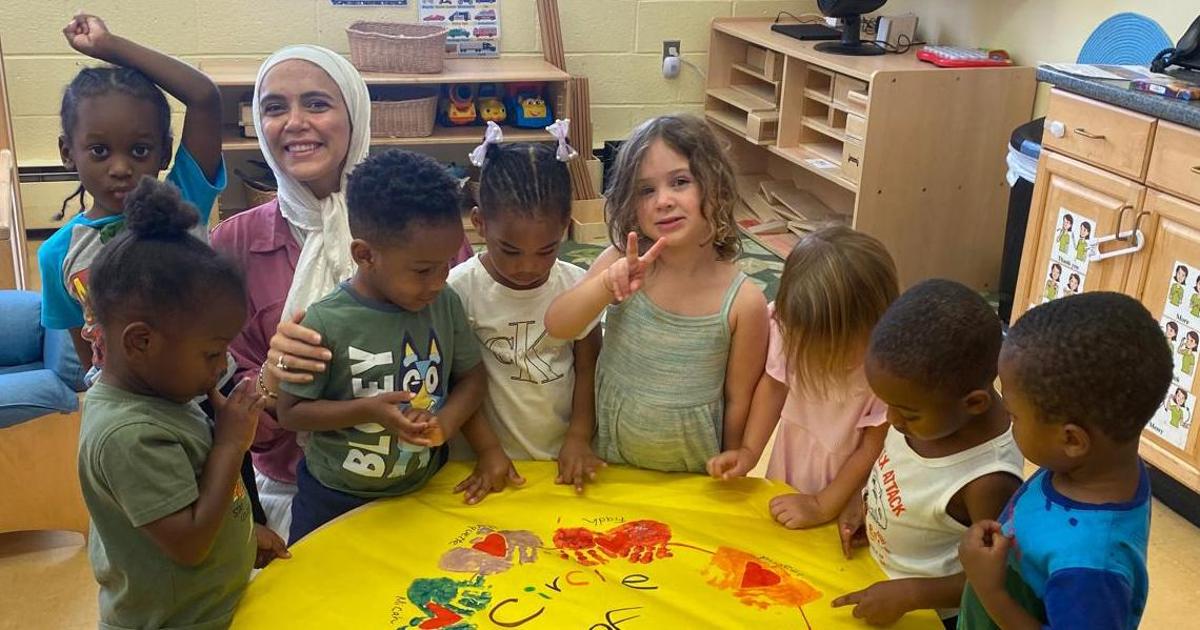 The program also opened another unexpected door. During the summer of 2024, Elbeih volunteered part time at Easterseals, which provides education, healthcare, and employment services, where she worked with children ages 3 and 4. “It was valuable because I was able to observe and explore how many of the child development principles and practices I learned in CDA were being applied in real life,” she says. “Seeing the connection between theory and practice strengthened my understanding of child development and inclusive education.”
Now awaiting an optional practical training work authorization as an international graduate, Elbeih is looking toward a future at the intersection of research, policy, and practice. Her goal is ambitious in scope: “Contributing to designing programs that can support every child with diverse needs, diverse communities, and cultural differences — because being culturally responsive is one of the factors behind the success of any program.” She sees this work happening simultaneously in schools, counseling agencies, and family support systems.
Back in Egypt, Elbeih observed, “In my old generation, people did not give any significance to the importance of early childhood [education].” Changing that perception — in Egypt and beyond — is a driving motivation of hers.
 Her advice to anyone considering the CDA program is grounded in the same philosophy that has guided her career: make it personal. “I would always advise them to set small daily goals and connect the material to daily interactions, because it makes it more meaningful when you’re always connected to human relationships.”
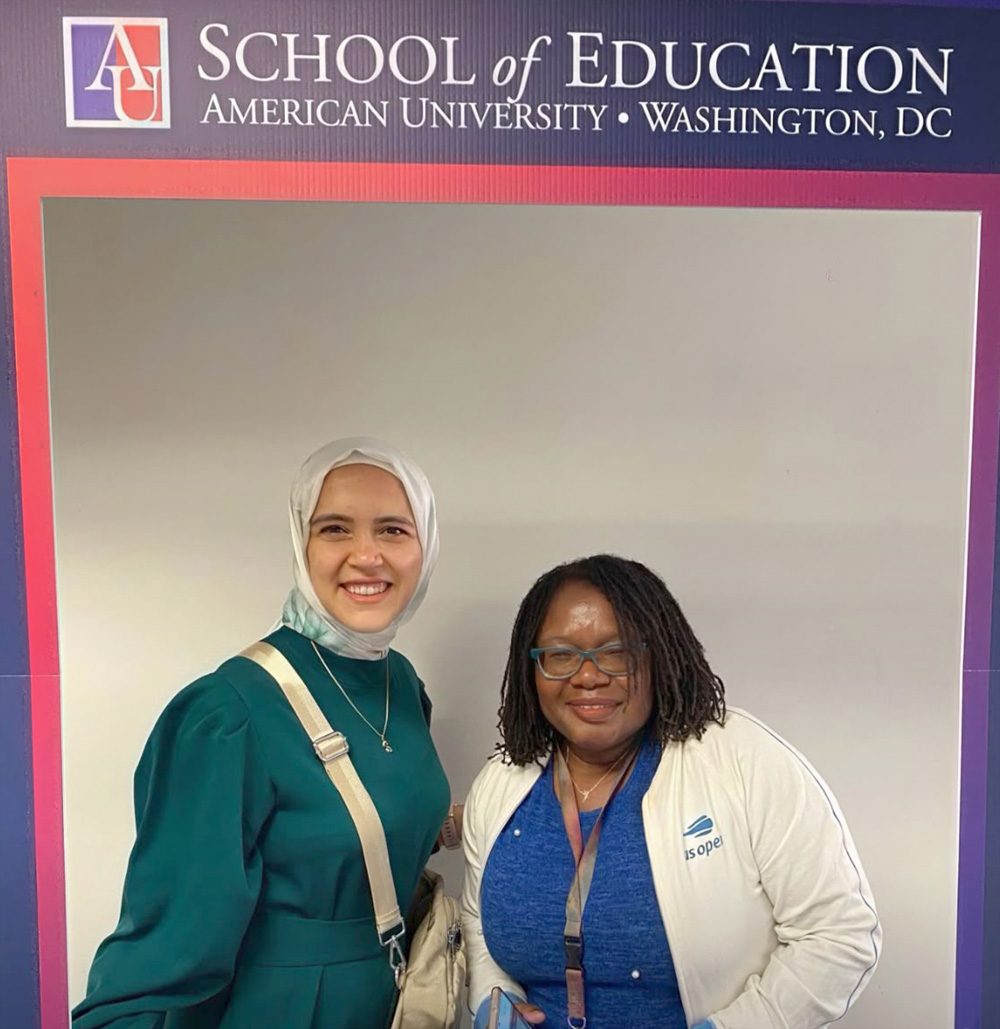
She also took a moment to thank Professor Toks Fashola, calling her one of the best mentors she encountered in the program. For Sahar Elbeih, who built her career around understanding children from the inside out, the CDA was, as she puts it, “a turning point in my life.”