
Associate Dean Secures NSF Grant to Advance AI Literacy in DC Schools
The American University Baker School of Education has been awarded a $25,000 supplement from the National Science Foundation to develop artificial intelligence (AI) professional learning programs for teachers and students at Friendship Public Charter School, one of the largest charter school networks in the District of Columbia.
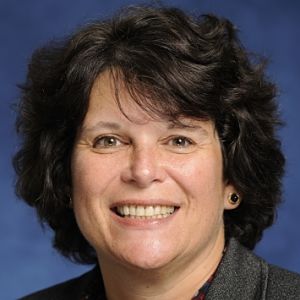
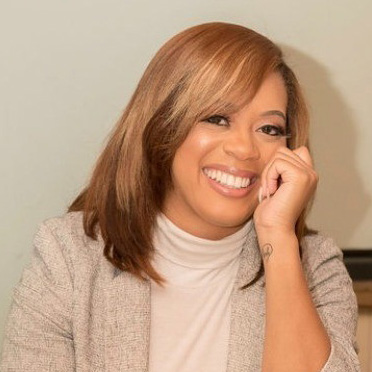 Dr. Carolyn Parker, Associate Dean for Research, Programs, and Partnerships at AU’s Baker School of Education, will lead the initiative in collaboration with Dr. Jennifer Beckwith, EdD ’24, now working as Deputy Director of STEM at Friendship Public Charter School. The award, granted in December as a supplement to an existing NSF grant, arrives at a crucial time when educators nationwide are grappling with how to effectively integrate AI into teaching and learning.
 “We know so little about how teachers use AI,” Parker explained during a recent interview. “To really do some research around how they use it after professional learning would be great.”
The project, currently in its planning phase, will focus on providing professional learning opportunities for Friendship teachers on AI teaching tools and their classroom applications. The initiative will also support a group of early-adopter students who have entered the Presidential AI Challenge, helping to cultivate the next generation of AI-literate learners.
Parker noted that the grant allows AU to continue an existing partnership with Friendship Public Charter School, building on previous collaborative work. The partnership represents a significant opportunity to study and improve AI integration in urban education settings.
Beyond the immediate work with Friendship, Parker is exploring the possibility of partnering with AU's College of Arts and Sciences to extend the project’s reach to science teachers, pending budget availability. She plans to approach the initiative as a research project, examining how teachers use AI tools after receiving professional learning and measuring the impact on AI literacy across the school community.
The expected outcomes include enhanced AI literacy among teachers and students at Friendship Public Charter School, student entries into the Presidential AI Challenge, and valuable research data on effective AI integration in K-12 education. Parker is conducting a literature review to identify appropriate measurement tools, noting with some surprise the limited AI integration she observed at a recent science education conference.
Parker was recently at a science conference and noted “I was really surprised at how little AI was integrated into the conference, how little people were presenting about it,” underscoring the timeliness and importance of this work.
This grant represents one of several recent funding successes for the Baker School of Education. Multiple faculty members have secured grants in recent weeks, demonstrating the school's continued research excellence even in a challenging funding environment.
As the project moves forward, Parker will finalize the program’s design and identify target participants for the professional learning opportunities. The initiative promises to provide valuable insights into effective AI integration strategies that could inform practice far beyond Friendship Public Charter School.
For a Baker School of Education committed to innovation and partnership with local schools, this NSF supplement represents both an opportunity to serve the DC community and to contribute meaningful research to the growing conversation about AI in education.