
Smokescreens and Spies in the Cold War
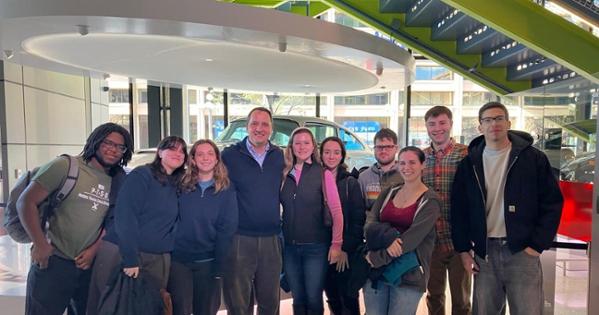
On Saturday, March 28, 2026, The Carmel Institute organized a trip to the International Spy Museum. Professor Fedyashin gave the students a 90-minute tour of the museum’s impressive holdings and introduced the group to how the Cold War stimulated the production of narratives that have profoundly affected contemporary culture.
The visit was an extension of Dr. Fedyashin’s course for history majors and minors in which the students read the memoirs of Stalin’s secretary Boris Bazhanov and used it to deconstruct the twentieth century’s most important ingredients—smokescreens and stereotypes.
The museum fleshes out the story of the Cold War with unique artifacts that reflect the stages of the Cold War and the evolution of national identities of the countries it affected, first and foremost the superpowers. The students explored information collection and the story of the Berlin Tunnel. They heard about the connection between the U-2 program and early space flight. Dr. Fedyashin introduced the group to several cultural figures who came out of the World War Two intelligence field to become American icons, such as John Ford and Julia Child. And the group took some time examining the unique artifacts from Ian Fleming, the author of the James Bond novels.
Museum visits, concert attendance, and study trips have been part of the Carmel Institute’s programming since its inception. As Professor Fedyashin always reminds his students, although our knowledge of the past depends primarily on reading, history must also be walked and seen.