
AU Historian Andrew Demshuk Uncovers Dark Secret that Changes a City’s Legacy
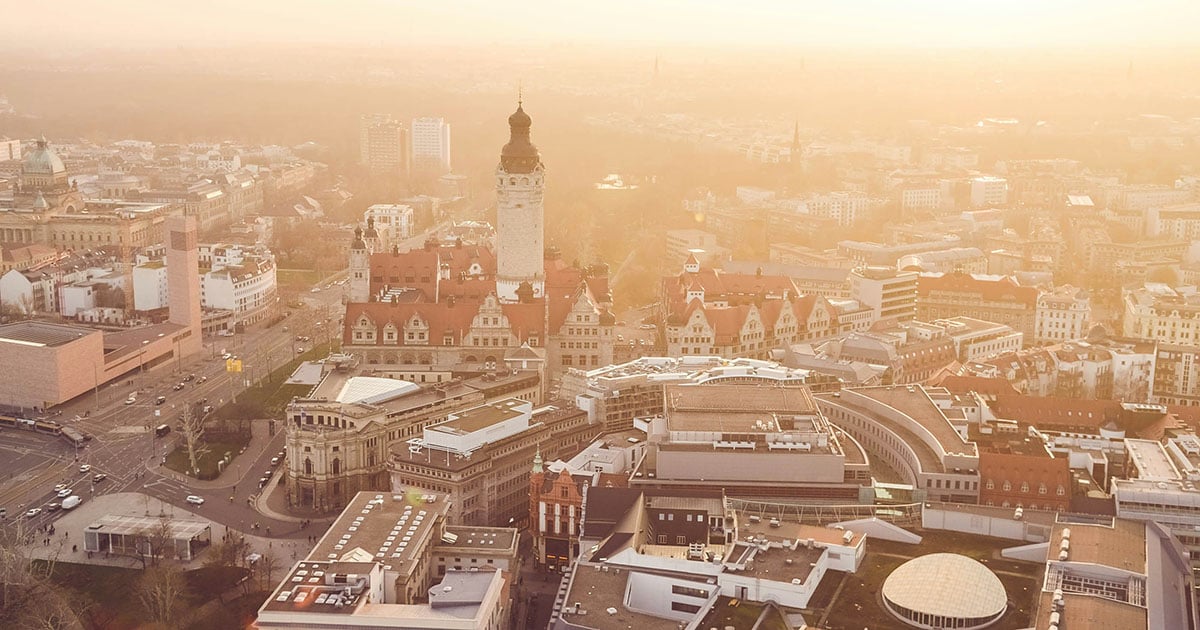
American University History Professor Andrew Demshuk was on vacation in Nice, France, with his seven-year-old son, about to sit down with a chocolate pastry, when an unusual message popped up on his phone.
It was from a journalist from Die Welt, one of Germany’s major newspapers, with a question about a man Demshuk hadn’t thought about in years: Horst Siegel (1934-2020), the former chief architect of Leipzig.
The journalist was investigating plans to name a public square in Leipzig after Siegel, who had helped shape the East German city for nearly two decades. There was a problem, however, and Demshuk had uncovered it years earlier: Siegel had secretly collaborated with the Stasi, East Germany’s notorious secret police.
And apparently, the city of Leipzig didn’t know this.
A Discovery in the Archives
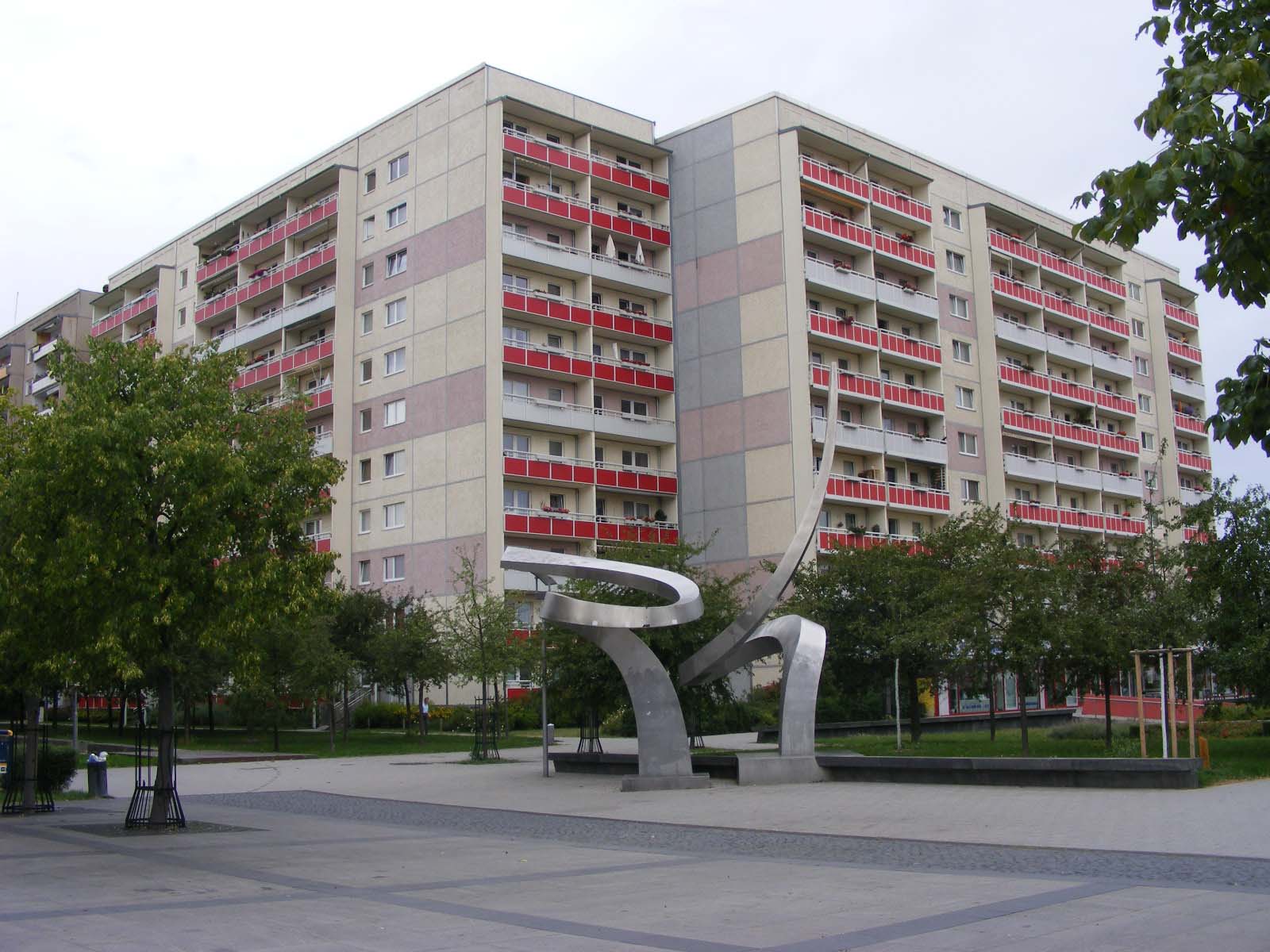
Demshuk first came across evidence of Siegel’s Stasi ties in 2014 while researching Leipzig’s postwar architecture and urban planning. His research focuses on postwar German and Polish history and the individual stories behind larger political developments. His award-winning books include Bowling for Communism: Urban Ingenuity at the End of East Germany and Three Cities after Hitler: Redemptive Reconstruction across Cold War Borders.
Years later, he returned to Siegel’s story, including him in a German Studies Review article examining the lives and motivations of Stasi informants.
The article was cited on Wikipedia, where the Die Welt reporter spotted it. He was unable to access the full article behind a paywall, so he contacted Demshuk to learn more.
Meanwhile, plans for the plaza renaming were already underway. It was going to be dedicated as part of the 50th anniversary celebration of Grünau, a residential district that Siegel had helped design. Siegel’s family was expected to attend, along with a representative of the German federal government. But after Siegel’s Stasi connection resurfaced, the dedication was canceled.
To this day, the square still remains unnamed, and the question of whether it will ultimately bear Siegel’s name remains unresolved.
A Complicated Legacy
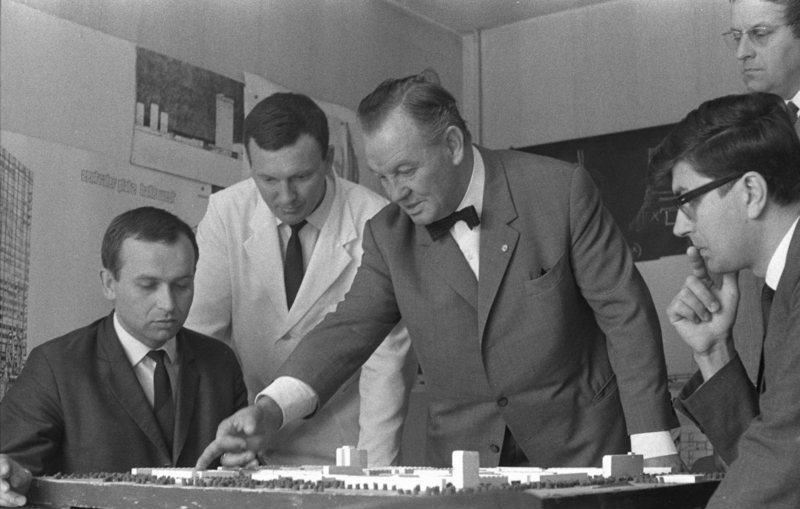
Siegel (center) and architects, 1967. By Bundesarchiv, Bild 183-F0609-0301-001 / Horst Sturm / CC BY-SA 3.0 DE license
Demshuk points out that Siegel’s story isn’t a simple one. Siegel was not a particularly important or high-level informant. And much of what he reported to the Stasi just focused on architectural planning. But he also passed along information about the people around him—whether someone wasn’t working hard enough, for example, or was having marital problems.
The impact of Siegel’s actions is unclear. “We’ll never know what happened to these people because we don’t know what the Stasi did with the information,” Demshuk says.
Siegel’s silence afterward is also important, Demshuk adds. After retiring, Siegel wrote memoirs celebrating his architectural legacy without ever mentioning his work for the Stasi. And when Demshuk interviewed him in Weimar in 2014, he saw no sign of self-criticism or remorse.
“He undermined his own legacy,” Demshuk says. Had Siegel acknowledged the truth, Demshuk argues, the public might have been able to reckon with his Stasi past alongside his accomplishments as an architect. “That doesn't exculpate what he did, but at least there's an honest reckoning.”
How We Reckon with the Past
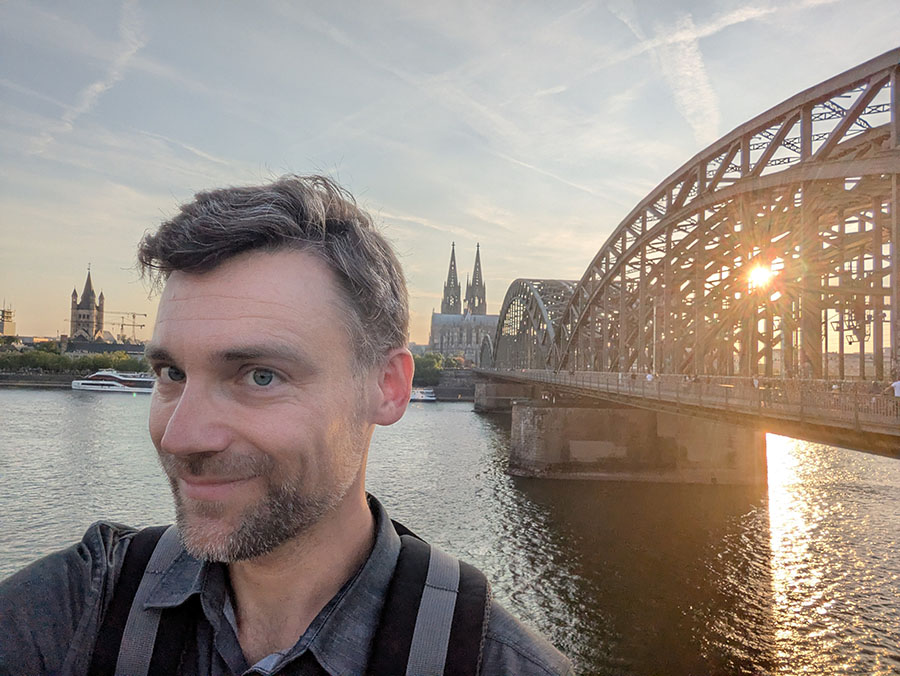
After Leipzig officials learned about Siegel’s history, Demshuk was invited to join historians and city officials for a public discussion. The group agreed that the city needed a more transparent and consistent process for vetting the people it chooses to honor.
But Siegel’s story raises a harder question: What should we do when someone we’ve chosen to honor turns out to have a troubling history we didn’t know about?
Demshuk says there is no single answer. “It has to be case by case.”
If Leipzig ultimately names the square for Siegel, for example, Demshuk believes the city should explain his Stasi involvement, perhaps on a plaque. The point is not to reduce Siegel to the worst thing he did, but to present a fuller history to visitors.
“I don't want to say that Horst Siegel was a terrible person just because he worked for the Stasi,” Demshuk says. “I know he was devoted to his family and to making Leipzig into a modern city in keeping with the architectural outlook of his time. Even if working for the Stasi was a small part of what he did, this is nonetheless an indelible part of his legacy.”
Demshuk sees similar questions much closer to home. In 2017, Washington National Cathedral, just a mile from AU’s campus, removed stained glass windows depicting Confederate generals Robert E. Lee and Stonewall Jackson. Demshuk has followed their fate ever since. After being displayed briefly at the National Museum of African American History and Culture, the windows were returned to the Cathedral and put into storage.
Demshuk would rather see them somewhere the public can grapple with them. When he learned that the windows had gone to the museum, he remembers thinking, “Where better to exhibit them, backlight them, and problematize them?” A public display, he says, could raise questions about who paid for the windows, why they were installed, and what kind of legacy their donors were trying to create.
Putting a piece of history out of sight, Demshuk argues, doesn’t necessarily settle its most difficult questions. In November, he will take his Complex Problems students (seminar: What is Nationalism?) to the National Cathedral to see the replacement windows, which valorize the civil rights struggle in the United States. “Even as my students examine this new reckoning with history, the obscurity of the old windows will be part of the conversation,” he says.
The Siegel episode also made Demshuk think about his own work differently. He had spent years researching Leipzig’s architecture and urban planning. He had read Siegel’s Stasi file and traveled to Weimar to interview him. But Siegel’s secret work wasn’t central to the questions Demshuk was asking at the time. It would take more than a decade—and plans for a public square bearing Siegel’s name—to give that part of his history new historical significance.
For Demshuk, that is the lesson. “Whenever you say ‘we’ve dealt with our history,’ you haven’t,” he says. “It is always an ongoing process. It doesn’t mean you’re keeping alive and awake the skeletons in the closet. It means that you’re interrogating them.”