
The Opportunity to Say Yes
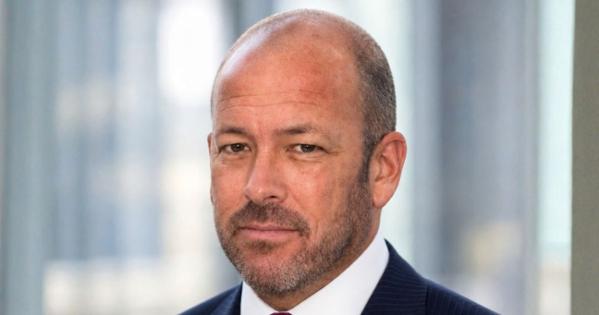
Justin Cooper, SPA/BA ’00, almost said no to an opportunity that would help shape his career.
During his sophomore year at American University, Cooper was taking a class on presidency when an assignment required him to interview two people working in executive branch agencies. One of those conversations was with the senior policy analyst for the President’s Council of Advisors on Science and Technology, part of the White House Office of Science and Technology Policy.
The interview went well. And shortly after, the senior policy analyst called Cooper.
“You were asking insightful questions,” she told him, before asking whether he would be interested in interning at the White House.
His initial answer was no.
“It was towards the end of the semester, it didn’t seem to make sense,” Cooper recalls.
Then he reconsidered.
“I thought, ‘Wait a second; they just offered me an internship at the White House. I have to figure out how to say yes.’”
He did. That decision became an early step in a career that would take him from an AU classroom to the White House, where he ultimately worked alongside President Bill Clinton for 15 years, and later to corporate strategy, executive leadership, and international business.
Today, Cooper is helping ensure that other AU students can access similar experiences.
Washington as a Classroom
Part of what attracted Cooper to AU was the opportunity to make Washington, DC, itself part of his education.
“AU wasn’t just the campus; Washington was your campus,” he says. “I learned that very few things happened in a silo and understanding the bigger picture helps me every day in the work I do.”
As a student in the School of Public Affairs, Cooper studied communications, law, economics, and government, the study and its interdisciplinary nature helping to build a foundation he says has stayed with him throughout his career. But applying that knowledge beyond the classroom proved equally formative.
His first White House internship, in the Office of Science and Technology Policy’s National Security and International Affairs division, gave him firsthand experience in government and introduced him to people who would remain part of his professional life.
He later interned for a member of Parliament while studying abroad in London through AU, gaining a different perspective on government and legislative systems. During his senior year, he returned to Washington and landed another internship at the White House, this time with the presidential office’s Oval Office Operations.
That internship became a job after President Clinton asked him to stay.
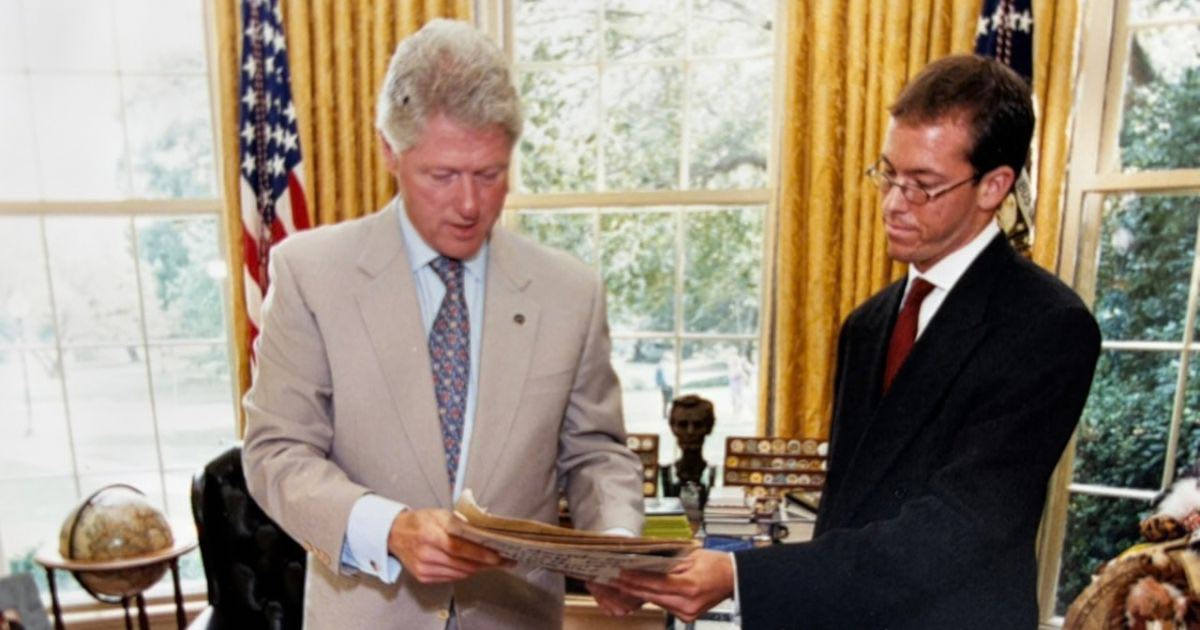
During his time with President Clinton, Cooper gained experience across government, politics, writing, business development, and philanthropy. He later earned his JD from Fordham University School of Law and co-founded Foxcroft Strategy Group, where he now advises CEOs and business leaders on corporate strategy and executive leadership. He also serves as board chair of American University in Dubai and on the board of the Tony Blair Foundation.
Looking back, Cooper sees his internships as an important part of that trajectory.
“I credit AU with setting me on a great pathway and internships being a big part of that,” he says.
For Cooper, those experiences also offered lessons that could not be learned from a textbook.
“Interactions with people don’t just happen on the pages of a textbook,” he says. “You have to be in the field to learn how to understand the dynamics and personalities of individuals.”
Internships gave him the chance to develop those skills in real time while building relationships that would extend throughout his career.
Paying Opportunity Forward
Decades after his first internship, Cooper is now helping remove barriers that can prevent AU students from pursuing similar experiences.
As a member of the School of International Service’s Dean’s Board of Advisors, Cooper learned that some SIS students face a practical challenge when pursuing internships in Washington: the cost of getting there. Transportation and other expenses can make internships that are otherwise within reach difficult to accept.
In response, Cooper established an endowed internship fund to help students overcome those costs.
“I was very fortunate to have the opportunities that I had,” he says. “But unfortunately, having access to opportunity is sometimes something you have to facilitate in certain ways.”
To Cooper, the experience itself can have lasting consequences, giving students the chance to build skills, relationships, and confidence in professional settings.
“Opportunity is theoretically equal, but it’s not always as equally accessible to everyone,” he says. “I’m just trying to remove those barriers and provide students with the same opportunities I was able to have that set me on a great trajectory for my professional career.”
For Cooper, supporting internships is a direct reflection of what AU gave him: the knowledge to understand the world around him and the opportunity to step into it.
“All because of what AU afforded me in opportunity and knowledge,” he says.
For one AU sophomore, a White House internship began with a phone call he almost turned down.
Today, Cooper is helping make sure the next student has the means to answer their own.