
Beyond the Bookshelves: How Librarians Turned Storytelling into Street-Level Play
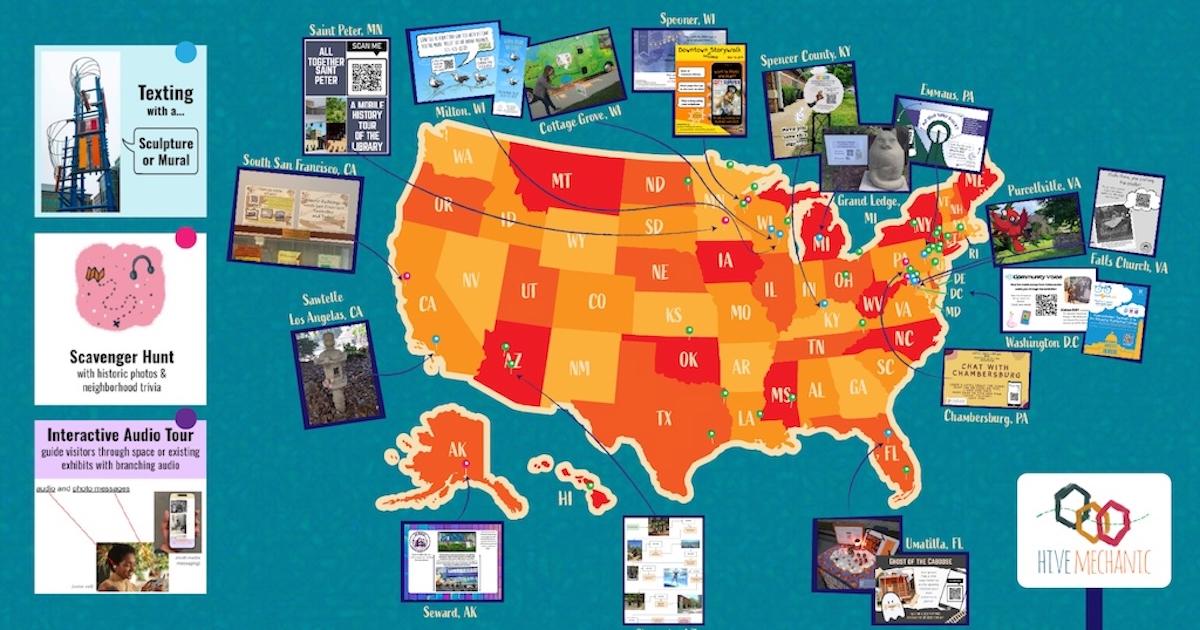 Photos courtesy of the Playful City Lab.
An American University research project has challenged assumptions about who can be a game designer by encouraging longstanding neighborhood anchors to embrace playfulness.
This summer, a team from the Playful City Lab (PCL) published a peer-reviewed article in Proceedings of the Digital Games Research Association summarizing findings from three years of work with public libraries in 50 towns and cities across America.
With funding from the Institute of Museum and Library Services, Engaging Beyond Our Walls (EBOW) taught librarians how to design low-cost, low-tech games and interactive stories for community use.
“Everybody knows that libraries are not just storehouses for books now,” said School of Communication professor Benjamin Stokes, PCL’s director and a core faculty member in the AU Game Center. “The library is a big venue for engaging with media, society, democracy, and social issues. They’re the most commonly available place of entry if you’re trying to connect streets and neighborhoods to local history and services.”
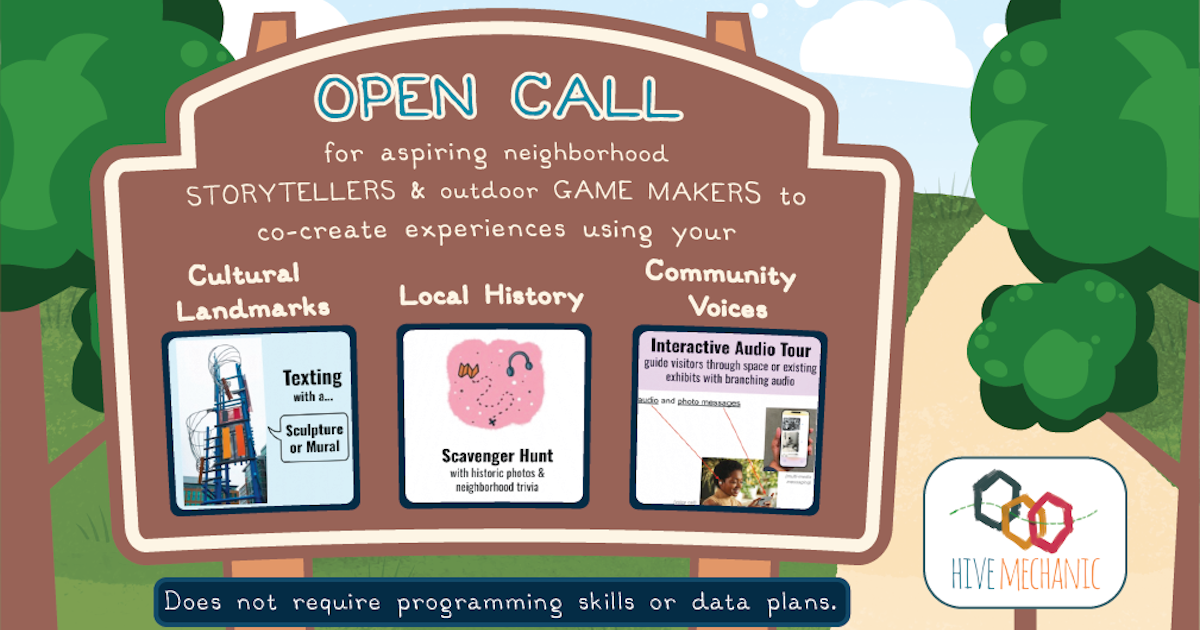 A postcard from the project invited librarians to become game makers.
The project furthers the Playful City Lab’s investigation into the power of playful tactics to advance equity, strengthen a sense of place, and build community. Stokes noted that until recently, game design was considered inaccessible to rural and neighborhood libraries, but he and his collaborators are challenging that notion.
Librarians were chosen for the partnership because they “are real gems of America,” Stokes said. “They are essential to the fabric of our democratic society. At the same time, they are so minimally resourced. It’s amazing how much they’re doing with how little we give them.”
With joy as a central objective, EBOW participants were asked to focus their games on local cultural assets such as sculptures, historic buildings, or neighborhood lore.
Of the 50 towns across the United States accepted into the project, 26 libraries developed a significant project, and 17 completed playtesting. Participants built their games using Hive Mechanic, a free, open-source platform created by PCL for mobile storytelling and games that use multimedia messaging (including SMS and WhatsApp).
All participants received the tools, training, and templates necessary for DIY storytelling. With a budget under $300 per game, the initiative turned traditional game design on its head.
This project “opens up so many possibilities for this type of work, of doing interactive, experience design with community engagement objectives,” said coauthor Eric Schoenborn, SOC/PhD ’26. “It’s not just letting them into the world of game design. It’s letting them run core aspects of it and building their confidence to play a big role in it.”
The initiative began in 2023 with the District of Columbia Public Library (DCPL), which created a companion game for the Tour de DCPL, an annual cycling event connecting city branch locations. Along the route, cyclists would scan QR codes at each stop to test their knowledge of neighborhood history.
“We used it for a [branch] like Watha T. Daniel or Dorothy Height,” said David Quick, DCPL’s adult services coordinator. “These are people who did really great things, but you might not even know who they are.”
Daniel was the first chairman of the DC Model Cities Commission and a longtime activist in the Shaw Neighborhood. With an unwavering commitment to racial and gender justice, Height became known as “the Godmother of the Civil Rights Movement.” She led the DC-based National Council of Negro Women for 40 years.
From Washington, Stokes and his team expanded to towns and cities across the country.
“This [project] was definitely incubated in DC,” Stokes said. “One of the benefits of being at AU is that we can work with a local DC partner and immediately [take it] national.”
At the Umatilla Public Library in Florida, librarians designed an interactive game in which community members joined a friendly ghost for a spooky narrative centered on the town’s historic train caboose.
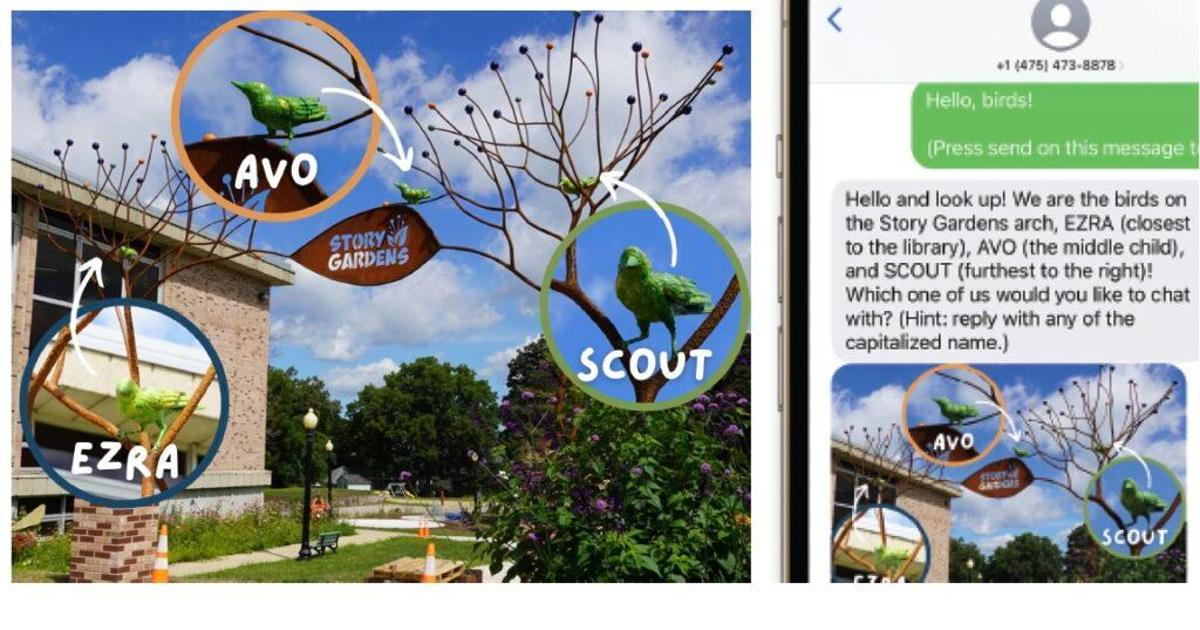 In Milton, Wisconsin, a small-town library serving roughly 11,000 residents designed an experience bringing a sculpture of three birds to life in an outdoor community gathering space.
Perched at the entrance to the library’s Story Gardens, the birds—Ezra, Avo (short for Avocado), and Scout— were each assigned a unique personality crafted by library staff. “Scout told the jokes, Ezra told the local history,” while Avo talked about books and the library, Milton Public Library director Ashlee Kunkel said. Elementary students in the school district helped write the jokes.
The Story Gardens installation quickly became a local favorite. It was refreshed once and remained active for nearly three years, encouraging visitors to explore the library’s gazebo, chess tables, and rainbow bridge.
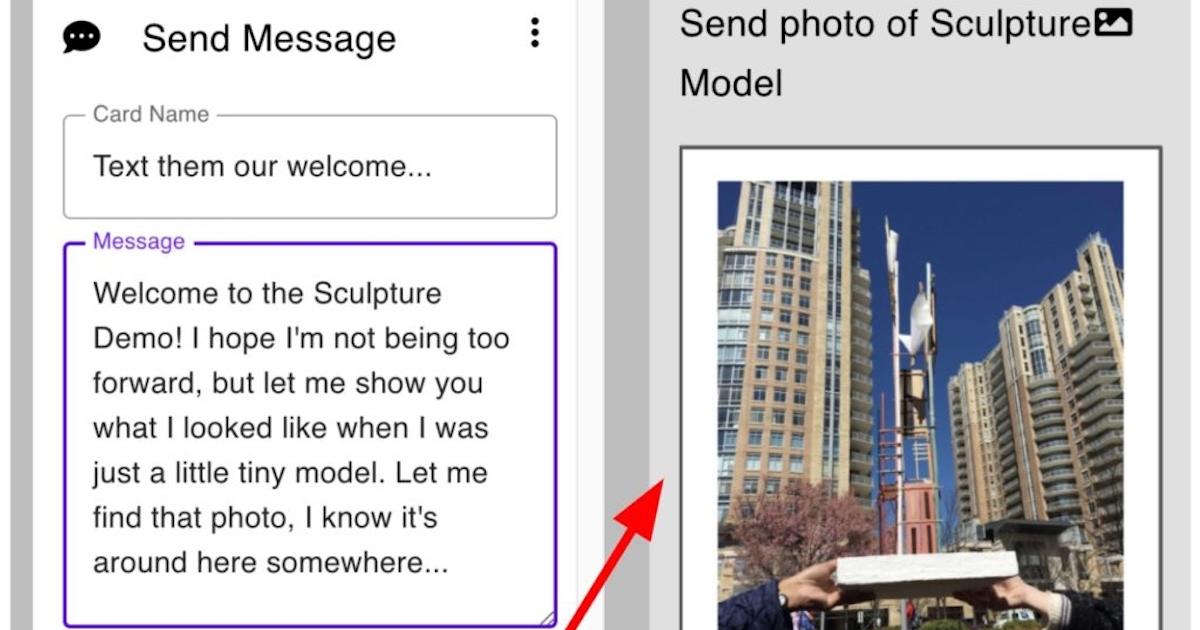
Try It Yourself
All AU faculty, staff, and students need to get started is an imaginative concept and the EBOW recipe book.
“I would love for all of our students and alumni to think about how they can activate their neighborhoods and the places they come from,” Stokes said.