
Interning at the Embassy: Connecting Ghanaians to Their Heritage
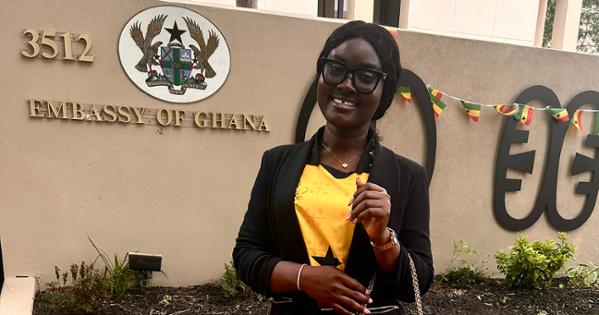
This summer, Gloria Anane, SIS/MA ’27, is interning at the Embassy of Ghana in Washington, DC, supported by the School of International Service (SIS) Dean’s Internship Fund. As part of the consular team's visa issuance desk, she's found that diplomacy isn't just policy and negotiation, but also the daily work of connecting people to their heritage.
Her internship reflects a broader SIS commitment: in preparing its students to enter the workforce, American University’s SIS funds undergraduate and graduate internships so students can accept prestigious and foundational roles across the globe—or often, as in Gloria’s case, inside the many embassies present here in DC that carry out diplomacy every day. Below, she shares insight on the role and reflects on how it has shaped her understanding of her studies and her outlook on her career.
Gloria Anane, SIS/MA ’27, Intercultural and International Communication
- Can you start off by telling me about your internship and the work you do there.
- I'm currently interning at the Embassy of Ghana in Washington, DC, right on International Drive. As part of the consular team, specifically in the visa issuance department, I help keep things running smoothly every day. My work involves assisting with visa processing workflows, reviewing application documents carefully, double-checking details, issuing visas, and making sure applicants genuinely intend to visit Ghana for the right reasons. We handle both single-entry visas for shorter trips and multiple-entry ones for people who travel back and forth more often. It’s interesting work because you get a glimpse into so many personal stories, whether it’s Ghanaians in the diaspora heading home or visitors eager to explore our culture. The Embassy offers a wide range of services like passport applications, Ghana Card registration, and more, so there’s always something new to learn. I’m really enjoying the hands-on experience and the chance to support our community.
- How has working at the Embassy deepened your understanding of your field of study?
- My knowledge of intercultural and international communications—two subjects I really loved, taught by Professors Chin and Durrani, respectively—has significantly increased as a result of working at the Embassy of Ghana. In class, we explored theories regarding global messaging, diplomacy, and cultural diversity. However, I witness it happening here every day. In reviewing visa applications and speaking with applicants from a variety of backgrounds, I've learned how expectations, body language, and communication styles can either create or bridge cultural divides. Those textbook ideas and class discussions come to life when you assist someone from the U.S.-Ghanaian diaspora with paperwork while they tell stories of reuniting with family in Ghana. I have become more conscious of how little things like concise, sympathetic explanations throughout processing foster international trust. My studies are wonderfully complemented by the internship, which transforms abstract concepts into practical capabilities. It has increased my enthusiasm for the subject and my desire to learn more about diplomacy once I graduate.
- What has been the highlight of your experience working there?
- One of the most memorable moments was when a candidate arrived, anxious about returning to Ghana for the first time in a long time. After I assisted with the evaluation of his multiple-entry visa documents and we had a brief conversation, he was in high spirits and shared recollections of his birthplace. I was reminded of the importance of our work by witnessing his happiness and relief when everything went according to plan. It wasn’t just about the paperwork but also about assisting individuals in reestablishing their ties to their heritage. It reminded me of my school, SIS, where we are committed to service. Supporting single-entry tourist applications, learning about various Ghanaian communities in the U.S., and participating in mobile activations where we visited different states to help some Ghanaians without passports are just a few of the various experiences I've enjoyed. My time here has been really fulfilling and enlightening because of those human relationships and the opportunity to contribute, even as an intern.
- How has this internship impacted your career goals, and how you think about the future?
- My career ambitions have been sharpened by this internship, and it has also opened my eyes to new opportunities once I graduate. I first concentrated on international relations, but as a long-term career route I'm now seriously contemplating diplomacy or consular services. The Embassy's assistance to Ghanaians living abroad and its role in facilitating meaningful travel have demonstrated to me the real significance of this effort. Building links between individuals and nations is more important than simply issuing visas. My confidence in cross-cultural positions and public service has increased because of my regular use of intercultural communication skills. I've started considering how these fields overlap because I'm also really interested in global health and diplomacy. Consular work, for example, frequently deals with international charity, disaster response, and health-related travel. I'm inspired by this experience to look into graduate job opportunities that combine global health policy with international affairs. It's made my future feel more exciting and purposeful.