
A Quarter Century Later: Prayers for Peace
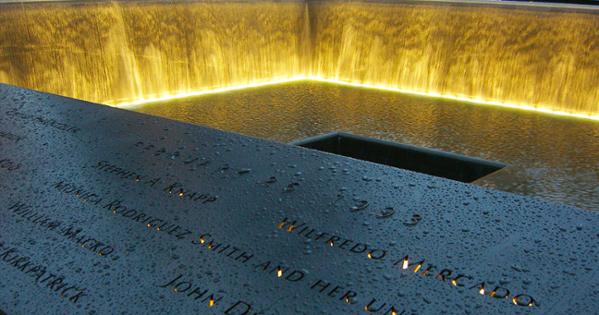
My memories of, during, and after September 2001 are all infused with prayers.
Prayers of gratitude for being alive now. Prayers of honor for those who fled not away but toward the horror and toxic dust. Prayers in honor of those workers in the towers that fateful Tuesday morning. It was mostly workers there, like the food workers at Windows on the World, the restaurant high up on a near-top floor.
Prayers for all who died and lost loved ones in this most chaotic way. The ‘Have You Seen My…?’ posters on street corners as frantic people sought news of missing family members. It was before broad use of cell phones or internet. Impromptu peace vigils in parks and makeshift kiosks, across Manhattan, Brooklyn, Queens (the boroughs I knew). Hand-drawn flyers crying out for peace in the world. Strangers weeping in public in wide and deep grief, patting shoulders on the subway, lifting up those breaking down. All in shock.
It felt like an atomic bomb, the largest physical thing I had ever seen in one stacked-up behemoth—or rather, two. Twinned masses of steel, smooth and straight up. I had gone on a run that crystal clear, blue-skied morning in Prospect Park, before showering and commuting from my home in Brooklyn to the Financial District of Manhattan, where I was four days into a lame temp job. I exited the delayed subway ride to walk up Wall Street, with charred pieces of office paper mysteriously swirling around me. Those of us on the sidewalk, at the base of the World Trade Center, looked up to see smoke rising from the top of the sky-high tower; how would the firefighters have the water hose pressure to quell it?
Then it exploded. Pulverized instantly. What had scraped the sky suddenly mushroomed into a vast, monstrous white cloud. We screamed and fled but could not escape it. Within the monster-cloud, all was muffled, with light things darkened and dark things lightened like inside an exposure, in a nightmare of mass death nearby. After seeking refuge in the Wall Street bank foyer, we made a dash east to the East River, covering our noses and mouths from the sickening dust. We broke out of the monster-cloud, dust-drenched like zombies, back into the sapphire blue-sky day, to hear sirens wailing and people yelling. One step on to the Manhattan Bridge, the other tower fell. I stepped back onto land and headed north on foot, back to my apartment deep in Brooklyn.
That night, from my rooftop, having finally gotten hold of my parents to assure them I lived, I watched the magenta sunset, sliced by the thick black plume of smoke stretching across the sky. The smell of scorched life, of toxic office apocalypse in the air. I prayed and prayed.
We didn’t know who had died. There could have been ten thousand people in each tower. Have you seen my son? My mother? My husband? Flyers everywhere in September 2001. People crying, praying, singing for peace in public squares. Let no other city in the world ever feel this pain. Let this cycle of hate and revenge stop now. At the very least, may this awful tragedy contribute to an end to the cycle of mass violence, attacks on innocent people, and war. New Yorkers, famous for their toughness, wept in each other’s arms, strangers hugging to comfort.
The horror of that day grew even more horrible as our grief was co-opted into vengeance, for our government to bluster into war upon war, all laced with ignorance. Conflating all Muslim and Arab countries into a caricature of an enemy. A war within America against Muslims, Arabs, and those mistaken for each. Extrajudicial surveillance, capture, torture, atop bombs and occupation of Iraq, Afghanistan, Pakistan, Yemen, Syria, and beyond. From Abu Ghraib to Guantánamo, the decades after that fateful day stole so very many more innocent lives and liberties. The heart-wrenching pain of September 2001 metastasized into a pain for all the millions of unnecessary subsequent civilian deaths thereafter. For what. No one is safer with all these bombs blazing.
In the stunned weeks after, the thick black plume of smoke still rose from the smoldering site. The heroic first responders were still combing burning rubble for survivors. We heard that Thich Nhat Hanh was speaking at Riverside Church on the Upper West Side. With hearts full of grief, shock, and anger, hundreds, then thousands, of us crowded up Riverside Drive, streaming into the historic cathedral. My friends and I arrived hours before, in a daze of stalled time. The normal city bustle had frozen in confusion. The line wrapped around 120th Street, blocks away, to get in.
Just being in the presence of a contemplative tradition was a balm. The monks and nuns began with chants and bells. We were in torment, seeking peace. Then a Vietnamese Zen Buddhist nun, Sister Chân Không, rose to the mic, in her robes, to greet the huge, rapt audience. She told us the story of her hometown of Ben Tre, in Vietnam. When she was younger, she was returning from her daily routine of fetching water, when the U.S. army attacked, bombing her village to rubble. In an instant, she lost family, neighbors, her entire village.
She sang us a song about her path through that trauma. She realized that holding on to the excruciating pain and fury would consume her, would kill her heart and soul and self. She had to let it go to live—to heal and work toward healing and peace in the world. She then spoke to a city reeling with grief and anger: “Revenge will not bring anything except suffering and suffering…Let’s say that we are going to spend billions of dollars to drop how many thousands of tons of bombs to revenge. Why don’t we transform them into money into medicine, into medical aid, into food for those who suffer in this country that you suspect to be your enemy. It will be a great ocean of love to dissolve a lot of suffering…”
We in the audience shook with quiet tears in our pews. I wept for the pain caused by the U.S. war machine and for all wars. Praying as hard as I could for peace to reign.
That moment was a glimpse of a peace that overpowers vengeance, of a love that breaks through cycles of war and violence. A moment snuffed out by the wasteful and racist forever wars that ensued. For what.
A quarter of a century later, our prayers and our work for peace must become even clearer and stronger.
For fifteen years, I have taught and researched at American University School of International Service to contribute to this uphill, worldwide work of forging peace.