Student Reflection: Inside SIS's Norway Practicum on Geopolitical Ecology
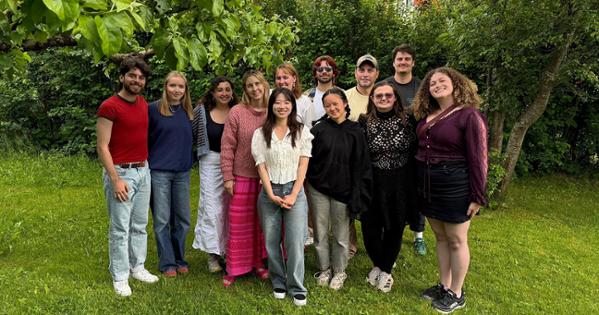
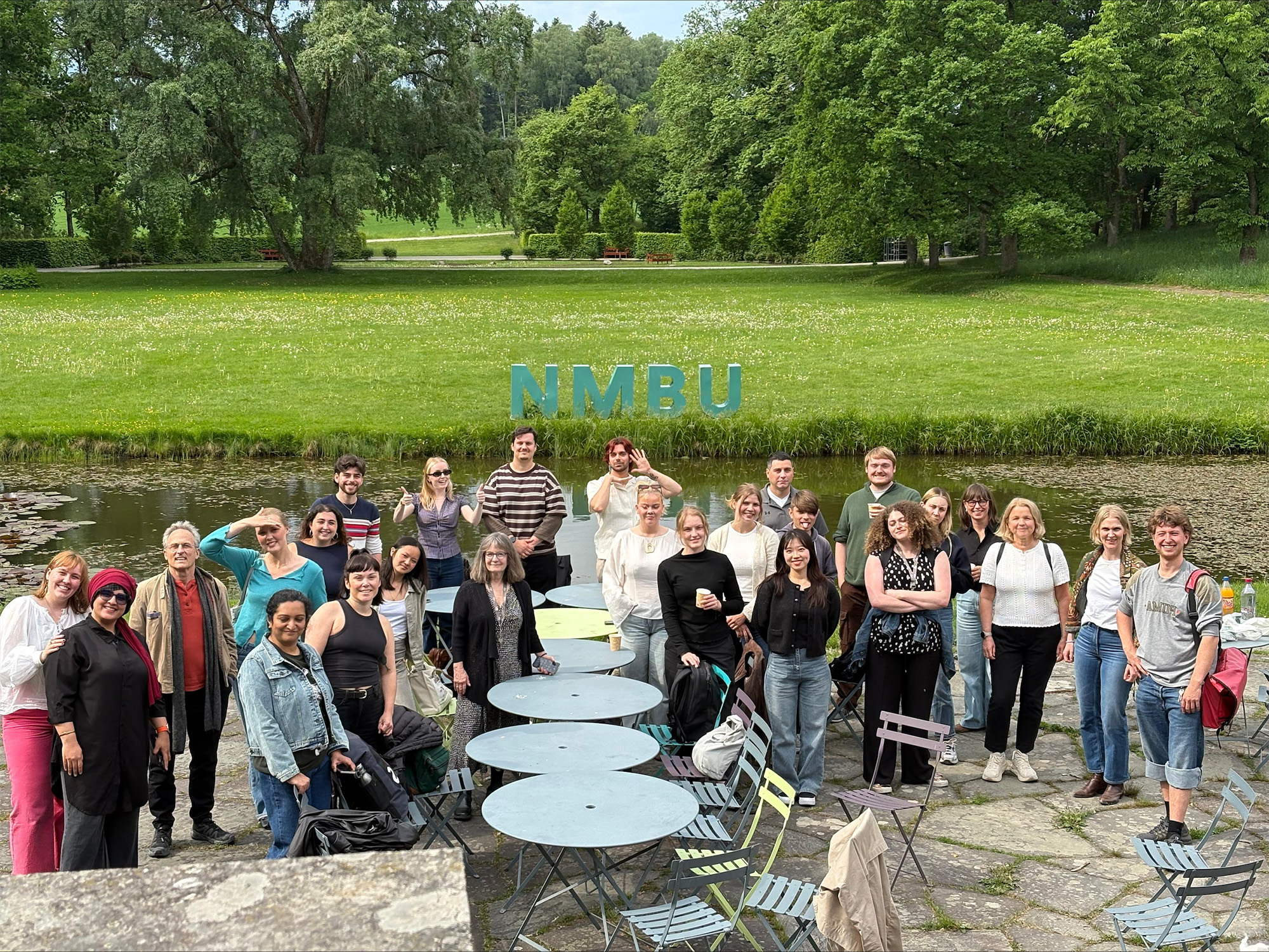
This June, a group of American University (AU) School of International Service (SIS) students traveled to Ås, Norway, to take part in a practicum focused on launching a new academic field: geopolitical ecology, an emerging discipline situated at the intersection of international relations and political ecology. The practicum, led by SIS professors Judith Shapiro and Jesse Ribot, partnered with faculty from the Norwegian University of Life Sciences (NMBU)—Katharina Glaab, Kirsti Stuvoy, John-Andrew McNeish, and Guri Bang—whose Department of International Environment and Development Studies served as the practicum's client.
The students spent two weeks attending lectures and seminars at NMBU's campus, while also interviewing stakeholders at institutions including the Norwegian Refugee Council, Greenpeace Norway, and the Nobel Peace Institute, practicing interview techniques under faculty coaching along the way. The goal: a feasibility study and preliminary framework for a new Geopolitical Ecology Research Center, including an executive summary with recommendations on how to proceed with the creation of the center, including possible structure, thematic areas, and sources of grant funding.
Lucia Fishel, SIS/MA’26, was one of the students who traveled to Norway as part of the practice. We asked her to share a brief reflection about her experience during the practicum.
Lucia’s Experience
From the moment I read the first email all the way back in September, I knew I would do almost anything to be involved in this practicum. After all, how many students get to participate in the development of an academic discipline—one linked to their own active field of study? Even before I understood the specific value of geopolitical ecology or of doing research in Norway at a critical geopolitical moment, I was sold.
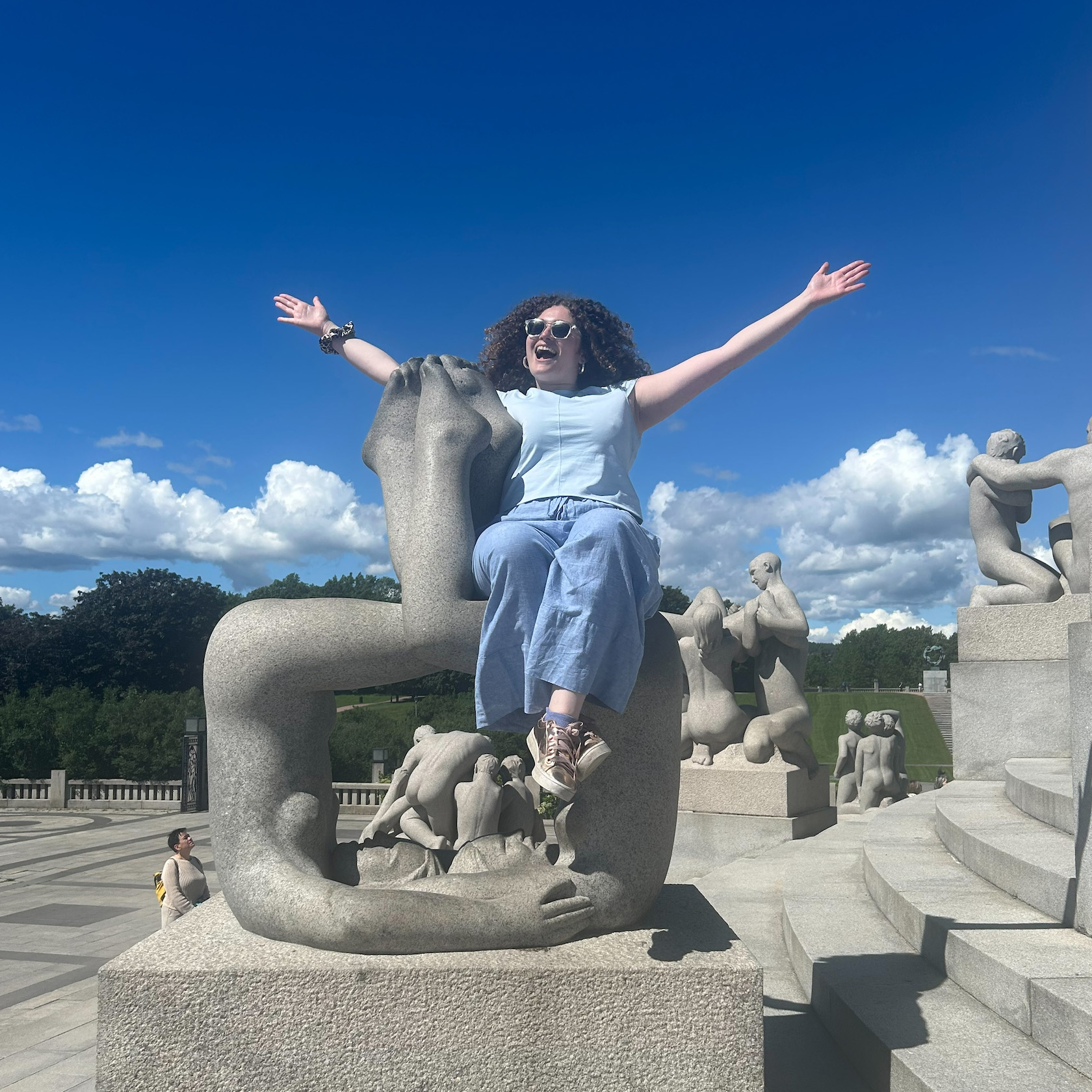 As an already abstract thinker in the Ethics, Peace, and Human Rights program—a program that bridges philosophy and international service—I knew I would benefit immensely from concrete examples of how “theory” and “practice” shape each other. What I didn’t expect was how ever-present this tension would be as our class worked to define geopolitical ecology and interview its potential stakeholders.
All interviewed actors were confronting a changing geopolitical and environmental landscape. Many identified themselves as politically “neutral” or pragmatic in their work; others felt Norway was obligated to confront a Brave New World, highlighting the rise of China’s economy, the Russian invasion of Ukraine, and the need to bolster European security. Again, and again, the same question arose: should the world’s changing realities reshape Norway’s values?
The contexts of American study and practice, as compared to Norwegian, made themselves starkly known in key points of dialogue and debate. I was shocked to learn that NMBU was the only Norwegian university with an international relations (IR) major, having begun as an agriculture school. I marveled at this institutional trajectory compared to AU’s, where SIS was seminal from the outset and environmental issues were only defined later (and arguably still remain marginal).
Yet no clean binaries existed of an environment-forward NMBU and a security-forward SIS. The most committed political ecologist was from AU; the most pro-global affairs professor was from NMBU. Yet the gradual uncovering of subtle institutional and historical context was ever-present, continually reshaping how I understood the relationships between theory and practice, academia and policy, environment and security.
In a class-wide debate about whether the center should have political commitments, Dr. Guri Bang, an NMBU professor of environmental governance, made the case for academic distance. Yet Dr. Judith Shapiro, an SIS professor similarly specialized in environmental governance, changed the conversation: are human rights political? For the global affairs researcher in Norway, the answer is no, but as IR scholars in the U.S. know all too well, this isn’t always the case.
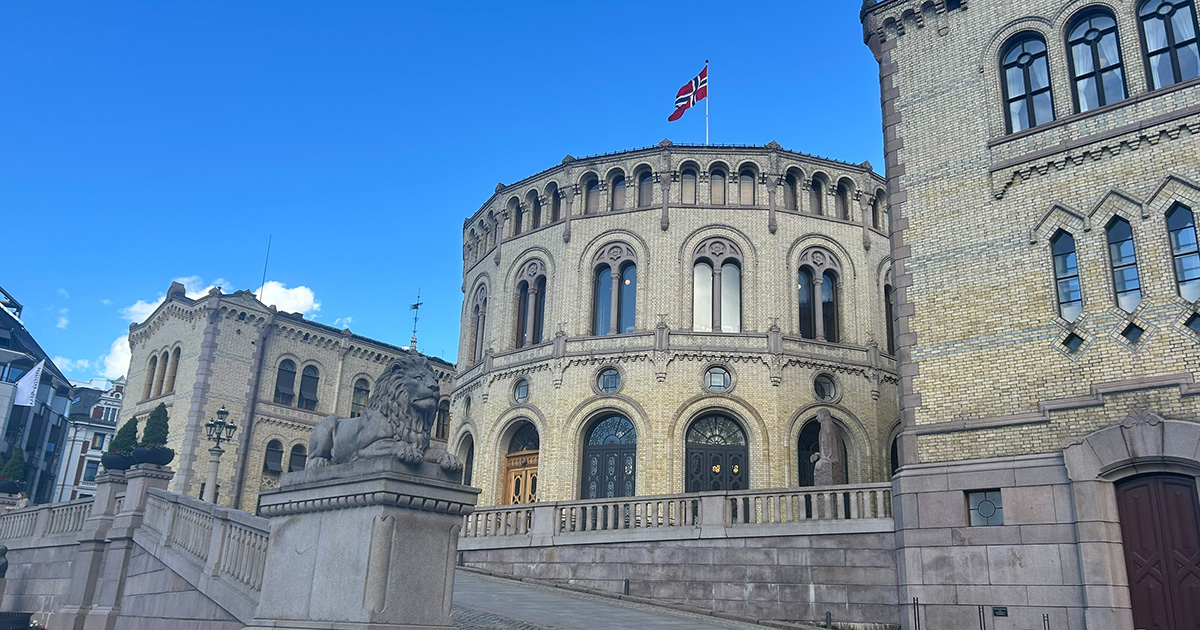 I was struck, and have remained struck, by how secretly defined analytical institutions are by the questions and priorities of their past, having developed over many years around the distinct geographies and political landscapes of their national setting. What does it mean to think globally in Washington, D.C., the crucible of American exceptionalism, as compared to the historically Europe-focused, though progressively self-identifying, Norway? For example, was the environment implicitly considered by Norway’s think tanks, government agencies, and academic researchers in ways I myself neglected as an American?
I had never had to absorb so much data at once as I did in Norway. There was literature: written down and frozen in time for greater deliberation. Then came debates: unfrozen thoughts departing messily from fixed writing into a chaotic storm of questions, assertions, and yet more questions. My instinct was to sit down and make sense of it all—slowly. But the speed of writing the report forced me to sit with an uncomfortable truth: the world is never sitting still, not even for the anxious academic who wishes to press pause and map out every crevice.
If the boundaries between theory and practice are themselves socially, historically, and institutionally constructed, then scholarship cannot be purely distance and critique, and policy cannot be purely strategy and prediction. An endlessly changing world cannot be permanently mapped; it can also always be reimagined.
Rather than demanding certainty, this practicum demanded participation. It demanded empathy, humility, and profound levels of collaboration: the willingness to absorb what we can while knowing that our object of study has already disappeared. The challenge is not to capture the world perfectly, but to keep learning–and responding–as it changes. That is what it has come to mean to me for theory and practice to make and unmake each other.