
Impact in Action: The Grants and Giving Transforming College of Arts & Sciences
Thanks to significant philanthropic and foundation support over the last year, students across American University’s College of Arts and Sciences are turning what they learn into real-world impact.
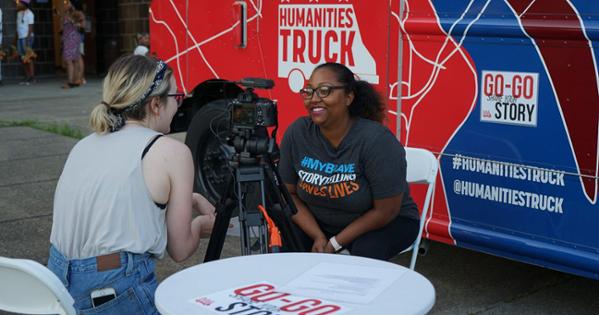
Students are building satellites to track radio waves from the historic Artemis II Moon mission. They’re meeting economists at the International Monetary Fund and Federal Reserve and innovating economics theory. They’re developing AI models of 3D cloud structures. And they’re taking AU’s Humanities Truck into DC neighborhoods to record the stories of Washington communities.
FY26 investments from major donors and partners include NASA, the American Economic Association, Mellon Foundation, Alfred P. Sloan Foundation, Peter G. Peterson Foundation, and Henry Luce Foundation. Together, their funding is giving students remarkable access to research, mentorship, and real-world experience.
“The investments from philanthropy and foundations have offered students extraordinary opportunities to pursue their curiosity, work closely with faculty, and put what they learn into practice,” says College of Arts and Sciences Dean Linda Aldoory. “But even more importantly, the financial support has expanded the students’ involvement in widespread social, scientific, and community impacts.”
It’s what AU calls “R1 the AU way.” As one of just three percent of US institutions conducting research at the highest level, AU pairs that research strength with small classes and close faculty mentorship, giving undergraduates opportunities to get into the lab, into the field, and directly involved in consequential work. Coupled with AU’s location in the nation’s capital—home to leading scientific, cultural, policy, and research institutions—and its strong alumni network, students gain unparalleled access to internships, research experiences, and professional connections that can help launch their careers.
Preparing Students for an AI-Powered Space Industry
The grant will double the number of NASA- and AI-focused internship opportunities. Students will work with NASA and industry mentors on mission-related projects, build professional networks, and gain experience for AI careers and graduate study.
AU students have a long track record of working with NASA, and the student experience has grown exponentially due to increased NASA funding. Last spring, AU was one of just eight universities selected by the agency to track radio signals from the Artemis II mission. Now, the university is one of just 13 recipients nationwide of a new NASA award focused on building an AI-skilled aerospace workforce. The $600,000 grant will expand classroom and hands-on opportunities for AU students.
Led through the DC Space Grant Consortium, the initiative will support new AU courses in data mining, machine learning, and modeling through the Center for AI Research in the Sciences and Humanities (CARSH) and AU’s new Computational Science and AI PhD program.
The grant will also double the number of NASA- and AI-focused internship opportunities. Students will work with NASA and industry mentors on mission-related projects, build professional networks, and gain experience for AI careers and graduate study.
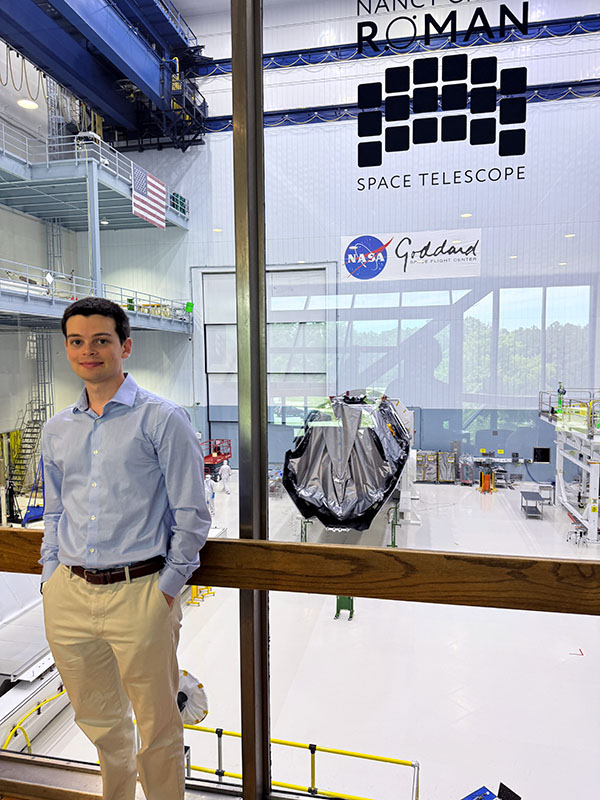
AU students are already getting a taste of those experiences. Adam Liewehr (MS computer science ’27) has spent the summer at NASA’s Goddard Space Flight Center, working with scientists to build AI models that reconstruct 3D cloud structures from satellite imagery. “The best thing about this research is learning from my mentors, and having autonomy over the process of the work,” he says.
Training the Next Generation of Economists
Washington becomes part of the experience: this summer’s students visited the International Monetary Fund, Brookings Institution, and Federal Reserve Board, meeting leaders working at the center of economic research and policymaking.
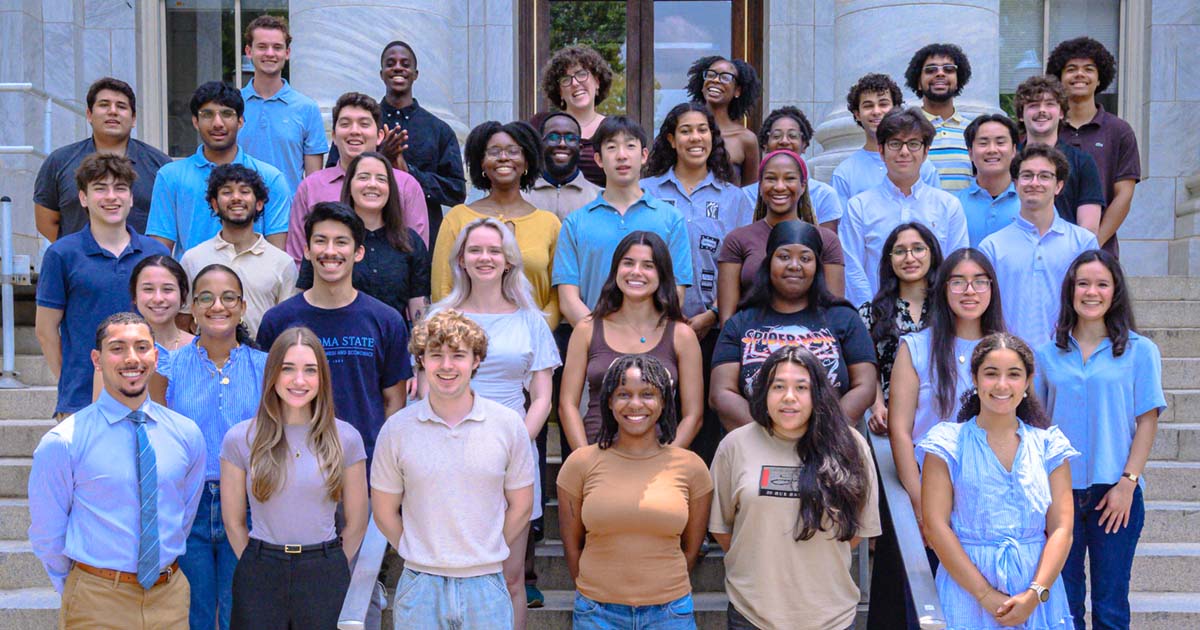
This summer, 40 aspiring economists from across the country came to AU for something difficult to replicate anywhere else: eight weeks of intensive study, close faculty mentorship, and access to economists and institutions shaping policy just beyond campus.
AU is the new home of the American Economic Association’s Summer Training and Scholarship Program, which prepares talented undergraduates and recent graduates for doctoral study and careers in economics. More than $2.3 million in external funding will support the program’s first three years at AU, including nearly $1.43 million in grants from the Alfred P. Sloan Foundation and Peter G. Peterson Foundation.
Students live on campus, take mathematics and economics courses, and work closely with faculty and mentors. Washington, DC, becomes part of the experience: this summer’s students visited the IMF, Brookings Institution, and Federal Reserve Board, meeting leaders working at the center of economic research and policymaking.
For Caleb “Max” Hill, a rising senior at Marshall University, the experience expanded his understanding of economics and his ambitions.
“Before the program, I heard that economics is a broad field with many applications, but I didn't fully appreciate what that meant,” Hill says. “This summer, I was introduced to environmental economics, gender studies, and many other fields where economic thinking plays an important role. Without this experience, I would have a much narrower view of the possibilities this field offers.”
Changing Lives in DC with Community Stories
Support from the Mellon and Henry Luce Foundations now totals $1 million, expanding the Humanities Truck’s programming and doubling its fleet.
Washington’s headlines are filled with stories of politics and power. But that isn’t the whole story of the city.
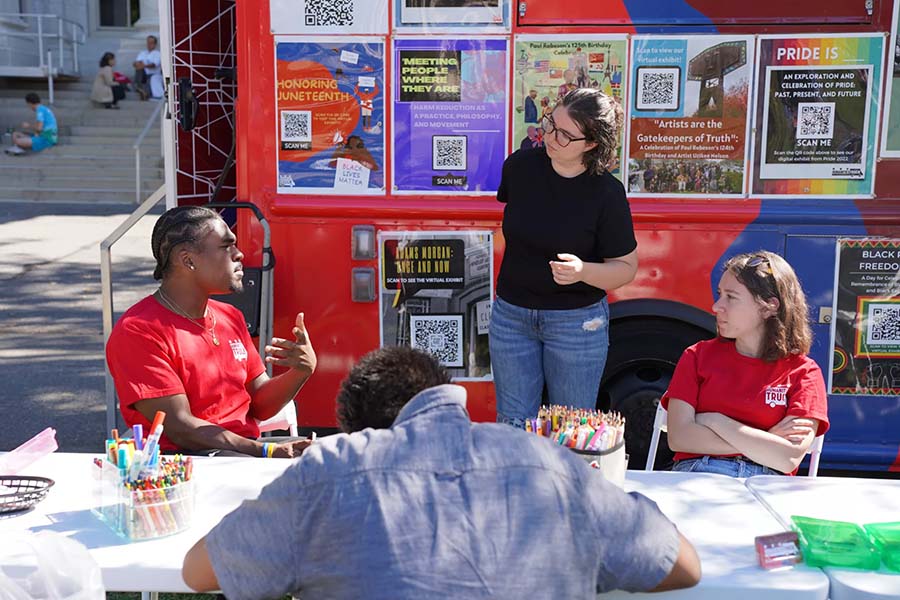
For eight years, AU’s bright red-and-blue Humanities Truck—part classroom, part research lab on wheels—has transformed streets, sidewalks, and parks across Washington into spaces for research and learning. Faculty and students work alongside residents to gather oral histories, create exhibitions, stage performances, and explore and share the stories of the nation’s capital.
Now, a new $250,000 grant from the Henry Luce Foundation will largely fund a second truck, giving more AU students opportunities to take what they’re learning into DC communities through hands-on, community-based projects.
The Luce award builds on a $750,000 grant from the Mellon Foundation supporting the Humanities Truck’s programming, bringing the two foundations’ combined support to $1 million. Together, Luce and Mellon support has helped fund 40 year-long faculty- and graduate student-led community projects and 23 two-year graduate fellowships. To date, the project has held more than 450 events, engaging more than 75,000 people.
“In addition to the incredible people we have met through our programming across Washington, DC, the Truck project has brought together faculty, staff, and students who are committed to making a difference in communities across the region,” says Professor Dan Kerr. “These folks inspire and challenge me every day and make me proud to be a part of our community at AU.”