Interdisciplinary Research
Work with experts across disciplines—computer science, physics, mathematics, and statistics—to develop AI-driven solutions to complex scientific challenges through collaborative, faculty-mentored research.

Contact:
Dr. Leah Ding

American University's PhD in Computational Science and Artificial Intelligence prepares students to use AI and advanced computational methods to solve complex scientific problems. Through interdisciplinary coursework, faculty mentorship, and hands-on research, students prepare for leadership roles in national laboratories, technology-driven industries, academia, and government.
Located in Washington, DC, students have direct access to one of the nation's leading research hubs, including the National Science Foundation, National Institutes of Health, NASA, the Department of Energy, nonprofit research organizations, policy institutes, and AI-focused companies shaping the future of science and technology.
Request Info How to Apply
Work with experts across disciplines—computer science, physics, mathematics, and statistics—to develop AI-driven solutions to complex scientific challenges through collaborative, faculty-mentored research.
Study where research meets real-world impact in the DC region. Get unparalleled access to federal agencies, national laboratories, nonprofit organizations, and technology leaders advancing AI and scientific discovery.
At AU, you’ll enjoy an average class size of 11 students, a strong cohort of like-minded peers, and opportunities to work with faculty mentors who have long track records of successful outcomes for their students.
The PhD in Computational Science and Artificial Intelligence requires 39 credit hours of graduate coursework, followed by original dissertation research. Students pursue core and elective phases of coursework:
The program also includes directed research, a comprehensive examination, a dissertation proposal, advancement to candidacy, and the successful completion and defense of an original dissertation.
View the complete degree requirements and course listings on the PhD Admission & Requirements page.

“I am excited to help launch this interdisciplinary program that brings advanced computation and artificial intelligence to the forefront of scientific discovery. Building on our strengths in computer science, data science, and computational modeling, the program prepares students to analyze complex systems, accelerate research, and advance knowledge.
“Located in the heart of the nation’s capital, we are uniquely positioned to connect scientific innovation with public impact. Our goal is to equip graduates with the scientific, technical, ethical, and multidisciplinary training needed to lead discovery and solve complex problems in a data-driven world.”
—Leah Ding, Provost Associate Professor of Computer Science and PhD Program Director
Roberto Corizzo develops adaptive machine learning methods for evolving data, focusing on continual learning, forecasting, anomaly detection, and class imbalance across healthcare, finance, cybersecurity, and scientific discovery.

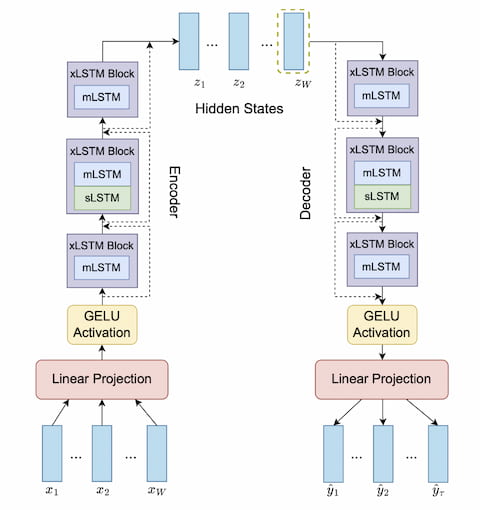
Johannes Lange develops importance sampling techniques for software that uses neural networks to accelerate statistical inference in astrophysics and cosmology, including Nautilus, a reference open-source python implementation of this technique for Bayesian posterior and evidence estimation.
Nathalie Japkowicz designed the Hate Mitigation App for discovering emergent hate speech on social media as part of her Signature Research Initiative interdisciplinary project, Unmasking Coded Hate Speech.


Leah Ding develops trustworthy AI systems for scientific discovery. Her research, funded by the National Science Foundation and NASA, includes a major NSF grant to advance AI and machine learning for wildfire detection and forecasting.
Patrick Wu published "Beyond Price: A Technical Quality Framework for AI Antitrust" at the 2026 ACM Conference on Fairness, Accountability, and Transparency, arguing that competition in the AI market should be analyzed through the lens of quality.
Michael Robinson received supplemental funding of $50,000 (new total: $110,000) from the Pacific Northwest National Laboratory for “Modeling and Analytic Capabilities for KBase”.
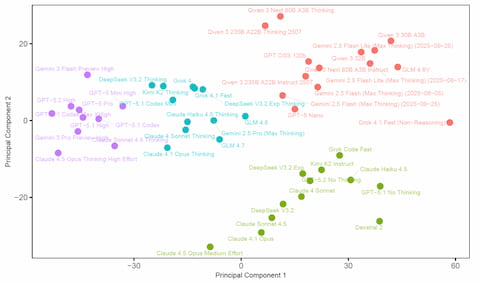
Michael Robinson’s paper, “Token embeddings violate the manifold hypothesis,” which investigates the internal geometry of large language models, was accepted to NeurIPS 2026, one of the world’s top AI conferences.
Nathalie Japkowicz and ZoisBoukouvalas published Machine Learning Evaluation: Towards Reliable and Responsible AI (Cambridge University Press), which examines ways to evaluate machine learning systems, including fairness and bias.
Ready to dive in?
Start Application