
AU Students Put STEM Research to Work at NASA, NIH, and Across the DMV
This summer, American University STEM students took on real-world scientific and environmental challenges, working alongside mentors at AU and outside leading research institutions across the Washington region.
They tracked osprey populations across the Chesapeake Bay, conducted coral reef research in the lab, built AI tools with NASA scientists, developed software funded by the National Institutes of Health, and studied pollution in the Anacostia River. Guided by faculty mentors, they contributed to research with real-world impact while gaining the skills and experience to become the next generation of scientists.
Meet 12 students putting science into action—in the lab and in the field.
Evan Kinnevan
Empty Nests, Urgent Questions
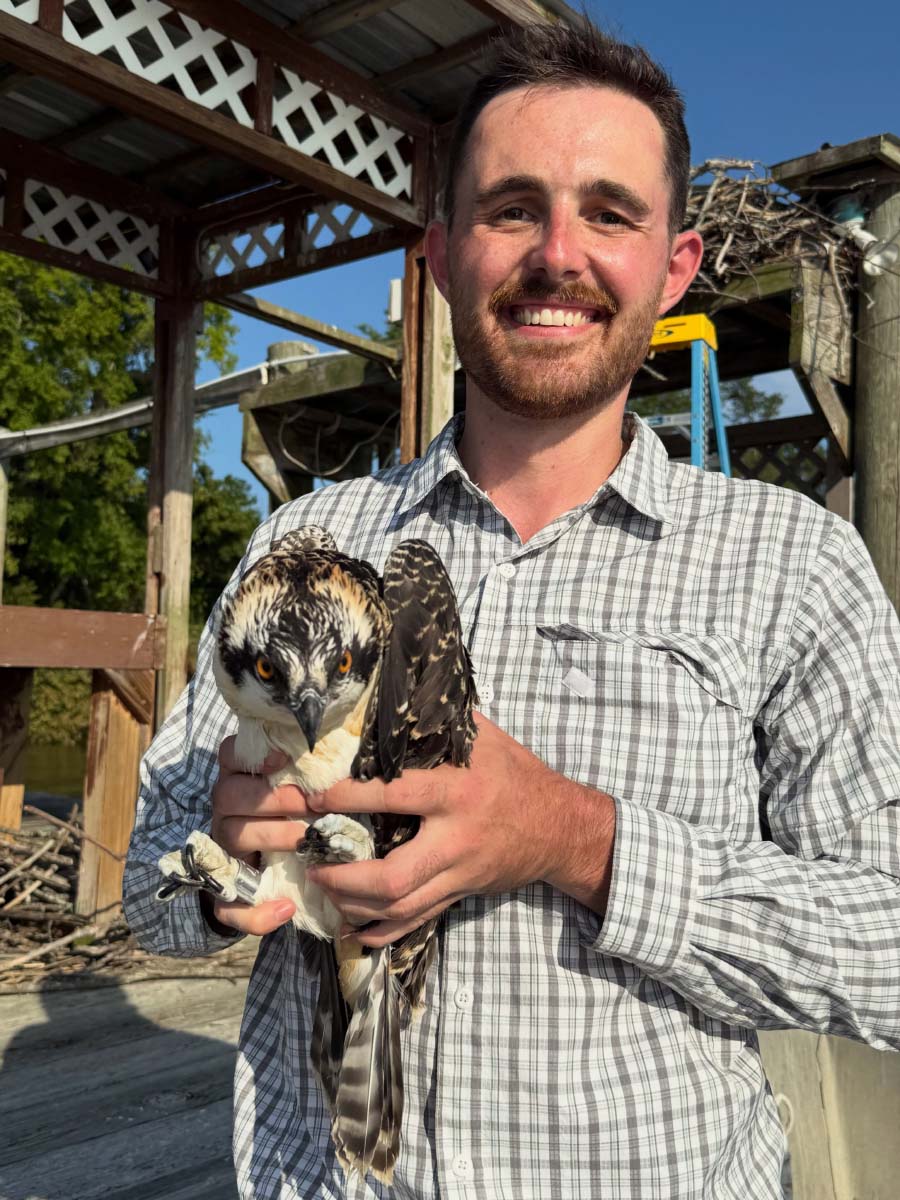
I've observed too many nests with starving nestlings abandoned by their parents in areas where they should be thriving.
Evan Kinnevan (PhD biomedical and environmental health sciences ’30) is studying the decline of ospreys in the Chesapeake Bay by investigating what the birds eat and analyzing stool samples to better understand the environmental factors affecting their health. This summer, he also assisted Maryland State Parks biologists with banding osprey nestlings.
What has surprised Evan the most is the speed in which ospreys are disappearing across the Bay, most likely due to overfishing, making it difficult for ospreys to find enough food to raise their young. “Every summer, about a quarter of the US osprey population (10,000–12,000 pairs) nest in the Bay,” he says. “During fieldwork this summer, I've observed too many nests with starving nestlings abandoned by their parents in areas where they should be thriving. In the areas most impacted, all the empty nests and lack of soaring osprey make it feel like a ghost town.”
Nate Groves and Adam Liewehr
Heads in the Clouds at NASA
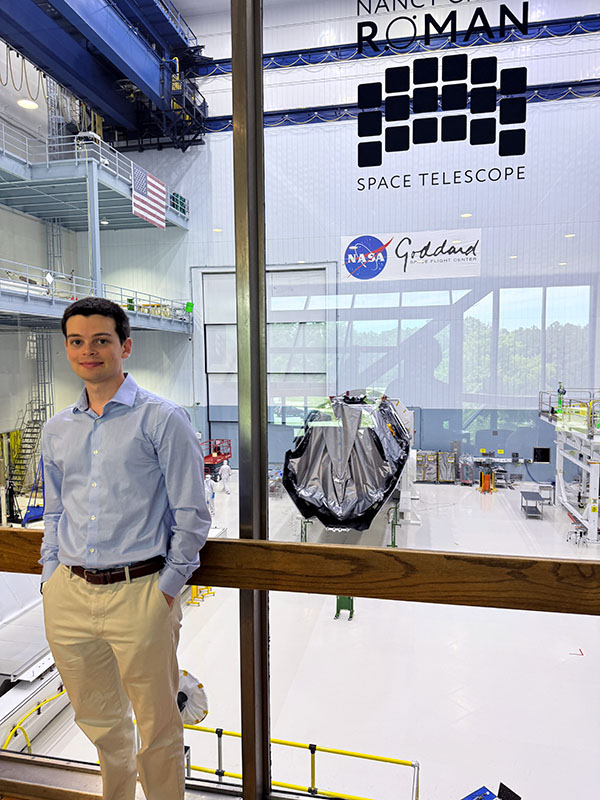
We are hoping that this work can be used to help fight forest fires and limit damage done by natural disasters.
Nate Groves
Two American University students spent the summer at NASA Goddard Space Flight Center working with NASA scientists and American University’s Professor Leah Ding (director of AU’s PhD in Computational Science and Artificial Intelligence program).
Nate Groves (BS computer science/data science ’26 and PhD Behavior, Cognition, and Neuroscience ’30) and Adam Liewehr (MS computer science ’27) worked on an AI research project that reconstructed the three-dimensional structure of clouds from satellite imagery. Their work spanned the entire machine learning pipeline, from preprocessing satellite data to developing AI models that predict detailed 3D cloud structure.
“We are hoping that this work can be used to help fight forest fires and limit damage done by natural disasters,” says Groves. “We also are focusing on making this research accessible to anyone, by creating a good user experience when using the model and creating visualizations to make the data easier to understand,” Liewehr adds. “The best thing about this research is learning from my mentors and having autonomy over the process of the work, which is something that I wouldn’t get in a normal industry job.”
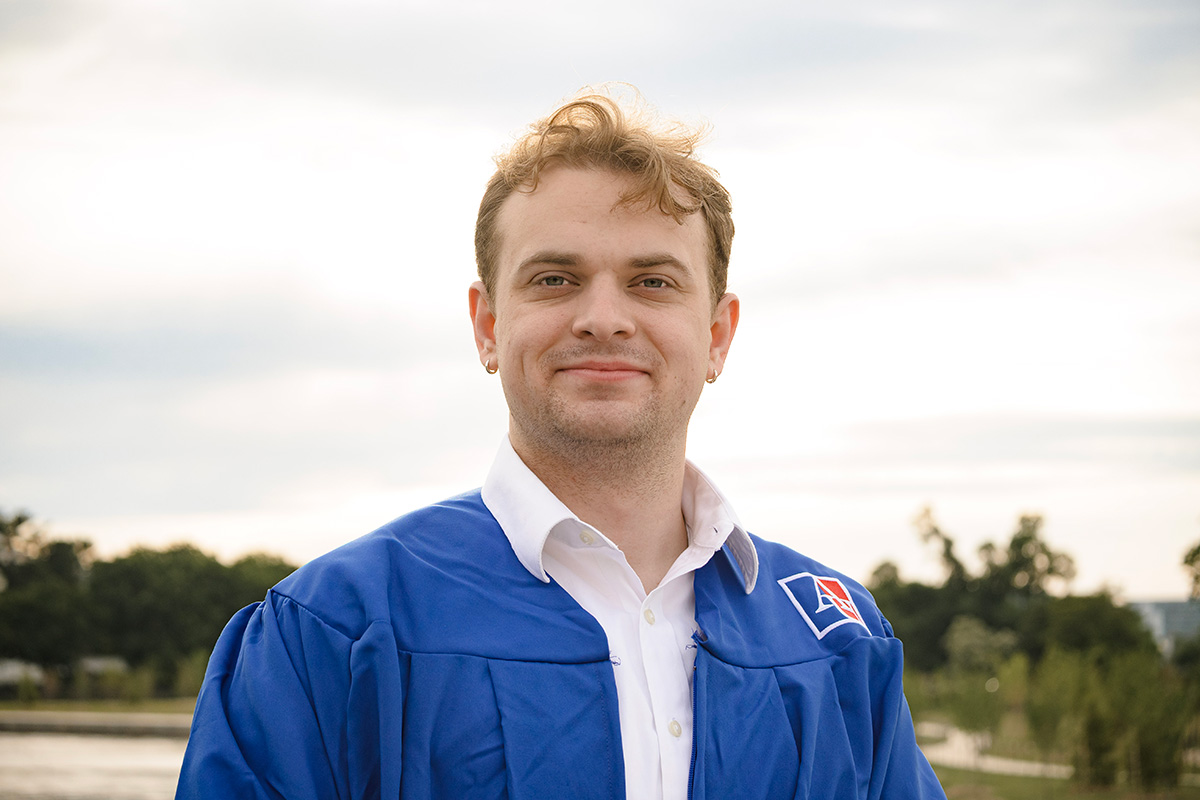 Nate Groves on AU campus
The research is sponsored by NASA through the MOSAICS and Earth Science Technology Office programs.
Elsa Waichulis
Getting to the Bottom of Water Quality
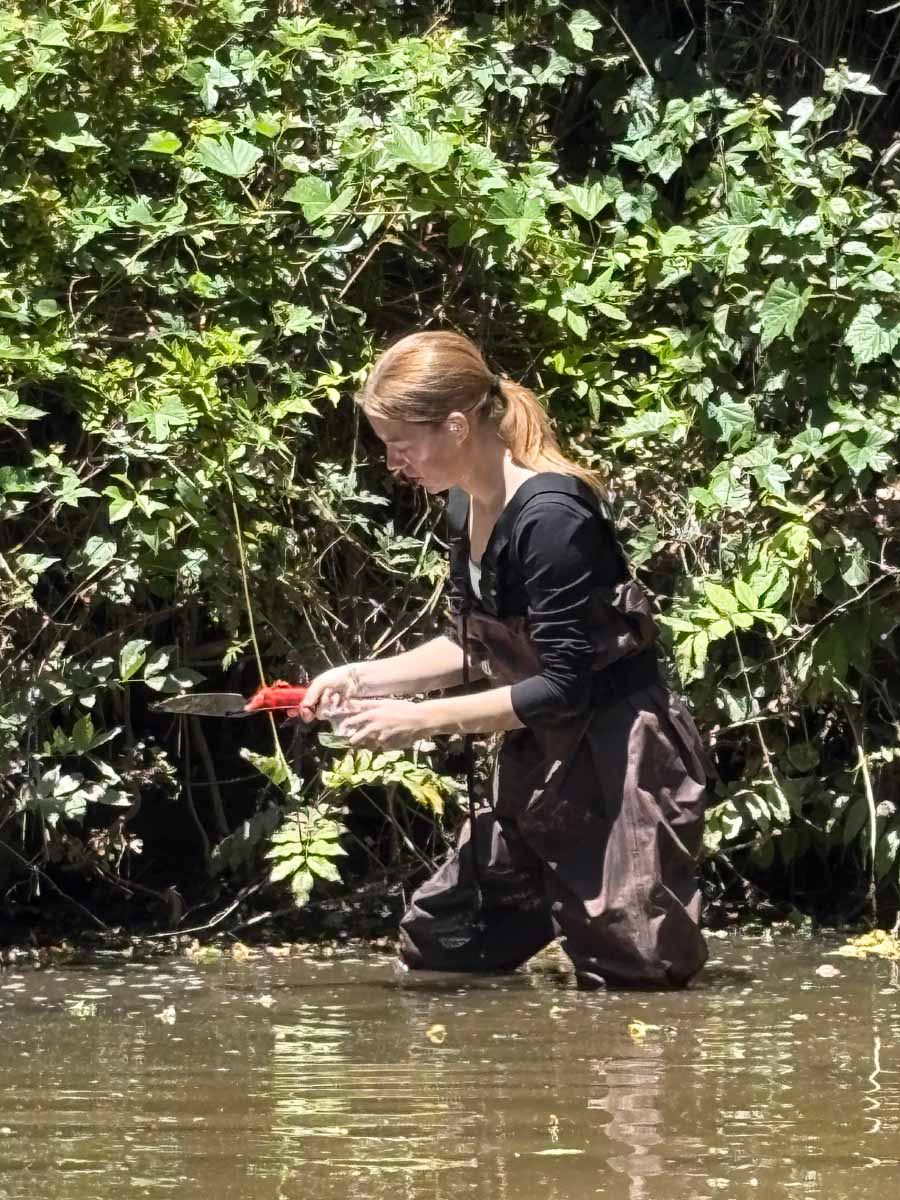
It's exciting to be part of research that helps us better understand the health of our local rivers.
Elsa Waichulis (BS environmental science ’28) helped researchers better understand water quality in the Anacostia River. She is studying BPA, a chemical commonly found in plastics and food packaging, in invasive clams that naturally filter water as they feed. By measuring how much BPA the clams retain, the research team hopes to better understand how chemicals travel through the river ecosystem and what this can reveal about the health of local waterways.
"I've loved getting out into the field and collecting clam samples in local rivers. It's hands-on work, and yes—I even fell into the mud once!” Elsa says. “But the muddy boots and hot summer days have been worth it. It's exciting to be part of research that helps us better understand the health of our local rivers."
Eric Gwadz
Stress and the Creatine Factor
I was allowed creativity to design and create a research project I believed was important, and my professors backed me each step of the way.
In the Connaughton Lab, Eric Gwadz (MS cell and molecular biology '26) is studying how chronic environmental stress affects the brain by using zebrafish housed in water from the Anacostia River, a historically polluted watershed. He is investigating whether creatine, a dietary supplement widely used to support skeletal muscle strength and recovery, may also provide cognitive benefits. Because zebrafish respond to environmental stress in ways that can be measured through their behavior and gene activity, they provide a valuable model for this research. Eric's early findings suggest that creatine may indeed help reduce stress-related effects in zebrafish exposed to polluted water.
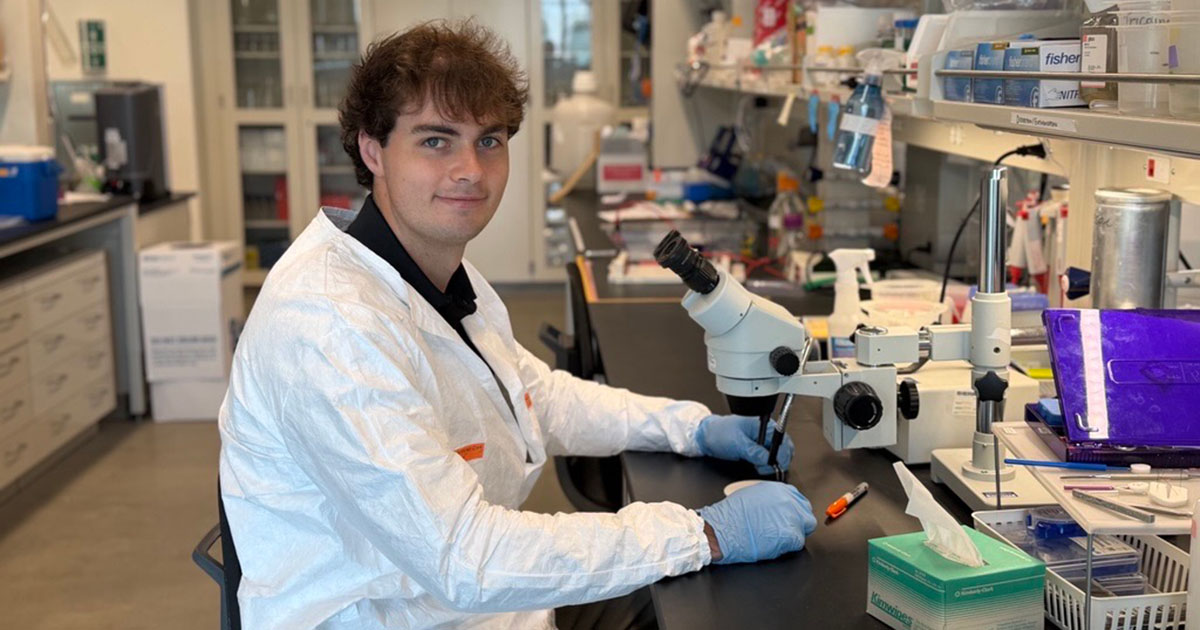 Eric Gwadz working in the Connaughton Lab
“My experience has been incredible,” Eric says. “The professors and students at American University are encouraging and thoughtful. I was allowed creativity to design and create a research project I believed was important, and my professors backed me each step of the way.”
Nikki Stewart
The Secrets of Coral Survival
My favorite experience so far was presenting my research at the American Society for Microbiology conference this past June!
Nikki Stewart (MS ecology and evolutionary biology ’27) worked in the Cárdenas Lab this summer, researching coral bleaching. The bleaching occurs when prolonged heat causes corals to lose the algae they depend on for most of their food, leaving them vulnerable to disease and death.
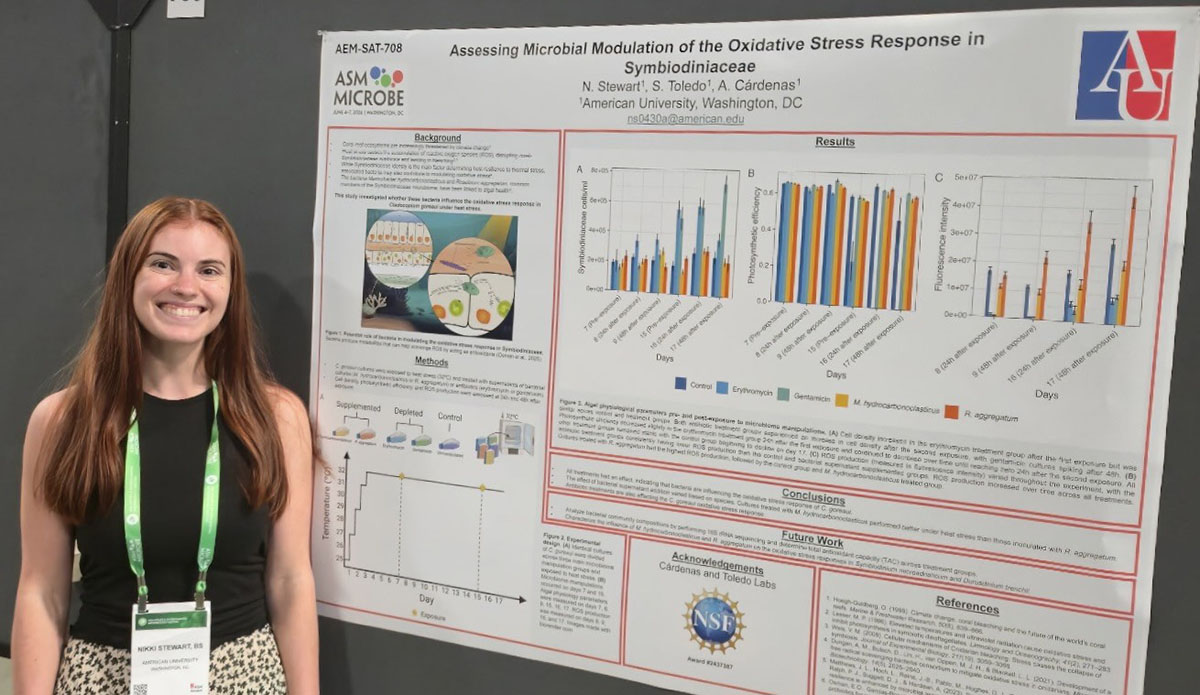 Nikki Stewart presenting at the American Society for Microbiology conference.
Some algae are better able to withstand heat than others, making the corals they live in more resilient to rising ocean temperatures. Nikki is studying what gives these algae their heat tolerance by examining how they interact with bacteria and respond to heat stress at the molecular level. She also collaborates with AU's Toledo Lab on this project.
Ciarán Fitzpatrick
Understanding the Mechanisms of Coral Environmental Resilience
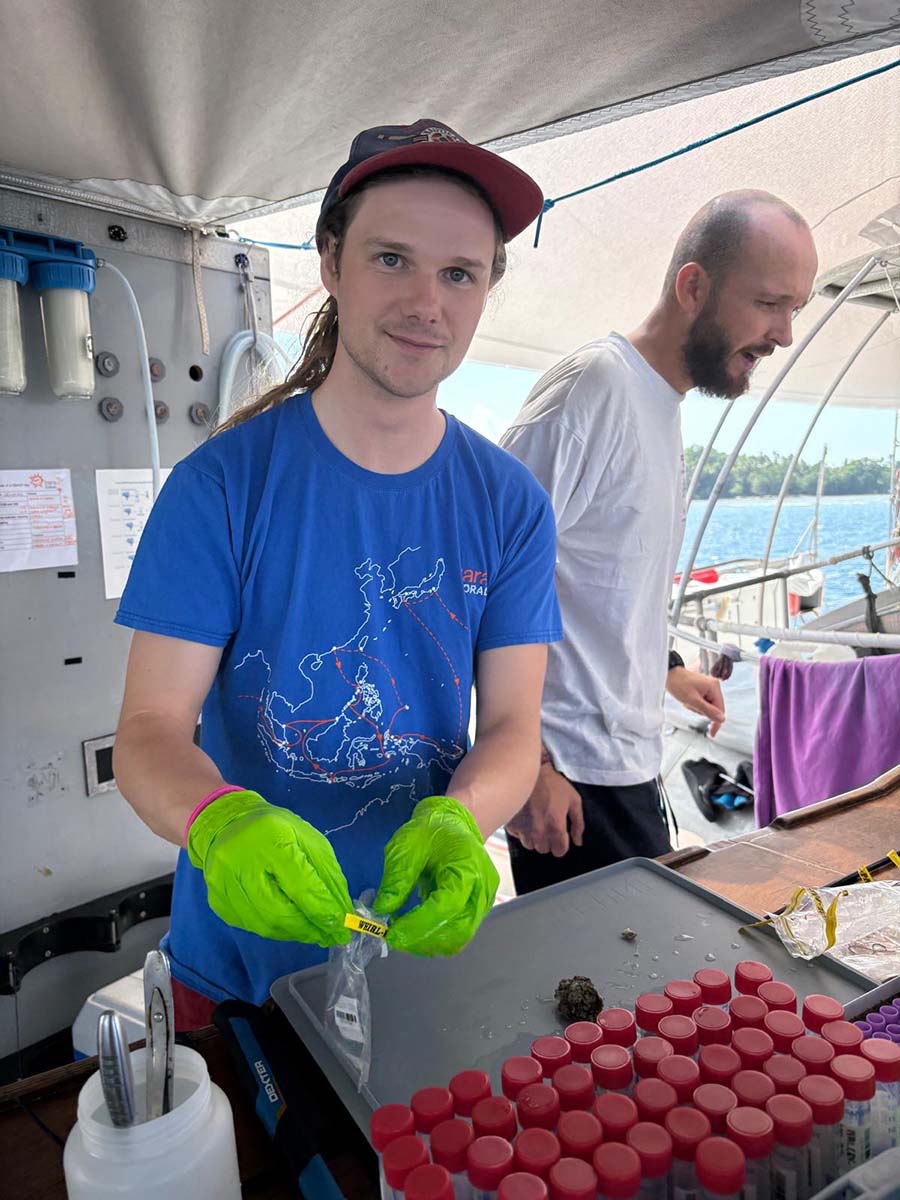
The research will help scientists identify what makes some corals more resilient than others—and better understand how reef ecosystems may respond to warming oceans.
Biomedical and Environmental Health Sciences PhD student Ciarán Fitzpatrick of AU’s Cárdenas Lab spent July and August at sea with the Tara Ocean Foundation, joining an international scientific expedition to better understand how coral reefs survive a changing climate.
Fitzpatrick helped collect and process coral and environmental samples and used a specialized system to test how corals respond to heat stress. The research will help scientists identify what makes some corals more resilient than others—and better understand how reef ecosystems may respond to warming oceans.
Ennzo Ortega
The Microscopic Team Behind Coral Health
It's made me appreciate coral reef research even more and the huge effort that scientists around the world are putting into protecting these ecosystems.
Ennzo Ortega (MS cell and molecular biology '27) is working in the Cárdenas Lab to better understand coral health. Corals depend on tiny algae called Symbiodiniaceae for much of their nutrition, and these algae rely on beneficial bacteria to help them thrive. Ennzo is studying how the algae and bacteria interact by examining which genes are turned on and off when they grow together compared with when they grow separately. His research could help scientists better understand the partnerships that support healthy coral reefs.
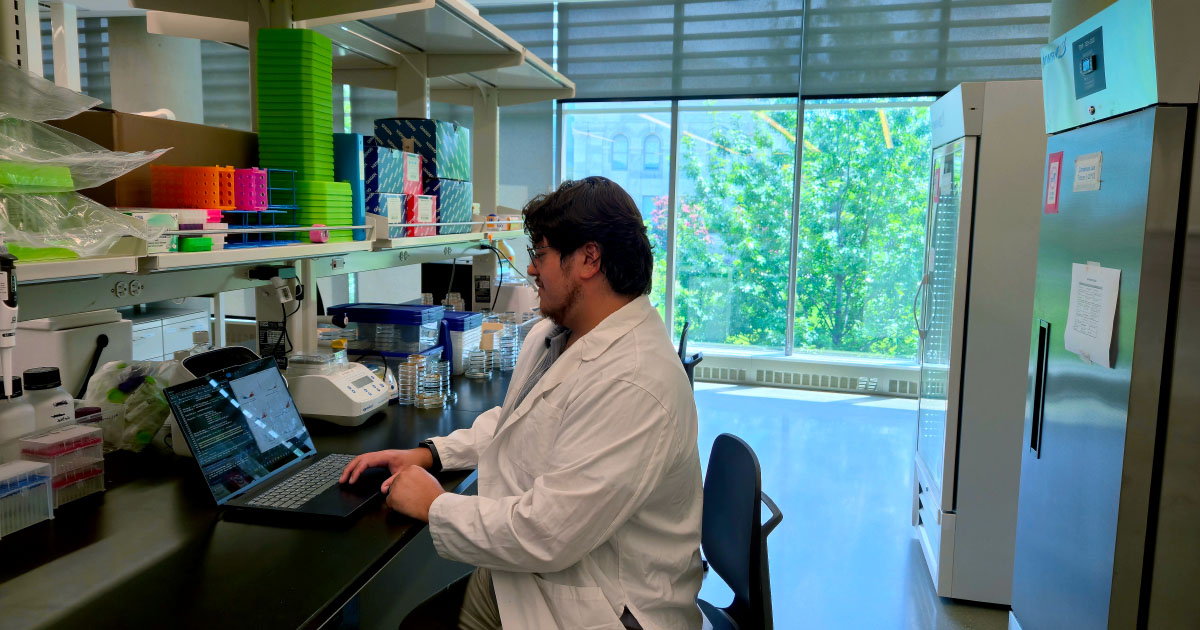 Ennzo Ortega in the Cárdenas Lab
“My time at AU and working on this thesis has taught me so much about the different sides of science. I came in with mostly wet lab experience, so shifting to a project that's almost entirely computational has been a really eye-opening change,” he says. “It's also made me appreciate coral reef research even more and the huge effort that scientists around the world are putting into protecting these ecosystems.”
Kaleigh Missimer
Improving the Environment in Washington, DC
I want my work to make a difference in the world, and my research this summer has helped me do just that.
Kaleigh Missimer (MS environmental science and MS sustainability management '27) spent the summer working with Empower DC on an environmental justice project in Washington, DC's Ivy City neighborhood. She documented residents' experiences with environmental hazards, including concerns about emissions from a chemical factory located beside residential homes. “The facility was grandfathered into the Clean Air Act and would never be allowed under current regulations, and residents have reported significant health problems linked to its emissions,” she says.
Kaleigh hopes that her research will help support the community's ongoing advocacy efforts. "Hearing residents' stories and seeing their fight for their community has been a privilege," she says. "I want my work to make a difference in the world, and my research this summer has helped me do just that."
Isaac Salmon
Measuring the Effects of Radiation
Learning how radiation affects microelectronics showed me why this work matters, and how much is still left to figure out as we push further into space.
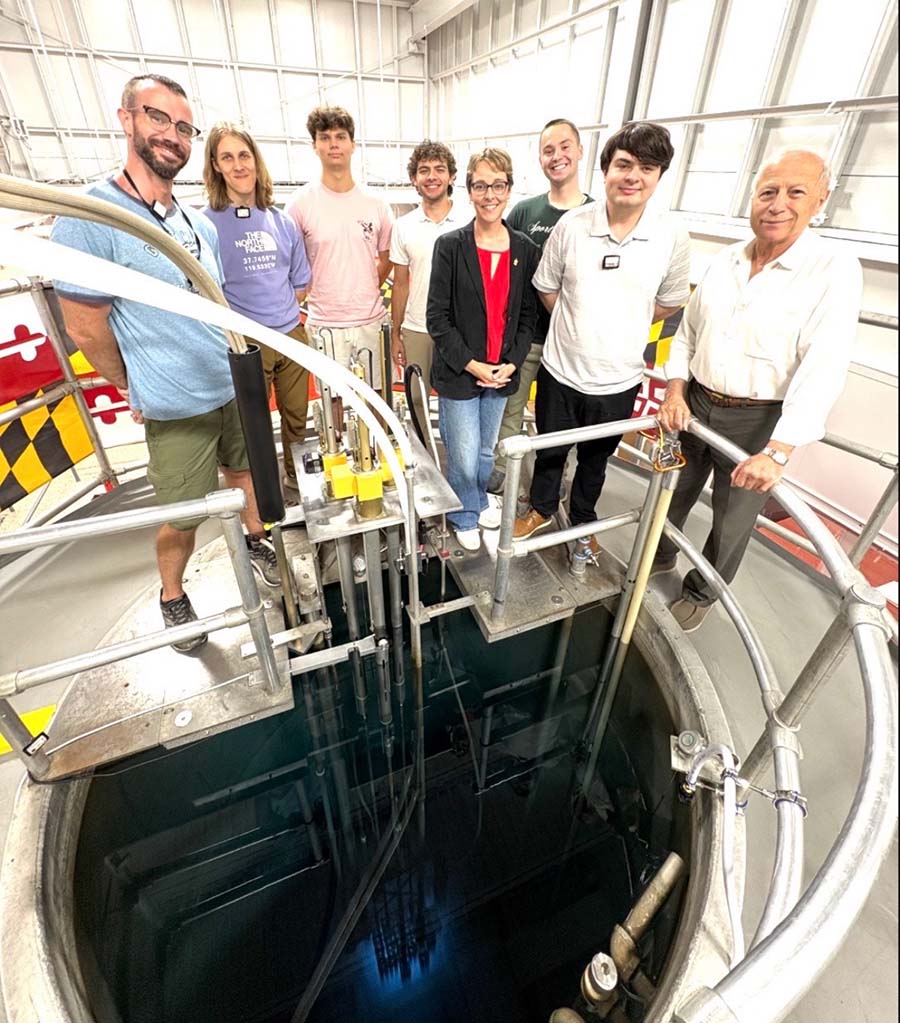
Isaac Salmon, (BS physics and mathematics ’29) worked as an Undergraduate Radiation Hardening Fellow, conducting research at the University of Maryland's radiation facilities, studying how radiation affects the performance of silicon photomultipliers––light sensors used in technologies ranging from LiDAR and astronomy to nuclear monitoring. Working at the facility that houses the Maryland University Training Reactor, he exposed the sensors to carefully measured doses of neutron radiation to better understand how they perform in demanding environments. The project was part of the Naval Surface Warfare Center’s SCALE Program through Purdue University and was conducted in collaboration with the Center for Advanced Life Cycle Engineering (CALCE) at the University of Maryland.
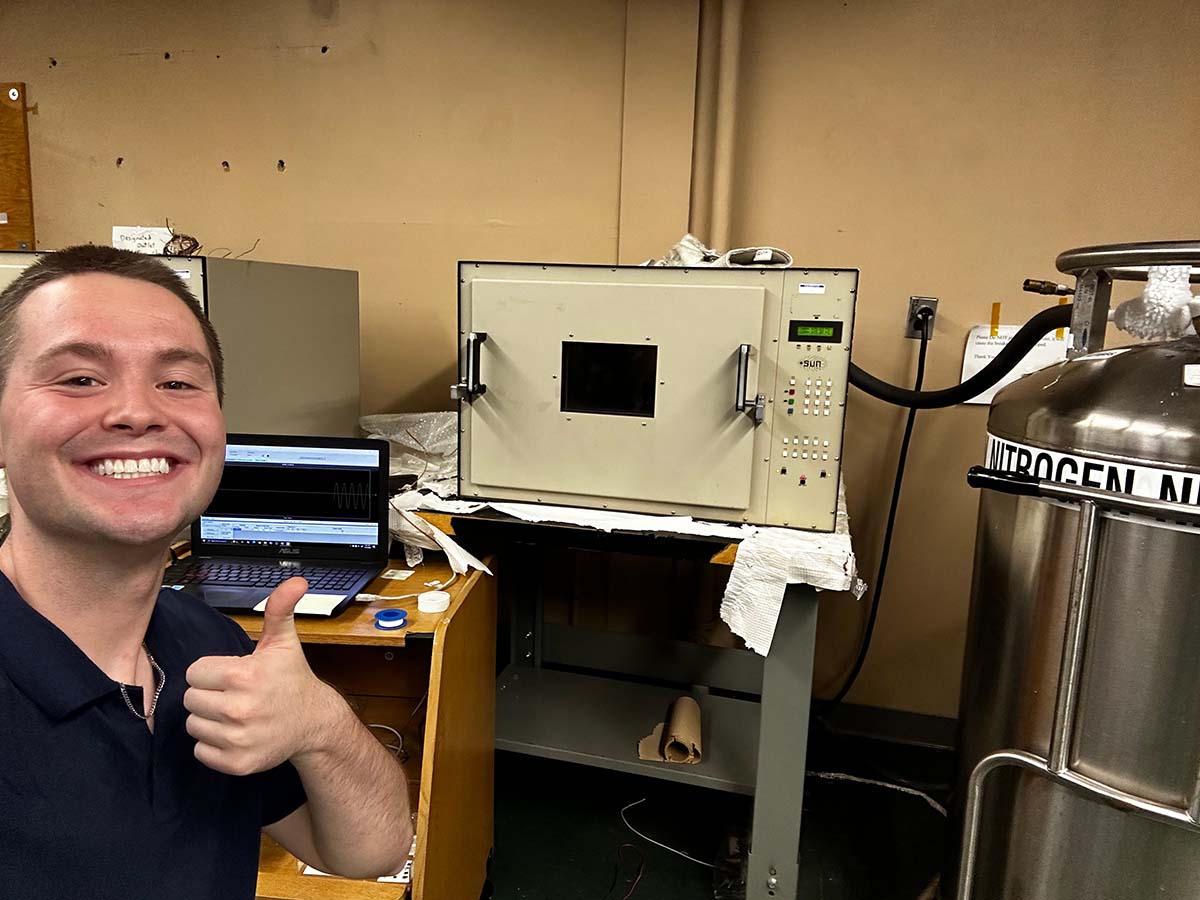 Isaac Salmon standing beside a temperature test chamber, which cycles materials between temperature extremes to measure how their performance changes.
"Learning how radiation affects microelectronics showed me why this work matters, and how much is still left to figure out as we push further into space," Isaac says.
Vincent Graham
Building Interactive Worlds with AI
The findings could help improve the design of interactive 3D experiences, including virtual classrooms, museum exhibits, and other immersive digital environments.
Vincent Graham (MS data science ’25) uses artificial intelligence to create lifelike, interactive digital replicas of real-world environments. Unlike a photograph or video, these interactive 3D scenes let people move through a virtual space and view objects from different angles.
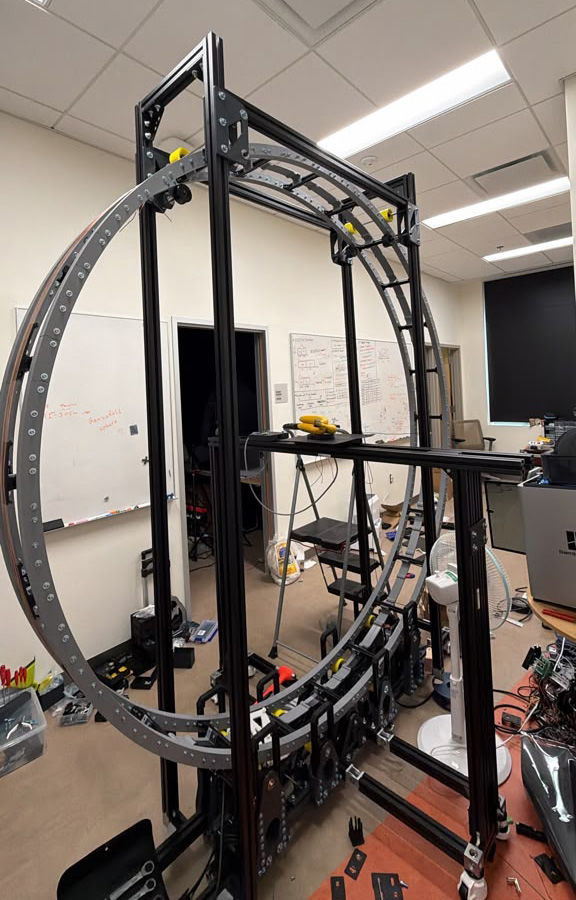
This summer, Vincent designed and built a custom camera system that captures a scene from hundreds of angles, then uses AI to reconstruct it in three dimensions. His research explored how people actively choose where to look when evaluating properties such as texture and glossiness. The findings could help improve the design of interactive 3D experiences, including virtual classrooms, museum exhibits, and other immersive digital environments. Vincent will present his research at the European Conference on Visual Perception.
Jason Blackmer
Tracking the Science of Decision-Making
I had the pleasure of engaging with all sorts of research on motion and kinematics from physics fields, as well as the advanced statistical methods in contemporary data science while programming in python.
Jason Blackmer (BS neuroscience and data science ’27) spent the summer working in the Laubach Lab in AU's Department of Neuroscience, helping develop a software tool funded by National Institute on Drug Abuse (NIDA) at the National Institutes of Health.
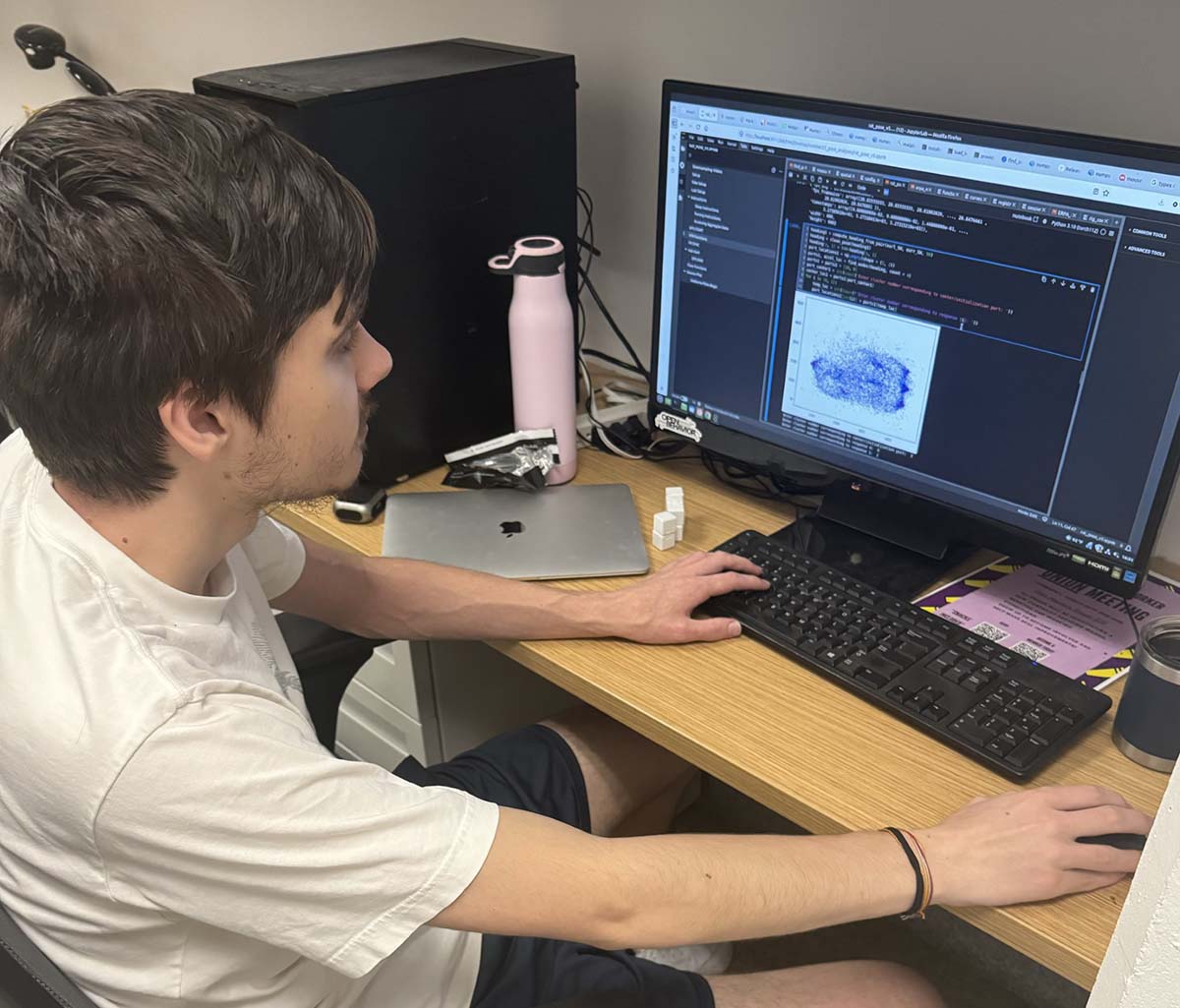 Jason Blackmer in the Laubach Lab
The software analyzes video data to better understand how movement relates to decision-making. The research will be featured in two upcoming scientific publications, and the open-source software has been released to GitHub, the leading software repository on the Internet, where developers store, share, and collaborate on software code.
"This summer, my work has centered on developing a new event-aligned analysis tool for behavioral studies and applying it to our lab’s own neuroscience data,” Jason explains. “Throughout the process, I had the pleasure of engaging with all sorts of research on motion and kinematics from physics fields, as well as the advanced statistical methods in contemporary data science while programming in python.”