
A Leader Who Listens

Three.
That’s how many sides there are to any story, goes the saying. Yours, theirs, and the truth.
In speaking with American University Chair Emeritus Gary M. Abramson, SPA/BA ’68, it’s easy to understand why it lives among his personal mottos.
Listen, consult, listen again. Consider all and build consensus. Something true will follow.
It’s an approach that has served him—and the institutions to which he’s dedicated—throughout decades of change and growth.
From helming The Tower Companies as one of the DC region’s most influential property developers to expanding a philanthropic legacy alongside his wife, Pennie Abramson, at American University, the Weizmann Institute of Science, the Heifetz International Music Institute, and Jewish nonprofits, Abramson’s roles in public life are matched by his unique reputation as a true gentleman. Where one might expect bravado, Abramson responds with considered sensitivity.
At his alma mater, Abramson’s 36-year tenure on the American University Board of Trustees remains the longest in university history. His chairmanship from 2005-2011 ushered in a period of stable governance that continues to this day. And with four named spaces, nearly every corner of campus bears witness to the Abramsons’ generosity.
This October sees Abramson recognized with the 2026 Cyrus A. Ansary Medal—AU’s highest honor for leadership, citizenship, and excellence.
Abramson typically resists accolades, but values the award for what it can inspire for the AU community.
“It does show that all that hard work I put in is appreciated, which is a nice feeling,” says Abramson. “It sets an example for other students and people and accents the importance of higher education.”
For those who have served AU alongside Abramson, the opportunity to celebrate him is deeply meaningful.
“I can't think of a single individual more worthy and deserving of that medal than Gary,” says AU’s 14th president Cornelius Kerwin, SPA/BA ’71. “It's not just the longevity of the service—it’s the quality of the service, the nature of the leadership, and the kind of contributions that he has made.”
A Local Son Finds His Way
The eldest of three sons, Abramson grew up in the Washington, DC, area in the postwar days of the 1950s.
His father, Albert “Sonny” Abramson, served as Captain in the U.S. Army Air Corps during World War II. Upon his return from the war and with a $500 investment from his wife, Ruth Selsky Abramson, he founded a real estate and property development firm—The Tower Companies—in 1947.
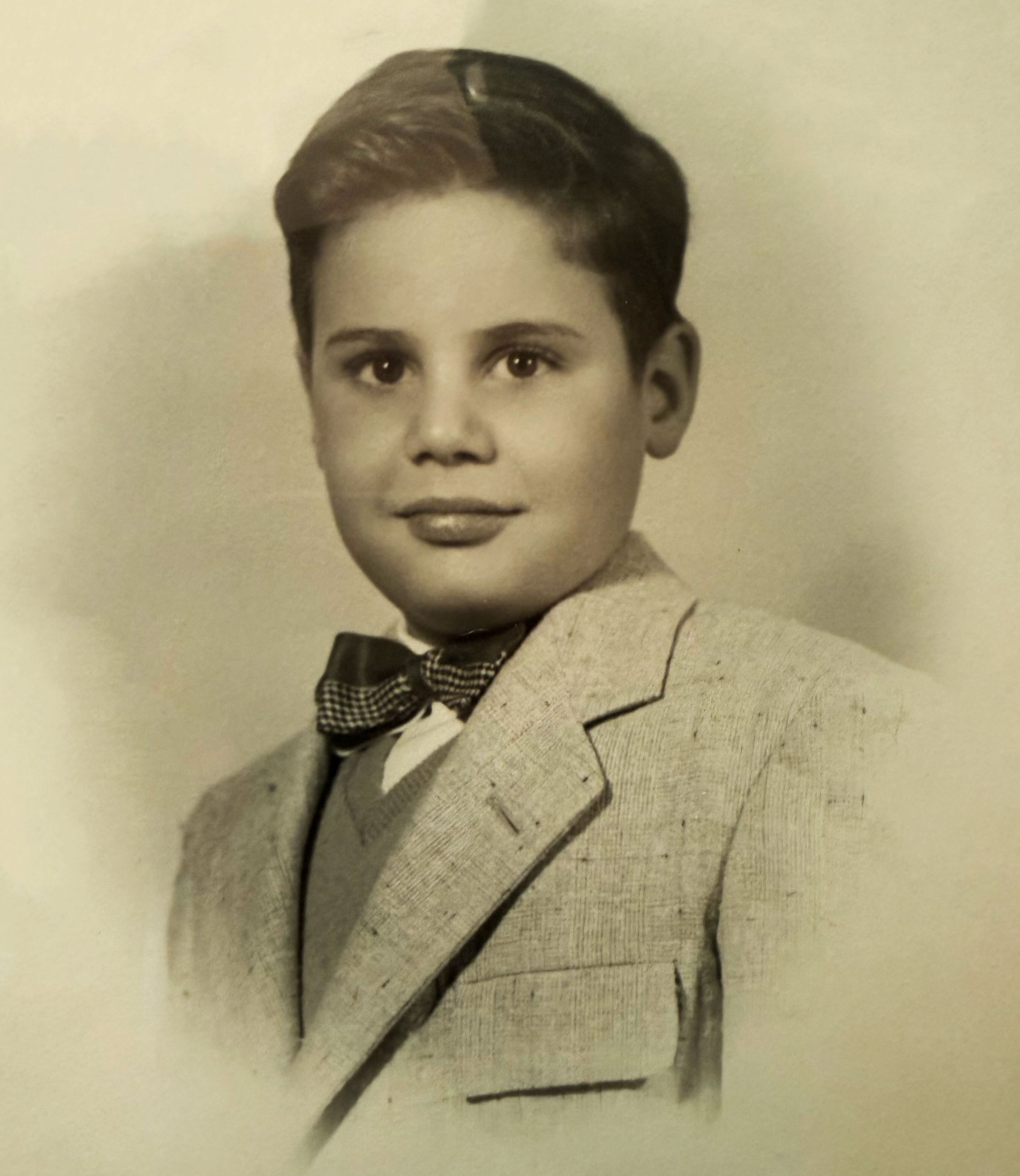
Sonny and Ruth Abramson were interested in the arts, taking their sons to galleries and mid-week concerts at the National Symphony Orchestra. A young Abramson learned to play the drums and the accordion.
“My grandmother was really interested in teaching her boys about art and music from a classical perspective,” says Abramson’s daughter and AU alumna Marnie Abramson, SOC/BA ’97. “I don't know that everybody would have embraced it in the same way, but for whatever reason, it resonated with them and became a part of their life.”
As Abramson grew up, so did his father’s company. What began as a small portfolio of houses and apartment buildings expanded, within two decades, into a real estate enterprise spanning residential properties, office buildings, and shopping centers throughout the region.
Sonny Abramson was keen to share this world with his sons, taking them on Sunday drives around the neighborhood to admire nearby houses. When Tower secured the rights to clear the historic Blair property in Silver Spring for redevelopment, an 11-year-old Abramson, under the watchful guidance of the local fire department, was permitted to start a controlled burn on the dilapidated mansion.
Still, a career in real estate wasn’t Abramson’s immediate plan. He headed south to attend the University of Miami, where the fun and the sun ultimately proved more appealing than the classroom.
“After two years of playing more than studying, my father thought it would be a good idea if I came home,” says Abramson. “AU was the local university, and we knew some other people there, so I applied and finished my degree.”

Abramson graduated in 1968 from the School of Public Affairs with his degree in government and public administration. After trying out a year of law school, he pivoted back to a role that seemed to be waiting for him his whole life. The family business was calling him home.
From Blueprint to Legacy
At Tower, Gary Abramson found an abundance of opportunities to learn and lead.
One of his earliest projects was the joint venture between Giant Foods and The Tower Companies—first initiated in 1955—that developed supermarket-anchored shopping centers throughout DC, Maryland, and Virginia. The venture helped transform the region’s grocery-shopping landscape, reshaping how generations of Washingtonians shopped.
 In the mid-1970s, Tower began development of White Flint Mall in Bethesda, MD, in partnership with real estate mogul Ted Lerner. It was characteristically visionary and ambitious. Gary Abramson lured luxury department giants typically reserved for the New York and San Francisco markets, including Bloomingdale’s and I. Magnin, to serve as retail anchors, while upscale dining, a nightclub, and curated transportive experiences like the Via Rialto and Georgetown, elevated how patrons interacted with the space. When it opened in 1978, White Flint had reimagined the modern shopping destination.
Impressed by his son’s discerning skill, Sonny Abramson entrusted the company reins to Gary Abramson in 1980. His time and attention had become focused on the creation of what would become the United States Holocaust Memorial Museum—a defining contribution of his life and legacy. The Tower Companies, he felt, needed a steady hand.
Abramson delivered.
Under his tenure, Tower stayed true to its founding vision while launching a new era of iconic properties that married form, function, and innovation. He worked in tandem with his brothers Ronald Abramson and Jeffrey Abramson to coordinate operations, leasing, and development.
Tower’s most recognizable projects, such as the Washington Square building, centered on revitalizing DC’s K Street corridor, home to the city’s concentration of advocacy, law, trade, and research power players. Its redevelopment of The Millennium Building at 1909 K Street, adding four stories to the 1960s building while netting a zero increase in its overall energy usage, cemented Tower as an early leader in sustainable infrastructure and began a legacy that has gone on to include the industry’s most preeminent LEED certifications and green building awards.
As company leadership has been passed by Abramson and his brothers to now the third generation and beyond, the center holds.
“Most family businesses don't grow in the second generation,” says current AU president and previous dean of the Kogod School of Business Dave Marchick. “But Tower did under Gary. Indeed, Gary, Jeffrey, and Ron took a great business created by Sonny and made it even better by breaking new ground with investments in sustainability.”

Abramson’s focus has never strayed from the potential he sees around him. While the family could have been tempted to follow other firms to New York or Chicago, Marnie Abramson, herself an AU graduate, noted that DC was in her father’s DNA.
"He’s always talked about it as, ‘DC is our community, so it's an extension of our home,” she says. “Because we build in the communities where we live and where we work, the types of buildings that we design matter. They have to be beautiful.”
Gary’s steadiness was complemented by his keen eye for aesthetics. No finish unnoticed, no scratch too small.
“He has always viewed us as stewards of the community through the built environment and creating spaces that we can be proud of” says Marnie Abramson.
Listening as Leadership
Nearly two decades into his career at Tower, Abramson was tapped by AU’s vice chairman Stuart A. Bernstein, Kogod/BS ’60, and nominated to join the university Board of Trustees in 1986.
“I thought it would be a good experience,” says Abramson. At the time, few trustees were alumni. “I had graduated from AU, so I thought it would be good to have somebody who had actually graduated from the university to be on the board.”
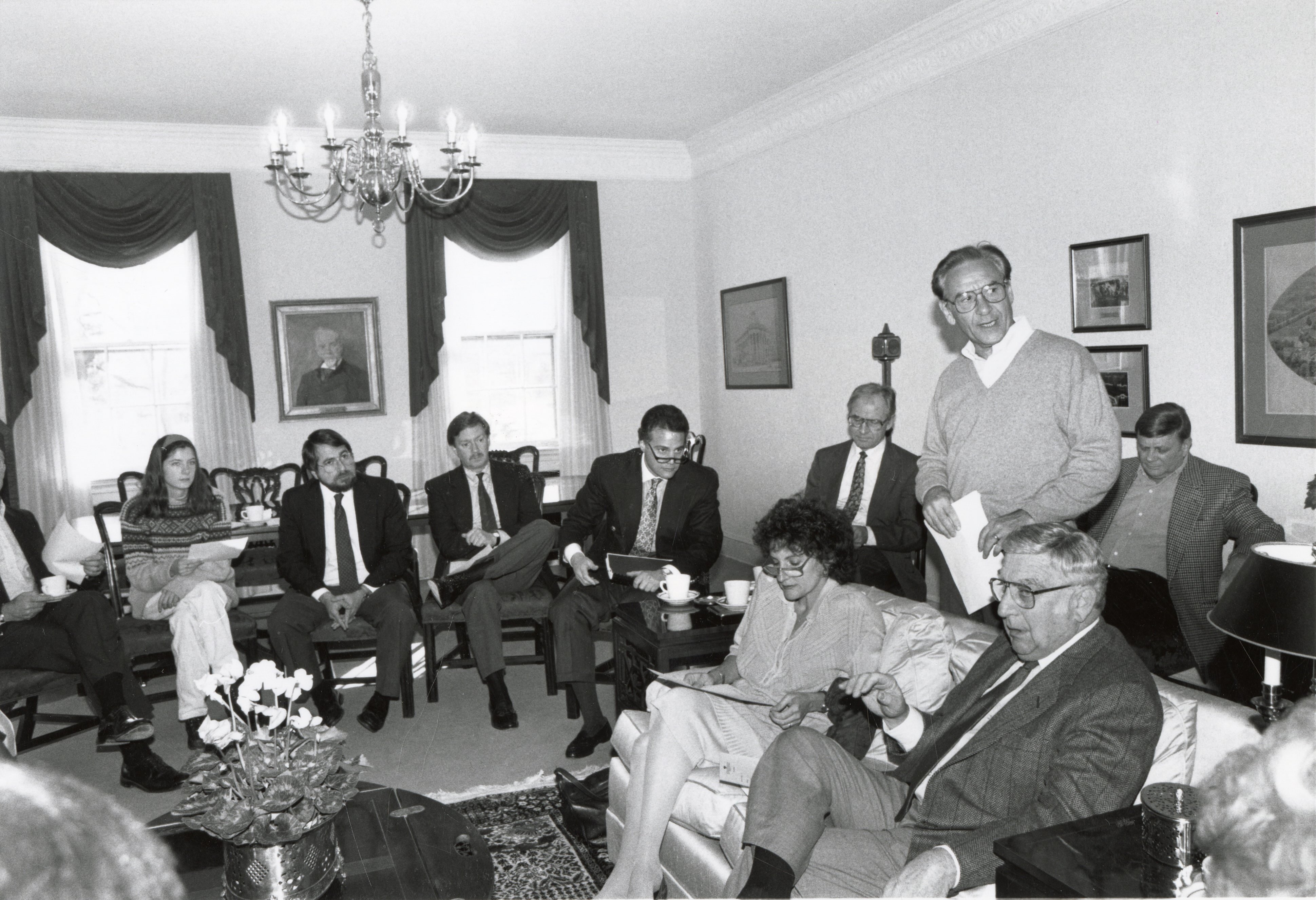
With each year on the board, Abramson became more attuned to the university community. He experienced a period of life-threatening illness in 2001 but remained observant and thoughtful as he regained his strength.
Current trustee Jeff Sine, SIS/BA ’76, recalls joining the board in 2003 and noting Abramson’s unaffected influence.
“What I remember about Gary as a board member before he became chair was that he was relatively quiet and unassuming, but that he just commanded tremendous respect when he spoke. Everyone listened to what he had to say,” says Sine. “He never wore it on his sleeve. He just lived it.”
In 2005, Abramson was elected chair during one of the biggest crises in university history—an investigation and subsequent termination of its then-president over spending issues. Abramson simultaneously led the board, managed the investigation, handled Congressional inquiries and intense press coverage, and appointed long-time professor, dean, and provost Cornelius Kerwin as interim, and then permanent president. It was a profoundly turbulent time for the university, the path forward clouded in uncertainty.
Abramson leaned on his trusted strategies.
“It was really a crisis of governance,” says Abramson. “We had to build a whole new board from scratch with new bylaws—more transparent, much more open, discuss as much as possible, have student representatives, and faculty representatives to correct a lot of what had caused that breakup to begin with.”
The result was a functional “model of what a perfect board should be” that Abramson has seen copied by institutions across the country.
The same steadying hand that Abramson brought to The Tower Companies extended to his leadership of AU’s board.
Core to his vision was openness and consensus. Three sides to every story.
“It was a stressful time, so I concentrated really on being very relaxed and very open. We weren't keeping any secrets,” he says. “I really wanted to have a unanimous decision on everything, so if we had some people that weren't in favor of something, we discussed it through to not turn anybody off.”
“To say he’s an active listener is an understatement,” says AU’s 15th president Sylvia M. Burwell of Abramson’s subtle power. “He uses that listening as part of his leadership, whether that’s in the problem solving because of the different perspectives, to how he makes others feel in terms of feeling heard.”
As chair, he brought in one of the most enduring cohorts of new trustees in university history, many of whom remain on the board as leaders and philanthropic drivers.
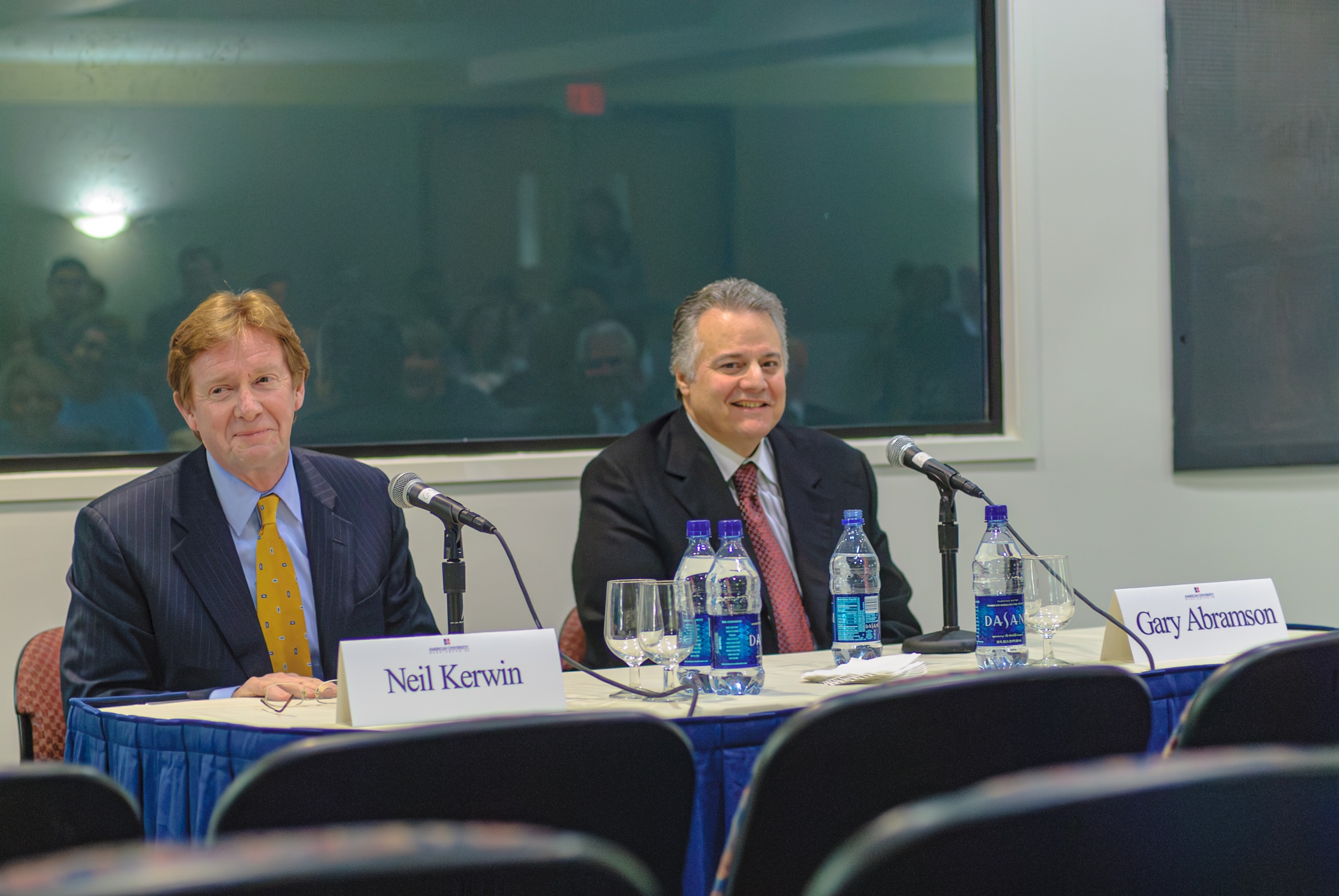
Current chair Charlie Lydecker, SPA/BA '85, cites not only Abramson’s example, but his friendship, in helping him feel included as a new trustee in 2005.
“It struck me, as a new member, that he was guided entirely by his commitment to the institution. I found that very reassuring and very powerful,” says Lydecker.
For trustee Alan Meltzer, CAS/BA ’21, who had known and respected the Abramson family long before joining the board in 2007, Abramson “represents the best in a human being.”
Among Abramson's greatest show of foresight during this time was the decision to allocate two percent of the university’s annual operating budget to build AU’s endowment, a practice continued until the pandemic. Building the endowment would shelter the university for a “rainy day” should the mercury drop.
President Marchick sees this as “perhaps the most important fiduciary decision for a university that's been around for 133 years” and continues its mission amidst a rapidly evolving enrollment climate and challenges to higher education.
“That 2% now is worth over 700 million dollars,” he says. “And it's raining.”
The decision at the time was not without critics. Yet, Abramson’s vision prevailed. Years in the family business had taught him one secures the future for what matters most.
A Home to Be Proud of
Parallel to Abramson’s leadership has always been a resolute commitment to service and philanthropy. It’s a lesson he learned early on.
“My father set an example for me of being philanthropic,” says Abramson. “You know, if you're lucky enough to have the resources and been successful, you should give some back.”
One of the most visible testaments to this ethos stands on the National Mall, where Sonny Abramson, Bud Meyerhor, and Noble Peace Prize winner and Holocaust survivor Elie Wiesel partnered to create the United States Holocaust Memorial Museum. Sonny played a leading role in overseeing the architect, construction, content creation, and fundraising of the site which opened to the public in 1993.
“If it were not for Sonny Abramson’s exceptional dedication and determination over many years, the United States Holocaust Memorial Museum would not exist. This Museum, which has been visited by more than 50 million people, is a gift to the American people and a major part of the Abramson family legacy,” says Sara Bloomfield, the long-time Director of the Museum.
Together, Gary and Pennie Abramson have extended the family’s service and philanthropy beyond Washington. They have been dedicated leader-advocates at organizations including the Heifetz International Music Institute and the Weizmann Institute of Science, where Pennie Abramson previously served as President of the American Committee and most recently spearheaded the development of a named residence hall for students and scholars.
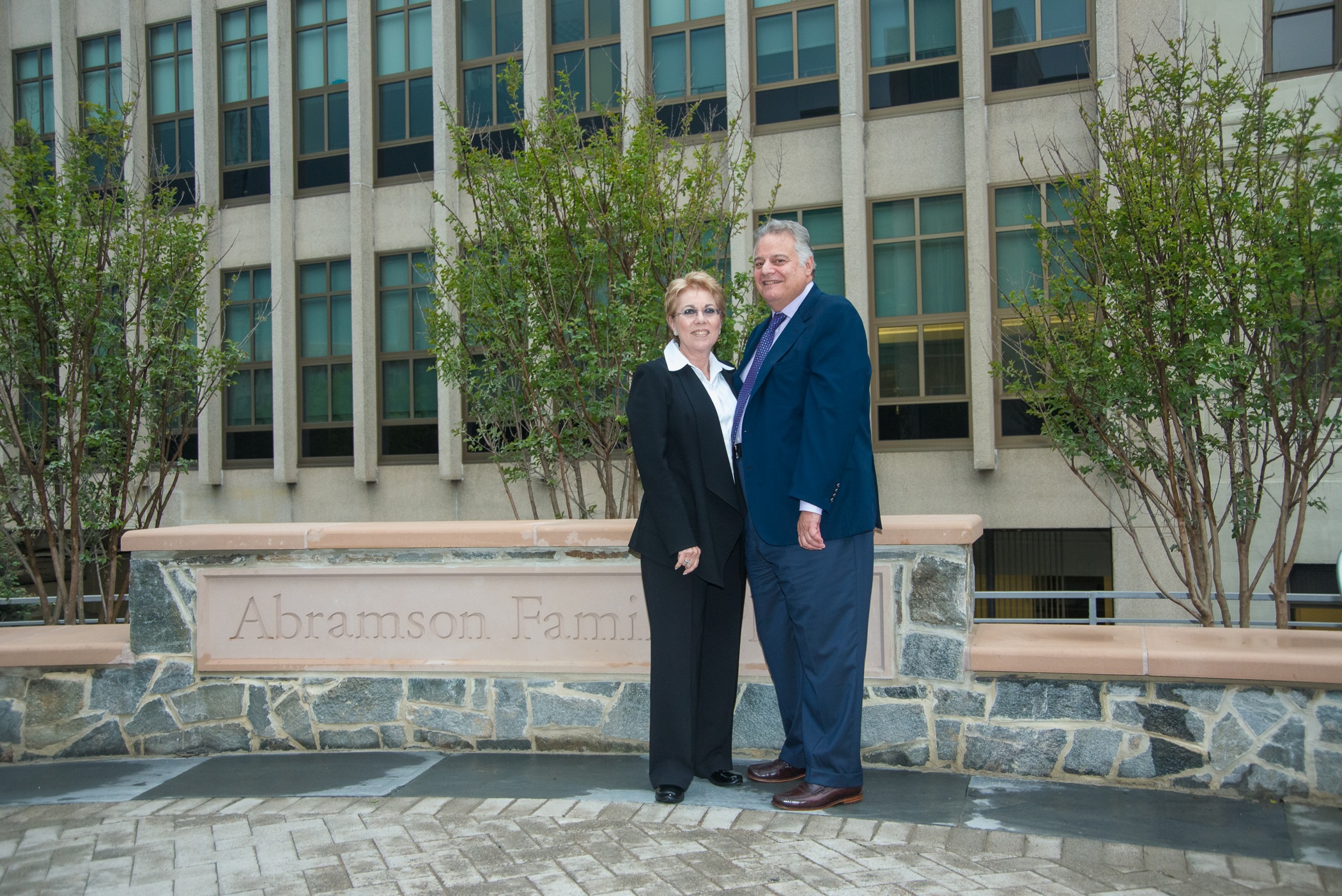
At AU, the Abramsonsimpact is equally tangible across the built environment— “Abramson,” a thread woven into the physical and intellectual fabric of four inspiring spaces as well as AU Hillel.

In the Abramson Family Founder’s Room in the School of International Service, students sit inches away from visiting diplomats. Across campus hears the swell of violins and Shakespearean verse performed in the Abramson Family Recital Hall.
“There's hardly a space on this campus where we study, where we teach, where we perform, where we worship, and where we relax,” Kerwin says, “That he and Pennie's philanthropy hasn't touched.”
In 2018, the Abramsons made a $5 million gift to kick off construction of the university’s state-of-the-art LEED Gold-certified Hall of Science. The building’s auditorium, recognized as the Gary and Pennie Abramson Discovery Hall, fills with sunlight each day through its wall of windows.
“The beauty of the building says a lot about not only the university, but the whole community,” Abramson says of the design’s attention to light, air, and sustainable materials. “It makes people proud that they went to AU, and it makes a better atmosphere for students to learn in.”
To commemorate the 2026 Cyrus A. Ansary Medal, AU established the Gary M. Abramson Presidential Scholarship Fund, with contributions from Abramson’s brothers, a matching gift from his daughter Marnie, and donations from President Marchick and admirers who served on AU’s board during Abramson’s 36-year tenure. It marks only the second presidential scholarship ever named at American University.
In addition, the Board of Trustees recently voted unanimously to elect Abramson as an emeritus member. As such, he holds the historic distinction as the first and only individual to serve as both Chairman Emeritus and Trustee Emeritus.
These titles underscore an extraordinary breadth and depth of generosity at the university to advance “science, international studies, the arts, Jewish life, financial aid, and the experiences that enrich students’ lives across campus,” reads the citation accompanying the Ansary Medal.
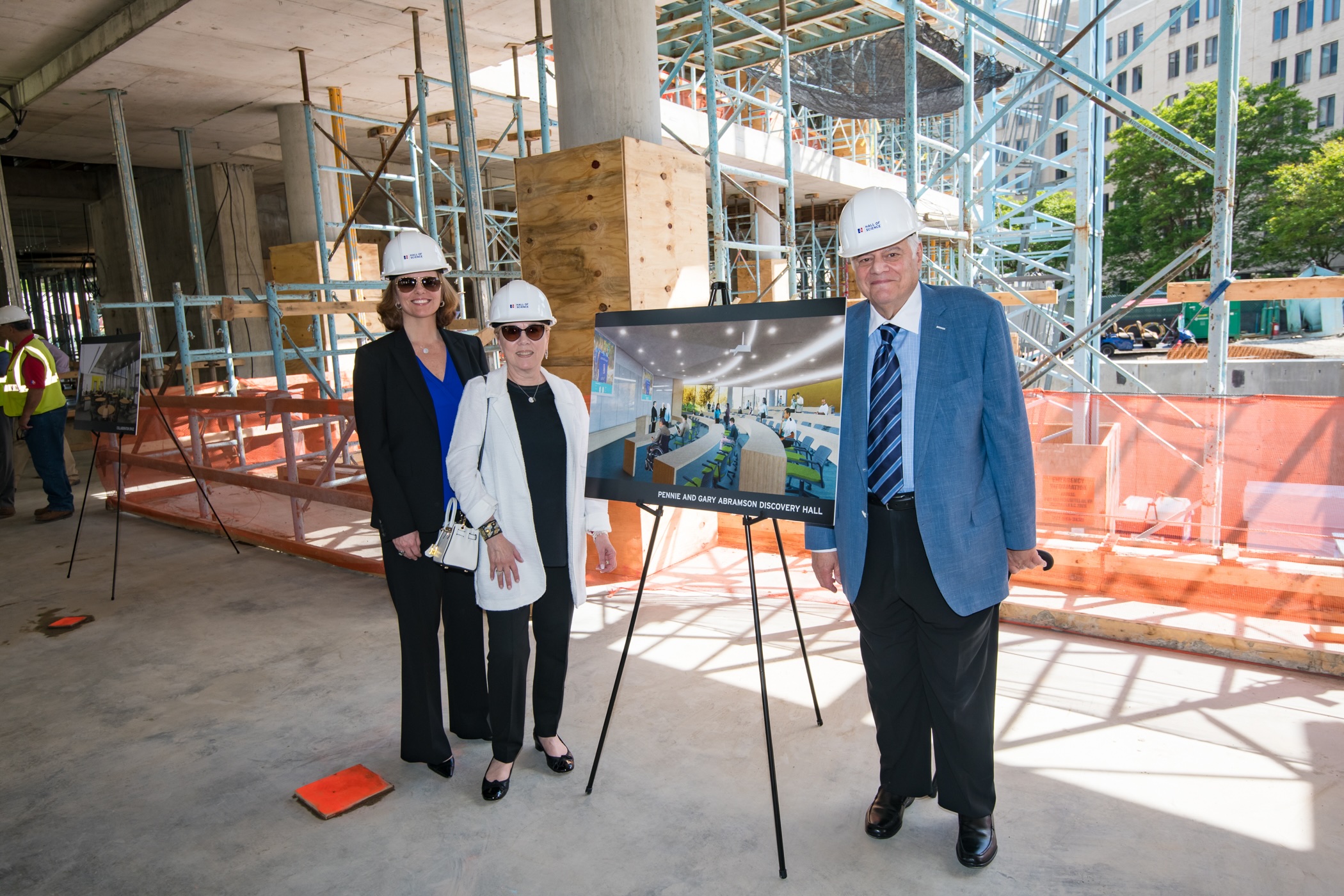
“We don't just put our name on what we create,” says Abramson. “We put the whole family on it as a family legacy, because we want our kids to be proud of what their parents and grandparents did.”
Indeed, Marchick notes that “one of Gary and Pennie’s other gifts to American University is Marnie, SOC/BA ’97.” He adds, “Building on her father’s commitment to their shared alma mater, Marnie has helped catapult AU’s leadership in sustainability through her service on the Kogod Sustainability Advisory Committee.”
In this tradition of family-driven excellence lies a lasting power to inspire.
It’s what Abramson—always loyal, continuously steadying, and quietly listening—has always intended.