
Investing with Passion and Purpose

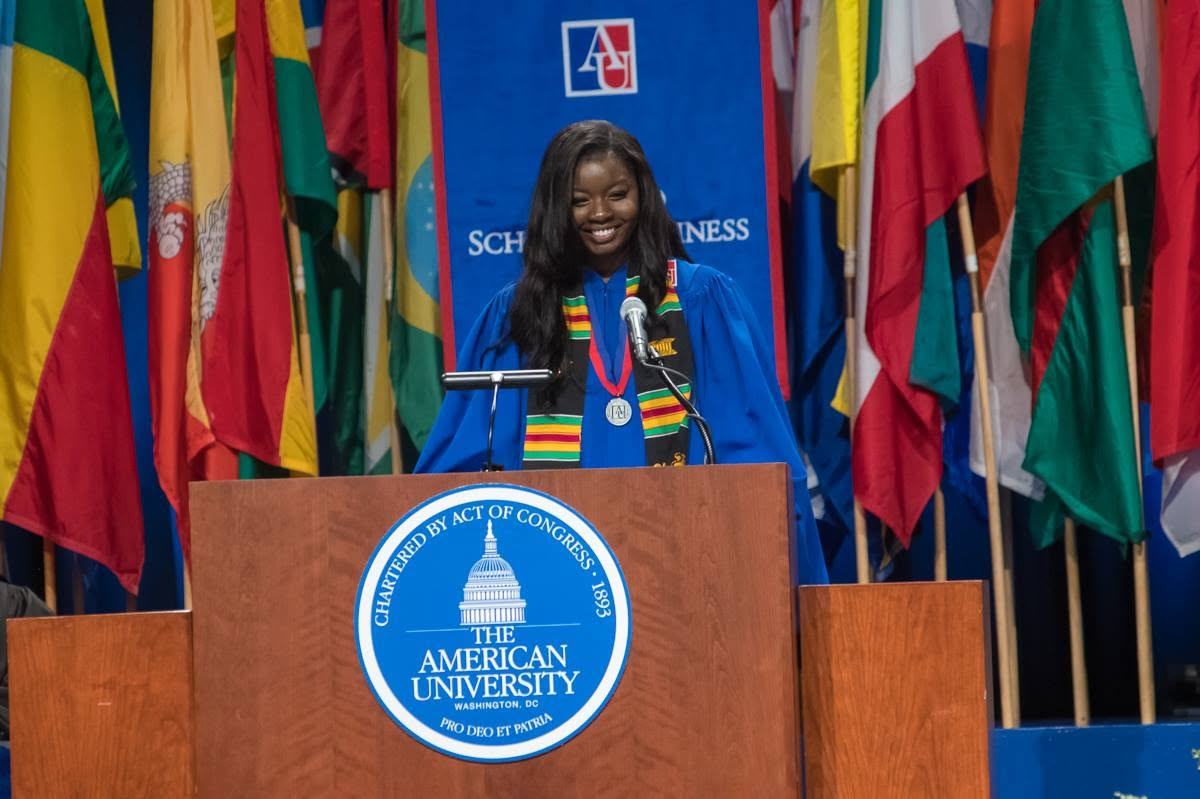
In a voice steady and resolved, a young commencement speaker charged her fellow Kogod School of Business graduates.
“The power of a Kogod education lies in your ability to pay it forward,” she told the crowd packed into Bender Arena for the May 2018 ceremony.
Flash forward to the present, and Genever Oppong, Kogod/BS ’18, recognizes her current self in that younger woman. Her message, too.
Since graduating, she has built a career around a question that first took shape while looking out the window of her childhood home: How can capital become a tool for creating greater opportunity in communities like hers?
Following the Money
Oppong grew up in Newark, New Jersey as a first-generation Ghanaian American. Hers was a working-class family that nurtured ambition. A college-age Oppong was encouraged to set her sights on medical school.
It would have been a perfect plan, save for the inconvenient fact that Oppong wanted nothing to do with germs, blood, or hospitals. Still, she wanted to have a career defined by impact.
“I don’t think I was the person who was up at night trying to figure out the cure for cancer,” says Oppong. “I didn't have a burning passion to solve a problem in the sciences, but I had a burning passion to solve a problem in my community.”
Oppong went back to the drawing board.
From her parents’ home in a city long pushed to the margins, Oppong noticed a common thread between many of the challenges around her.
“I realized—whether it was access to quality, food or health care, or a good education—it all really came down to capital,” says Oppong. “And somehow, for the people who look like me, that flow of capital always skips us by.”
How could this flow be redirected? Her instinct was simple: Follow the money.
Almost instantly, Oppong pivoted toward business and banking. She Googled “CEOs of Fortune 500 companies.” Seeing only one Black woman on the list at that time lit a fire in her to change that. She would aim high and trust that the rest would fall into place.
Which it did, thanks in part to a mentor she found in now-interim dean of the Kogod School of Business Casey Evans.
Enrolled at AU and attending a Kogod event some months later, Oppong was immediately drawn to Evans’ polished presentation, down to her color-coordinated Apple Watch wristband. It happened that Evans was a professor in the accounting department.
“She told me that accounting was the language of business” says Oppong. “I thought, well, ‘I don't know anything about business, so the language seems to be the best place to start.’”
During her sophomore year, Oppong secured an accounting internship with Goldman Sachs. A person with more industry familiarity might have been weighed down with expectations.
“I didn't even know what Goldman Sachs was,” says Oppong, recalling the awed reactions she’d get from Kogod peers. “There was a level of imposter syndrome that I didn't suffer from because I just went with, ‘I'm going to go and do my best at this place.”
It was at Goldman that the accounting major began to feel the pull of the markets and moved to derivative accounting for her second internship at the firm.
The complexity of derivatives and their implications for the firm’s balance sheet made Oppong proficient with different markets, commodities, and interest rates, as well as gained her exposure with senior Goldman executives. Knowing she wanted to continue towards investment banking and private equity, she pitched herself for roles that could “peel the onion behind the numbers.”
In other words—if an investment banking team was going to run a model off of financial statements, she reasoned, then who could be more invaluable than the person who first put those statements together?
Learning to Invest
In a twist of wry timing, Oppong launched her career as an industrials investment banker focused on transportation and logistics amidst the COVID-19 pandemic.
Suddenly, she was back home in her childhood bedroom, fielding existential Zoom calls alongside questions about dinner. “I remember being back home, my mom is barging in my room, and I'm like, ‘We're trying to save the airline industry right now!’” Oppong recalls.
Cutting her teeth in investment banking during a global crisis taught her lessons—both technical and human—that she still turns to.
The rapid market devaluation of airlines forced Oppong’s team to innovate bespoke deals that leveraged the IP behind loyalty programs as a company asset. At the same time, she saw firsthand the relational side of the business, of building trust for when a client turns to her as an expert in the face of fear and uncertainty.
As the pandemic wound down, Oppong found herself returning to the goal that started it all: how to direct capital to her community.
“Needing to learn that from the people who sit at the top of capital,” says Oppong, she moved to a private equity unit at BlackRock managing approximately $4 billion in assets. Her two years on the team helped her learn what it was like to be at a major institution allocating capital.
Yet, watching the public adoration and then abandonment of equity engines such as the Fearless Fund—a venture capital firm designed to support women of color—underscored for Oppong a sense of urgency that she couldn’t ignore.
“Genever, you have to get back on the mission,” she told herself.
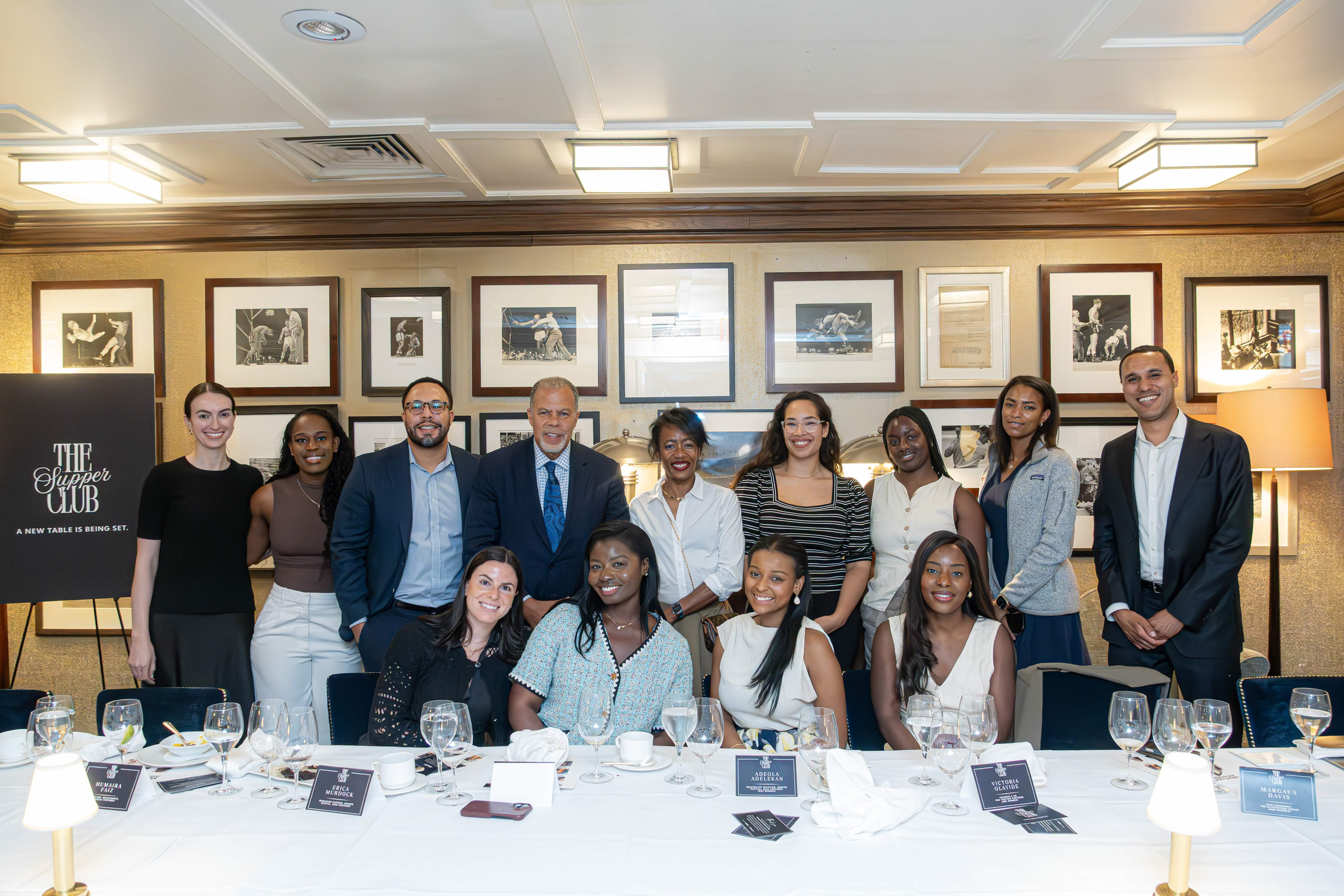
In August 2024, Oppong became the Founder and CEO of the Black Women Investors Network (BWI). The nonprofit is driven by a core thesis: “Expanding participation in private markets requires addressing a structural imbalance in both access to capital and the diversity of capital allocators.”
It’s an industry imperative as much as a mission statement. Of the more than $80 trillion in US assets under management, less than 2% are managed by minority- and women-owned firms. Minority founders likewise receive only a fraction of annual venture capital funding.
To change this imbalance, BWI is building a pipeline of funders and angel investors, while also promoting education, mentorship, and community to help close these long-too-accepted gaps in access to wealth management and decision-making.
“Money and business are highly emotional. Even if not intentional, you invest in problems you understand,” says Oppong. She cites persistent under-investing in asset classes such as women’s health.
“You need more investors who look like you. Because if you don't, the problems in those communities get underfunded.”
Paying It Forward at AU
It was this same inner compass behind BWI that led Oppong back to AU to create the First-Generation Genever Oppong Fund. Known as the GO Fund, it provides financial assistance to undergraduate students at the Kogod School of Business seeking to participate in real-world experiential learning opportunities.
Aligned with the university’s commitment to fund student internships and new AU Ready Pledge, awards help students access unpaid internships, conferences, site visits, study abroad, or other opportunities. Support from the GO Fund can also offset the costs of professional attire or transportation a student might need, such as a suit and a train ticket for a corporate interview.
The fund is deeply personal for Oppong, who navigated AU as a first-generation student and remembers the support from mentors like Evans, Professorial Lecturer Emeritus Bill Bellows, and Managing Director of AU Catalyst and the Frederick Douglass Scholars Program Wim Taylor that helped her make the most of her experience.
Being able to do an internship during her first semester at AU assured her she could begin building her resume right away and enter the workforce with the credibility of an AU education behind her. She also utilized campus resources like the Kogod Career Closet to find clothing that made her feel prepared and confident for her Goldman Sachs internship.
“First-generation students are usually managing the mental and emotional load of being the first person in their family to go through college, and often the financial implications,” says Oppong. “I think people can underestimate how many ‘micro-things' a student from a non-traditional background is worried about.”
Core to Oppong’s values is that financial support and mentorship go hand-in-hand. She connects with AU students to advise them on career pathways and interview prep, and she also joined the American University Alumni Board this past January as a volunteer leader.
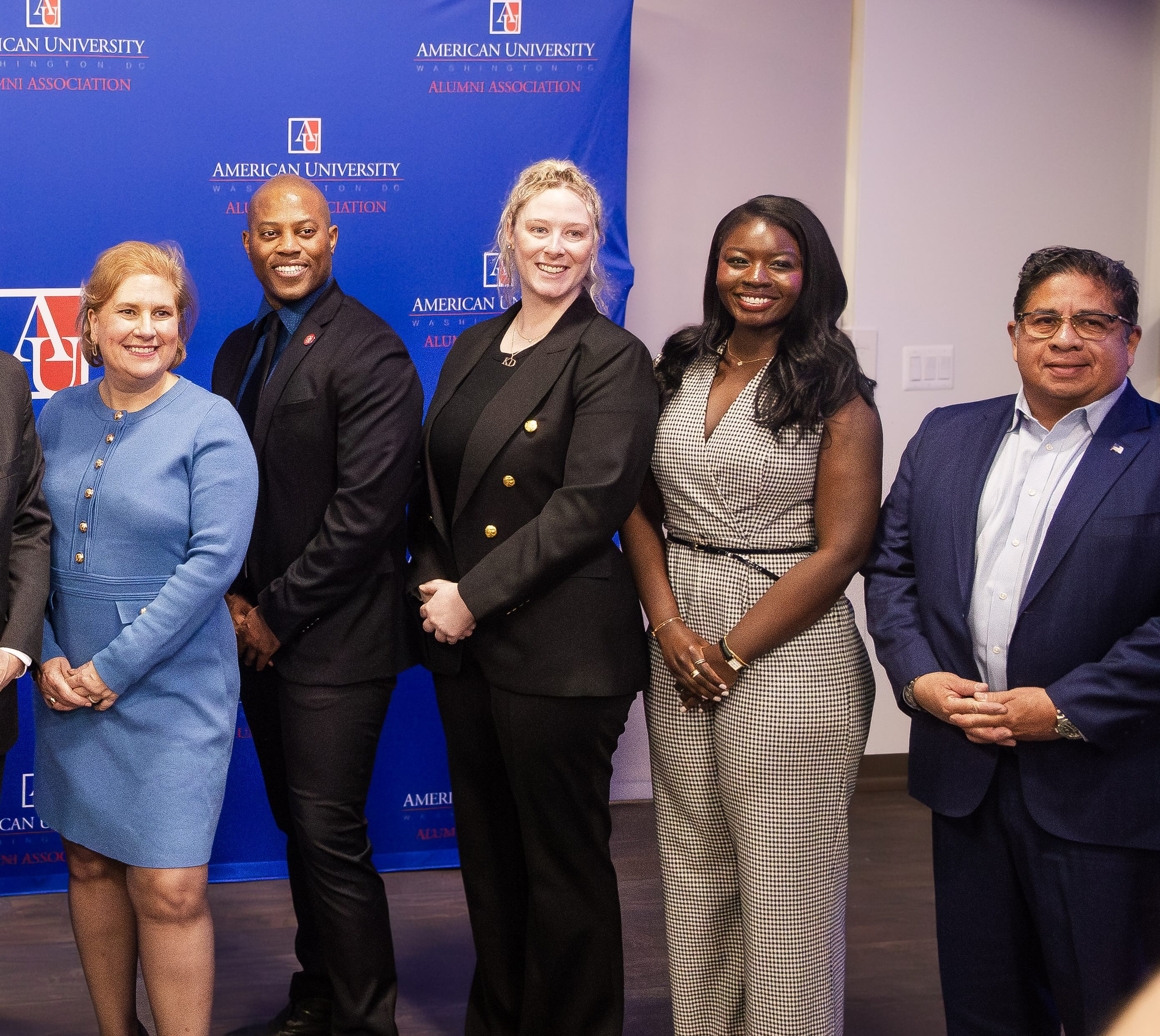
The work brings her back to the message she shared at commencement eight years ago: success is not only about how far you go, but who you bring with you.
“I know that every time I work hard and make progress, I’m not only showing up for myself,” says Oppong. “I'm showing up for my community.”
How does she find the spark to keep striving?
“I’ve learned that if I’m staying true to my North Star, if I'm being firm and unwavering on my values, then that little girl who looked out her Newark window is very happy.”