
Bridging Theory and Practice: One Student’s Summer at the Treasury
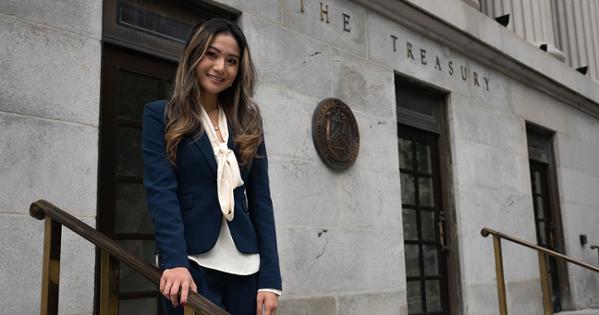
When Abigail Ha, SIS/BA ’27, first stepped foot on campus at American University’s School of International Service (SIS), she knew, in broad strokes, she was interested in pursuing a pathway in international affairs.
But as she began her coursework at SIS, she discovered a more specific interest: international economic policy.
That interest led Ha to seek opportunities outside the classroom where she could put the economic theory she was learning into practice. With dozens of federal agencies and departments right in her backyard, Ha set her sights on the U.S. Department of the Treasury and was ultimately selected to intern in the Office of International Trade and Investment Policy during summer 2026.
While interning at Treasury, Ha was able to work on various trade topics that she had learned about in her classes and sit in on meetings with policymakers at the federal level. She credited her SIS coursework with giving her the foundational knowledge and basic theories in international affairs policy that she needed to pursue this internship.
“I took various courses in this topic at SIS,” she said. “But through this experience, I realized I'm energized by not only the high-level goals and the complex issues but also the day-to-day tasks and the behind-the-scenes projects.”
The internship also provided Ha the chance to practice articulating and writing about complex trade issues with guidance from mentors—experiences she says will continue to impact her beyond her internship.
“Gaining this hands-on experience at the Treasury Department has clarified my interest in pursuing a career in international trade policy,” she said.
Ha’s internship was made possible by the SIS Internship Fund, administered by the SIS Office of Career Development, which for several years has provided funding support for students pursuing unpaid or underpaid internships. Without this funding, Ha said, she might have missed out on an internship that proved formative for her career growth and development.
“There are lots of great opportunities for students in DC, but many of them are traditionally underpaid or unpaid, and that can be particularly challenging,” Ha said. “All the experiences I had over the summer, they wouldn’t have been possible without the SIS Internship Fund.”
Ha was one of 12 undergraduate and graduate students the fund supported this year, at organizations including the Embassy of Ghana, the U.S. Commercial Service, and the Defense Technology Security Administration.
American University is also working to reduce financial barriers to internships more broadly. Through the AU Ready Internship Pledge, part of the university’s new strategic plan, every undergraduate student will have access to a $4,500 resource for a funded internship or research opportunity starting their sophomore year.
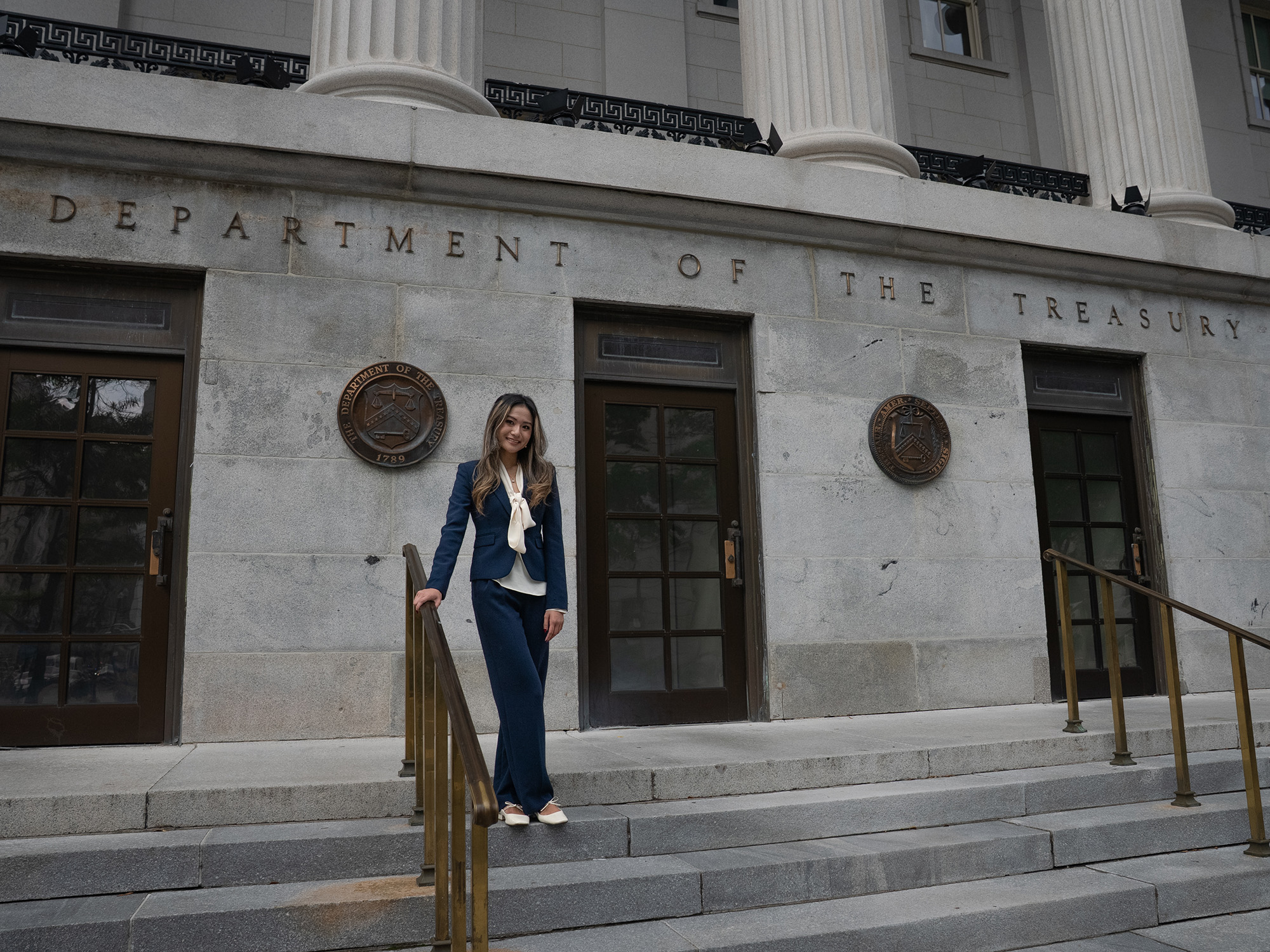
Heading into a new academic year, Ha is now equipped with a more refined professional skillset and a new outlook that has taught her to “see complexity where I initially saw simplicity.”
“I think one of the most valuable parts of pursuing internships as a student is that you are able to learn some of the more intangible skills that cannot be taught,” Ha said. “How you ask questions, how you prepare for meetings, how to communicate professionally—these are things that cannot be taught without experience and will be valuable regardless of the direction students go in their careers.”
For students looking to pursue competitive internships in DC or elsewhere, Ha’s biggest piece of advice is this: “Be open to opportunity.”
“Don’t be too stuck on just one opportunity because your first job is not your last job,” she said.