
NextGen Voices: Asiye Taskin
"We want KCMA to be a strong and meaningful cultural center that represents Kurdish culture and music in a way that is both authentic and accessible to the wider community."
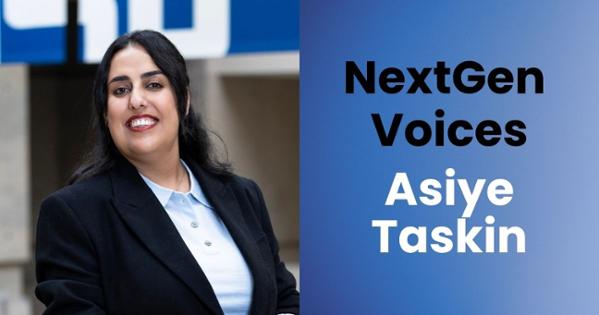
Asiye Taskin is a Kurdish community organizer in Nashville, Tennessee, where she co-founded the Kurdish Culture and Music Association (KCMA) and serves as its president. Originally from Diyarbakir, she has a background in political science and public administration and is now pursuing a master’s degree in computer science. She began her community work more than a decade ago with charities and groups working for women’s and children’s rights, first taking part as a student and later volunteering and organizing.
Taskin and a group of Kurdish friends founded KCMA more than three years ago to share Kurdish culture, music, language, and the arts with the wider Nashville community and beyond. They started as a small group working out of a donated space. KCMA now offers classes in Kurdish language, dance, theater, music, and daf. It also has a Kurdish rhythm group and hosts cultural events.
In our conversation, Taskin talks about how KCMA has grown, why bringing together Kurds from different parts of Kurdistan matters to her, and the association’s efforts to share Kurdish culture across Tennessee and beyond. She hopes KCMA will become a home for Kurdish culture and a place where people of different generations and backgrounds can get to know one another.
- Can you begin by telling me about yourself?
- My name is Asiye Taskin. I was born in Diyarbakir in Turkey. I studied Political Science and Public Administration, and I am currently pursuing master’s degree in computer science, so I have two very different academic backgrounds, but both have shaped the way I approach community work and service. I have also had the opportunity to share what I have learned by teaching computer literacy class in three languages to the members of the Nashville community. I am also the co-founder and president of the Kurdish Culture and Music Association.
- Can you share more about the Kurdish Culture and Music Association and your experience co-founding it?
- The Kurdish Culture and Music Association has been established for more than three years, but before that, the co-founders already had more than a decade of experience in different fields. I had experience with women’s rights, children’s rights and charitable organizations, while other members of our group brought their own experiences and skills.
- When I came here, I realized that even though Nashville is called “Little Kurdistan,” many people did not know who Kurds were or where Kurdish people came from. The idea for the association started through conversations among friends. We would talk about what was missing and what we wished we could do. Eventually, we said, “Let’s see what we can make.” We wanted to create a center for culture and the arts, but the most important thing was bringing people together and supporting one another. That is why we decided to focus on Kurdish culture and music. We wanted to create a place where people could come together, learn, share, and support each other.
- What kinds of activities and programs has KCMA developed since its founding?
- At the beginning, we did not have a physical office. We were all covering the expenses ourselves, and at that point, we asked ourselves what we could do with our own skills and abilities. We started with daf education classes because one of our co-founders, Nesrin, had been a teacher for many years. We also began working on a music group and networking.
- It took about a year to find a physical space where we could provide classes. One of our American friends opened her basement to us, and we rebuilt it and turned it into our new home. From there, we were able to provide Kurdish language classes, dance classes, and daf education. Over time, we added music, theater, and English as a second language classes. We also established the Kurdish Cultural Music Association rhythm group, which is still active and performing.
-
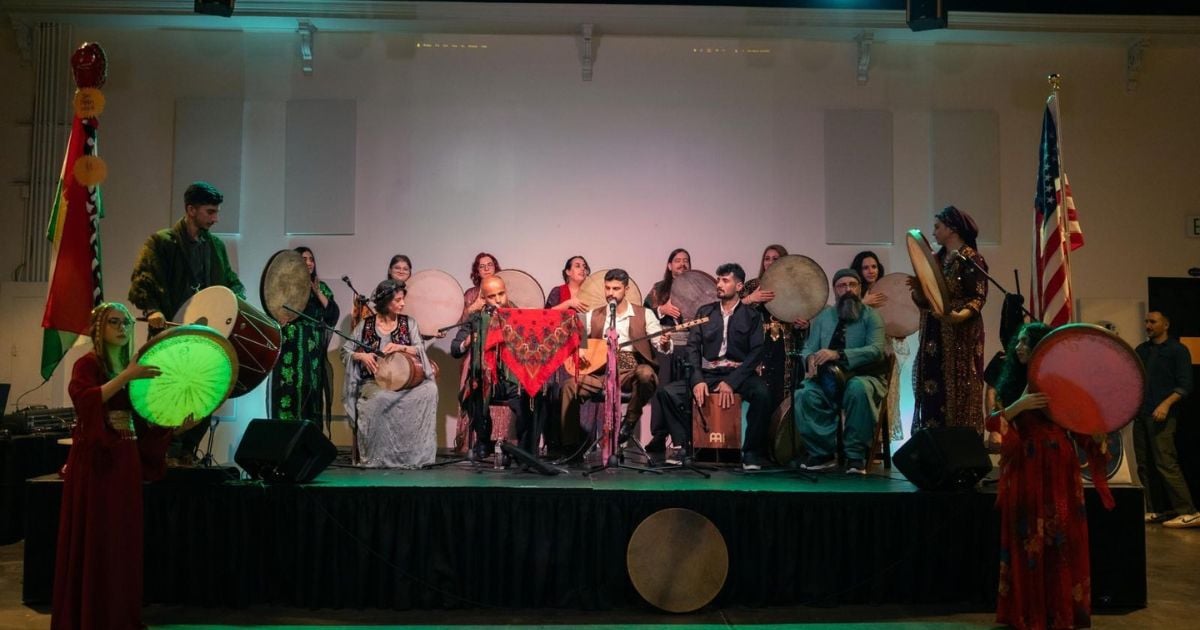
The Kurdish Culture and Music Association performing.
- What did it mean to celebrate KCMA’s third anniversary?
- It was very meaningful to me because I have been involved in women’s rights, children’s rights, and charitable work for more than a decade. I originally joined as a student, taking classes and eventually becoming a volunteer. I was always inspired by the people around me who were doing something for their communities.
- So, becoming a co-founder of an organization and then celebrating its third year is something I cannot really express in words. One of the things that made the anniversary especially meaningful was our collaboration with the Nashville Symphony. Kurdish people have been here for more than 25 years, maybe 40 years, but we had not seen this kind of collaboration before. We were very proud to be part of it. At KCMA’s third anniversary, more than 500 people participated. It was very diverse, with Kurdish and non-Kurdish attendees, local government representatives, associations, artists, and musicians. Mayor O’Connell also joined us, and we received a lot of support from the wider community.
- How does KCMA engage with the local community and government in Nashville?
- We have been trying to connect with the local government and make sure they hear from us and understand who we are. During a meeting with Kurdish Community Leaders and Mayor O’Connell, we discussed our experiences, our challenges, and what we need as a community. On behalf of Kurdish Culture and Music Association, I spoke about the lack of information about Kurds, the lack of visibility, and the importance of having better representation. Coming from a political science background, I also understand the importance of visibility and having an active presence within government and public institutions. For that reason, the mayor’s participation in our community event was especially meaningful to us. For me, it is also about encouraging officials to show up and be present in the community. When someone from the local government comes to an event, it shows that they are willing to be there and understand what a new organization is trying to do. The mayor came to our event and was very supportive. He also shared information about us with his colleagues. For our association, it was valuable simply to have that recognition and to know that people were seeing what we were doing.
- What does KCMA’s program on WXNA radio involve?
- The WXNA radio program focuses on art and culture, and we have rotating hosts. We introduce Kurdish musicians, artists, writers, and history. For intense, if we are talking about a particular song, we do not just play the song. We talk about who created it, when it was created, what was happening at that time, and what the story behind it is. Sometimes we invite local artists or people who have lived here for a long time to share their experiences.
- It is also important to us to highlight women. Women have always been part of Kurdish history, even though their contributions are not always visible. Sometimes it feels like there is dust over those stories, and we want to remove that dust and make them visible again. We want people to see what women have done and who the women leaders were, including women from our grandmothers’ generations who were contributing in their own ways.
-
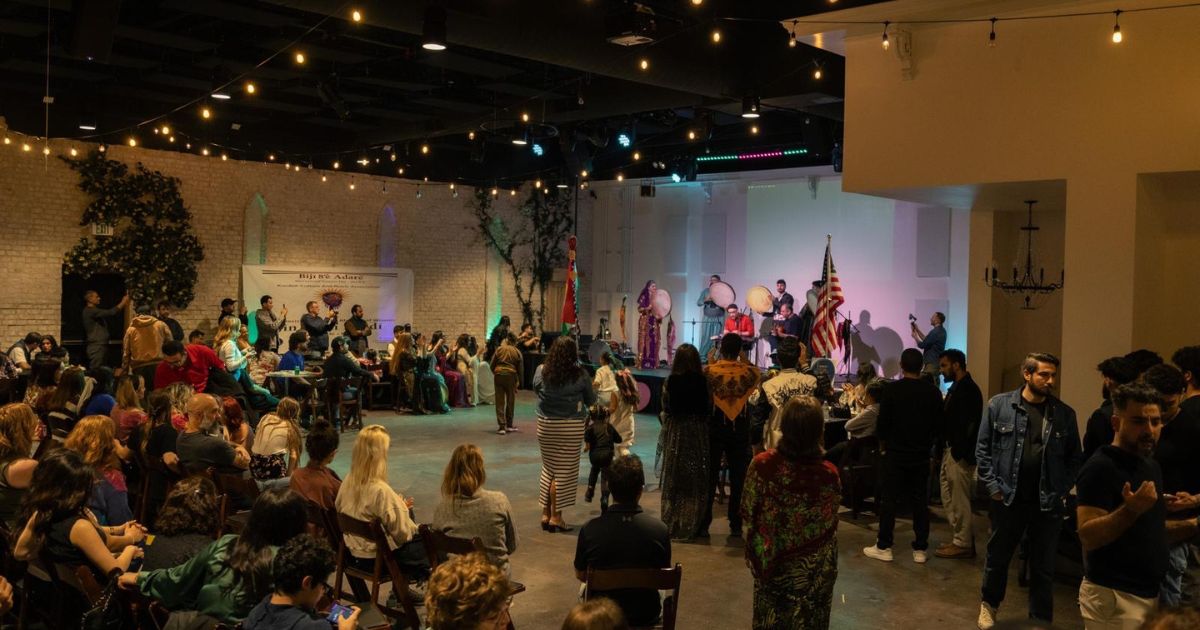
Audience at the Kurdish Culture and Music Association’s performance.
- What are some of the ways KCMA is expanding its cultural outreach?
- We recently began working closely with the Nashville Film Festival. Through this collaboration, and with support from the New York Kurdish Cultural Center, we are presenting Spotlight: Kurdish Short Films in Nashville. The program will feature four Kurdish short films and will take place on September 27 at Regal Green Hills.
- We have also worked on bringing Kurdish cinema to Nashville in the past. For example, we previously screened Neighbors by Kurdish filmmaker Mano Khalil at Vanderbilt University, and the director himself joined us for the screening. These opportunities are important to us because they allow us not only to share Kurdish films and stories, but also to connect Kurdish cinema with a wider Nashville and Tennessee audience.
- For us, these collaborations are about building relationships and creating more opportunities to introduce Kurdish culture, artists, and stories to the wider community.
- Looking ahead, what are your hopes and goals for the future of KCMA?
- We have a lot to achieve. Our biggest hope is for KCMA to become financially independent and to have our own place where people can come together. We would love to build a place where we can have our own instructors, offer regular classes and programs, and create more opportunities for people to learn and participate. We also would love to be able to bring musicians, artists, and writers from different parts of the world to Nashville, organize workshops, cultural programs, and eventually host larger festivals and events. We want KCMA to be a strong and meaningful cultural center that represents Kurdish culture and music in a way that is both authentic and accessible to the wider community.
- Ultimately, I would love to see a strong cultural and music center that provides a home not only for Kurdish people in Nashville and Tennessee, but eventually for people across the country and, hopefully, one day around the world. We have already offered classes online, and people from different states have participated. That shows me there is hope and capacity. We have something inside us that gives us the energy to keep going. We do not want that fire to die. We want it to grow.