
Recap: After Sovereignty: A Diploma's View of Kurdish Governance
Key Takeaways
1. Iraq’s constitutional provisions for regional autonomy give Kurdish leaders a basis for seeking international support while affirming Iraqi sovereignty.
2. A capable federal government and meaningful regional powers can coexist. Control over armed groups is a central test of whether that balance can hold.
3. Cooperation among Kurdish parties and effective government strengthen the Kurdistan Region’s standing with Baghdad and foreign partners.
4. The U.S.-Iraq relationship extends beyond military deployments, leaving security, intelligence, investment, and financial ties relevant to Kurdish interests.
Executive Summary
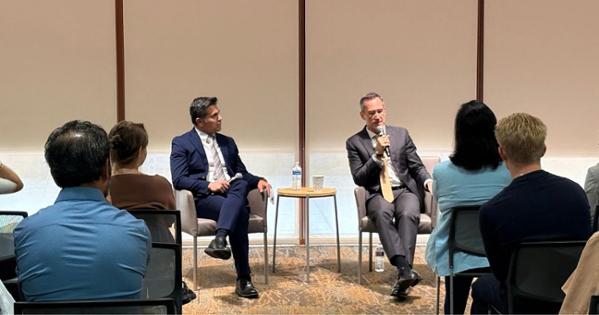
Kurdish self-rule requires a workable division of power within Iraq, backed by institutions capable of sustaining it. That was the central argument advanced by Joey Hood, former U.S. ambassador, in a discussion hosted by the Global Kurdish Initiative for Peace at American University’s School of International Service. Yerevan Saeed, Barzani Scholar-in-Residence and Director of the Global Kurdish Initiative for Peace, pressed him on whether changes in the U.S. military role could leave Kurdish autonomy more exposed. Hood’s response linked constitutional protections and continued international engagement to a domestic task: Kurdish leaders must demonstrate that they can govern effectively and cooperate within a sovereign Iraq.
Constitutional Autonomy and Federal Authority
Saeed raised the concern that Baghdad could use the U.S. military transition to narrow the Kurdistan Region’s autonomous powers. Hood located the region’s strongest diplomatic case in Iraq’s own constitutional provisions for regional authority. Grounding Kurdish claims in that framework, he suggested, would strengthen efforts to secure support from foreign partners.
His preferred division of responsibilities gave Baghdad authority over national defense and foreign policy while preserving meaningful powers for regional and local governments. “There has to be something in between,” Hood said of the space between separation and a highly centralized state. Effective national institutions, local participation, and citizens’ rights all belonged in that arrangement.
The wider Kurdish question ran through the exchange, including prospects for participation in Syria, Turkey, and Iran. Iraq supplied the most concrete case. Hood presented decentralization as a principle that different states could adapt to their own political and social circumstances.
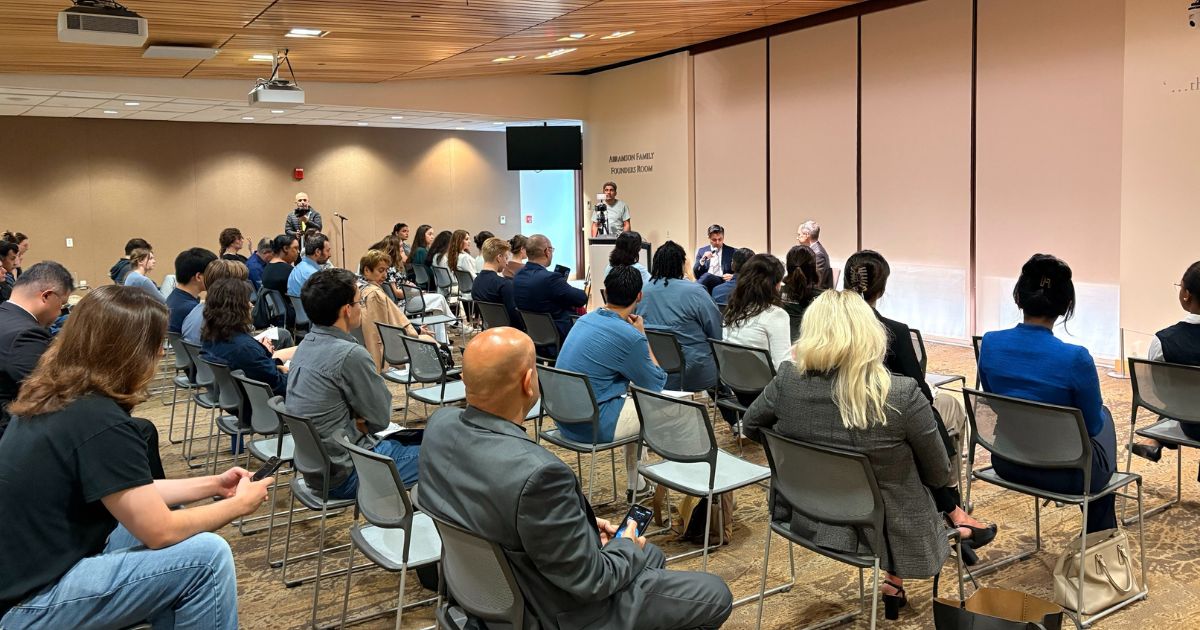
Audience at After Sovereignty: A Diplomat's View of Kurdish Governance.
Militia Power and the U.S. Security Transition
Iraqi sovereignty also requires control over the use of force. Hood warned that competition between Iran-backed militias and actors seeking greater independence from Tehran could again make Iraq a site of regional conflict. The Kurdistan Region would be particularly exposed because of its geographic and political position. For him, the practical test was whether Iraqis and their government could exercise authority over armed groups operating within the country.
He placed that risk within a regional order shaped by overlapping partnerships, pointing to cooperation involving Saudi Arabia, Turkey, and Pakistan, as well as possible closer ties among Gulf states and Iraq. Regional governments would increasingly shape these arrangements as their reliance on Washington changed.
Drawing on his experience as U.S. chargé d’affaires in Iraq, Hood described a bilateral relationship spanning security cooperation, intelligence, investment, business, and finance. The implication for policymakers is to assess how those channels can sustain engagement with Baghdad and the Kurdistan Region as the military relationship changes.
Government Formation and Diplomatic Credibility
The Kurdistan Regional Government’s credibility abroad also rests on its performance at home. Hood cautioned that prolonged government formation can affect how international partners judge its reliability. Greater cooperation among Kurdish political actors, together with political and economic stability, would strengthen the region’s position within Iraq.
Its contribution extends beyond its Kurdish population. “It’s a region that many Iraqis go to when they want to feel safer,” he observed. The Kurdistan Region’s role as a refuge for people displaced by conflict, and its diverse communities, made its stability a concern for the wider country. In Hood’s account, preserving that security and opportunity was part of the case for sustaining regional autonomy.
Policy Outlook
The discussion points to three practical tests: whether Baghdad can exercise effective authority over armed groups; whether Kurdish parties can sustain cooperation and credible government; and whether U.S. security, diplomatic, and economic ties help preserve a workable federal balance. Policymakers should watch how Baghdad and the Kurdistan Regional Government exercise their respective powers in practice. Constitutional recognition of autonomy will matter most if institutions can uphold it through political and security disputes.