
University Event Scheduling > Event Policies & Guidelines
Film Screenings & Public Performance Rights
Contact Us
Mary Graydon Student Center, Room 319 on a map
Student Center 4400 Massachusetts Avenue NW Washington, DC 20016-8113 United StatesFilm Screenings & Public Performance Rights (PPR)
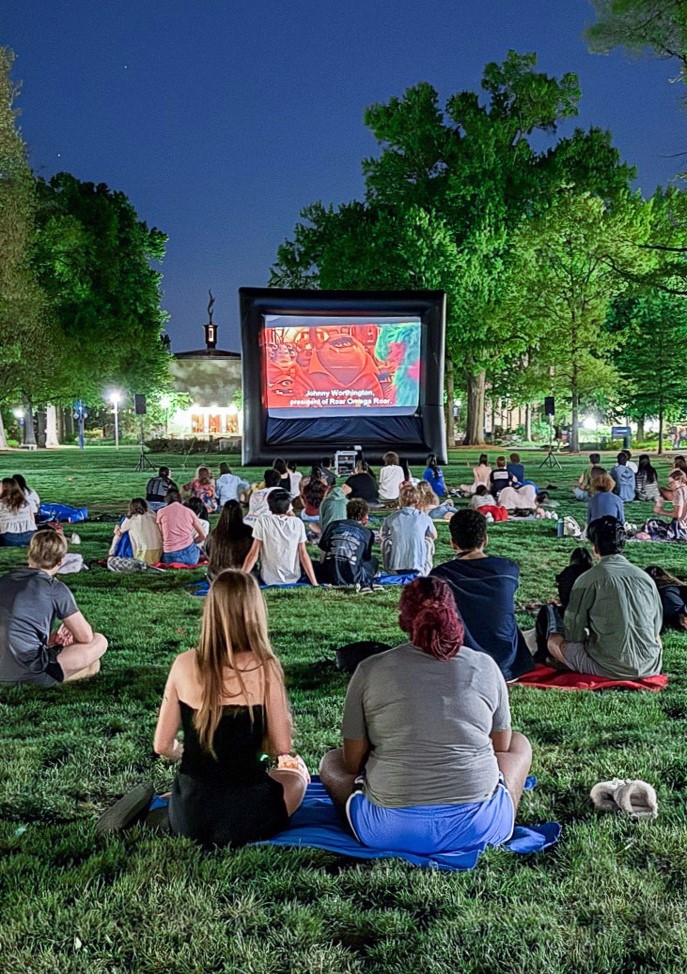
Most movies, television programs, and streaming content are protected by U.S. copyright law. In most cases, showing a film or video at a university event requires Public Performance Rights (PPR), also known as a public performance license.
Public Performance Rights are the legal permission required to show copyrighted films or video content to a group outside of a private home or personal space, such as a residence hall room. This includes classrooms, meeting rooms, event spaces, outdoor areas, lounges, auditoriums, and other campus venues.
PPR is generally required for film screenings at university events, including student organization movie nights, residence hall screenings, campus entertainment events, outdoor movie events, department-sponsored programs, cultural or awareness activities, and films shown as part of conferences, retreats, or other special events. This applies regardless of whether the screening is educational in nature, limited to a private or invited audience, free of charge, or uses a legally purchased or personally streamed copy of the film.
PPR may be demonstrated through documentation such as a signed license or contract, written authorization from the rights holder, or a distribution agreement that explicitly allows public screening. These rights are typically obtained through one of the following methods:
- Purchasing a public performance license
- Working with a licensed film distributor
- Using a film that already includes screening rights
- Receiving written permission from the copyright owner
Pre-Licensed Films and Streaming Platforms
AU Library Materials
Some library materials may already include Public Performance Rights, particularly documentaries or educational titles. However, most feature films do not automatically include public screening rights. Event organizers should confirm licensing status with the AU Library before advertising or hosting a screening.
Organizational or Parent-Group Licensing
Some student organizations may have access to film screening rights through a national or parent organization license. In these cases, the group should provide documentation showing that the specific film and type of screening are covered under that license.
Personal affiliation alone does not grant screening rights. If no applicable license documentation is provided, standard PPR requirements apply.
Commercial Streaming Services
Personal streaming subscriptions such as Netflix, Hulu, Disney+, Max, and Amazon Prime Video generally do not permit public screenings under their terms of service. Even educational or student-focused events may still require separate Public Performance Rights.
Some streaming platforms occasionally provide limited educational screening permissions for select titles, but these are exceptions rather than the norm.
Exceptions to Public Performance Rights
There are a few limited exceptions under U.S. copyright law where public screenings of films and other copyrighted media do not require Public Performance Rights (PPR). These exceptions are narrow and only apply in specific situations, such as when permission is granted by the copyright owner, when the use qualifies under classroom teaching exemptions, or when short clips may be allowed under fair use. Below are the three main exceptions.
Under this exception, Public Performance Rights (PPR) may not be required when a professor shows a lawful copy of a film in a classroom setting, as long as: (i) the instructor is present during the screening; (ii) the screening is part of a private class session; and (iii) the film copy was obtained legally. See 17 U.S.C. § 110(1).
In addition, the TEACH Act allows instructors to show reasonable and limited portions of films in certain online classes, but only when specific legal requirements are met. See 17 U.S.C. § 110(2).
In some situations, using short clips from a movie may be allowed under the “fair use” provisions of U.S. copyright law. Fair use is decided on a case-by-case basis using four factors:
1. Purpose and character of the use
This looks at why and how the material is being used. Educational, nonprofit, or critical uses are more likely to qualify as fair use. Courts also consider whether the use is “transformative,” meaning it adds new meaning, analysis, or context rather than simply copying the original. Commercial uses are less likely to qualify, but fair use can still sometimes apply depending on the situation.
2. Nature of the copyrighted work
Using factual or informational content is more likely to be fair use than using highly creative works like movies or fiction.
3. Amount and substantiality of the portion used
Using smaller portions of a work is more likely to support fair use. However, even a small clip may weigh against fair use if it includes an important or highly recognizable part of the work (sometimes called the “heart” of the work).
4. Effect on the market for the original work
If the use could replace the original or reduce its value or ability to be sold or licensed, it is less likely to be considered fair use. Courts sometimes treat parody differently under this factor.
In general, when using film clips for educational discussion, they should be brief, limited to what is necessary for teaching or commentary, and should not include the most important or recognizable parts of the film.
If you do not have a Public Performance Rights (PPR) license, you may still be able to show a film if you have written permission from the copyright owner.
A letter of permission from the copyright owner may be accepted instead of a license, as long as it clearly states that the owner is allowing the specific public screening. The permission should include details such as the title of the film, the date or timeframe of use, and the type of event or screening that is allowed.
The permission must come directly from the copyright holder (or an authorized representative) and should be kept on file as proof of authorization.
Frequently Asked Questions
Are rights required if I use my Netflix account, or other streaming service?
Usually yes, PPR is required. Personal streaming subscriptions (such as Netflix, Hulu, Disney+, Max, and Amazon Prime Video) are licensed for individual or household viewing only and do not include public screening rights.
Even if an event is educational or student-focused, public screenings typically require Public Performance Rights (PPR) obtained separately from the content owner or a licensed distributor.
In limited cases, a streaming platform or title may explicitly grant educational screening permission, but these instances are rare and must be verified in advance.
Are rights required if the filmmaker, director, or guest speaker is presenting the film?
If the filmmaker, distributor, or guest presenter owns the rights to the film or has the authority to grant screening permission, the screening may be allowed as part of the written agreement with the presenter, and without a separate PPR license.
The event host or sponsoring organization is responsible for verifying that the correct permissions are in place. A guest’s participation does not, by itself, guarantee that screening rights have been granted. In all cases, Public Performance Rights (PPR) are still required unless appropriate rights are already secured through the event agreement.
Acceptable proof of permission may include a signed license or contract, written email authorization from the rights holder, or a distribution agreement that explicitly allows public screening.
Are rights required if the screening includes a discussion, lecture or panel?
Yes - PPR is still required. A discussion, lecture, or panel after the screening does not eliminate the need for Public Performance Rights (PPR). If the film is being shown to a group outside of a personal or classroom setting that qualifies for a legal exception, PPR is required, even if the event includes an educational or academic discussion afterward.
Are rights required if I'm not showing the whole film?
Possibly. In some situations, using short clips from a movie may be allowed under the “fair use” provisions of U.S. copyright law.
Fair use is decided on a case-by-case basis using four factors:
1. Purpose and character of the use
This looks at why and how the material is being used. Educational, nonprofit, or critical uses are more likely to qualify as fair use. Courts also consider whether the use is “transformative,” meaning it adds new meaning, analysis, or context rather than simply copying the original. Commercial uses are less likely to qualify, but fair use can still sometimes apply depending on the situation.
2. Nature of the copyrighted work
Using factual or informational content is more likely to be fair use than using highly creative works like movies or fiction.
3. Amount and substantiality of the portion used
Using smaller portions of a work is more likely to support fair use. However, even a small clip may weigh against fair use if it includes an important or highly recognizable part of the work (sometimes called the “heart” of the work).
4. Effect on the market for the original work
If the use could replace the original or reduce its value or ability to be sold or licensed, it is less likely to be considered fair use. Courts sometimes treat parody differently under this factor.
In general, when using film clips for educational discussion, they should be brief, limited to what is necessary for teaching or commentary, and should not include the most important or recognizable parts of the film.
Are rights required if the event is free?
Yes - PPR is required. Charging admission is not the determining factor. Public screenings generally require rights regardless of whether admission is charged.
Public screenings generally include any showing outside of a private residence or personal dorm room. Examples of public screenings include:
• Student organization movie nights
• Campus events and programs
• Department-sponsored screenings
• Residence hall lounges and common spaces
• Public discussions or panel events that include a film screening
• Outdoor movie events
How do I get Public Performance Rights for a Film?
Option 1: Contact the Copyright Owner or Distributor
You may request permission directly from the copyright owner, studio, or distributor. Acceptable proof of permission may include a signed license or contract, written email authorization from the rights holder, or a distribution agreement that explicitly allows public screening.
The following information is typcially required for permission:
• Film title
• Date and location of screening
• Audience size
• Whether admission will be charged
• Organization name
• Contact information
Option 2: Work with a Licensing Company
Many films are licensed through companies that manage public performance rights on behalf of studios and distributors. Typical licensing fees range from approximately $300–$1,000 or more.
Common licensing companies include:
• Swank Motion Pictures
• Motion Picture Licensing Corporation (MPLC)
• Criterion Pictures USA
• Kino Lorber
Licensing fees vary based on factors such as:
• Film title and popularity
• Audience size
• Screening format
• Number of screenings